REVIEW · MAUI
Maui -PRIVATE- Air Tour: 5 Islands: (2-5 people): SEE Even MORE!
Book on Viator →Operated by MAUI PLANE RIDES · Bookable on Viator
Five islands, one sky-high view.
This private Maui flight is interesting because you get live pilot commentary while you fly, plus you’ll see Maui County from angles most people never get. I especially like the route’s mix of famous viewpoints (think Molokini and Wailea) and gritty, real places like lava fields and the old sugar-cane industrial past. The main drawback to consider is that the ride can feel bumpy, and if you’re prone to air sickness, you’ll want to take that seriously.
You’ll fly in a small, private cabin setup (not a big cattle-plane), and you’re not sharing the experience with anyone outside your group. The total time is about 1 hour 15 minutes to 1 hour 30 minutes, and the day-of focus is simple: see a lot, ask questions, and come back with photos that make your regular beach pictures look like they took a nap. A pilot named Eric is specifically praised for turning the flight into something personal and fun.
You’ll cover a tight circuit that includes Nakalele Blowhole, Honolua Bay, Lanai (with a WWII shipwreck reference), Kahoolawe (as a WWII aerial bombing practice target), Molokini Crater, Wailea and central Maui Valley, Makena State Park’s beaches and lava fields, Kihei’s Kamaole Beach Parks, and even the ghost factory linked to Maui’s sugar-cane industry.
In This Review
- Key moments that make this flight worth it
- Private cabin views over Maui’s 5-island circuit
- Your plane time is short. Your viewpoints are not.
- What the flight feels like: timing, small cabin, and motion sickness
- Bring your own comfort plan
- Your route in the air: blowhole, bays, WWII coasts, and crater water
- Nakalele Blowhole and Honolua Bay: raw coast meets clear water
- Lanai: prehistoric coastline plus a WWII shipwreck line
- Kahoolawe and Molokini Crater: a “why it looks like that” moment
- Wailea and central Maui Valley: resorts meet the bigger picture
- Makena State Park: Little Beach, Big Beach, lava fields
- Kihei’s Kamaole Beach Parks and the old sugar-cane ghost factory
- Why live pilot commentary makes the flight better
- Price and value: $536 per person for five islands
- What’s included on board (and what to bring)
- Who this Maui private air tour is best for
- Who should be cautious
- Should you book this private Maui air tour?
- FAQ
- How long is the Maui private air tour?
- How many islands are included?
- Where do we meet in Kahului?
- Is this tour private?
- Will I be able to hear the pilot during the flight?
- What is the cost per person?
- What happens if the weather is poor?
- Is mobility required?
- What’s included with the ticket?
Key moments that make this flight worth it
- Live, in-flight narration you can actually ask about while you’re looking down
- Small-plane feeling in a private cabin setup (personal attention)
- WWII-era sights from above on Lanai and Kahoolawe, not just postcard views
- Molokini Crater and clear water chances, including the kind of color and coral contrast you can spot from the air
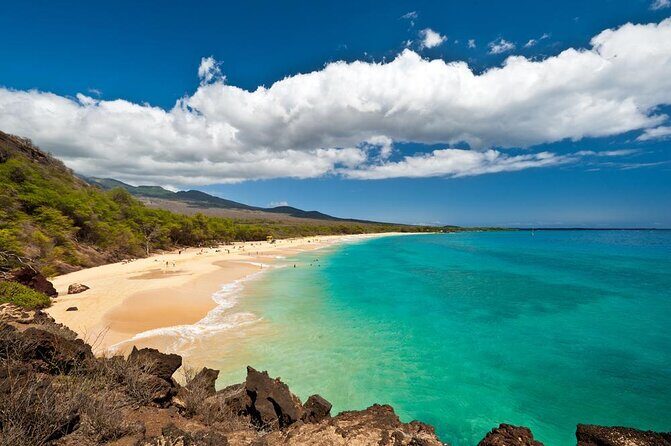
- Makena lava fields + Little Beach and Big Beach from a higher, wider perspective
- Kihei’s coastline grid with the Kamaole Beach Parks strung together below
Private cabin views over Maui’s 5-island circuit
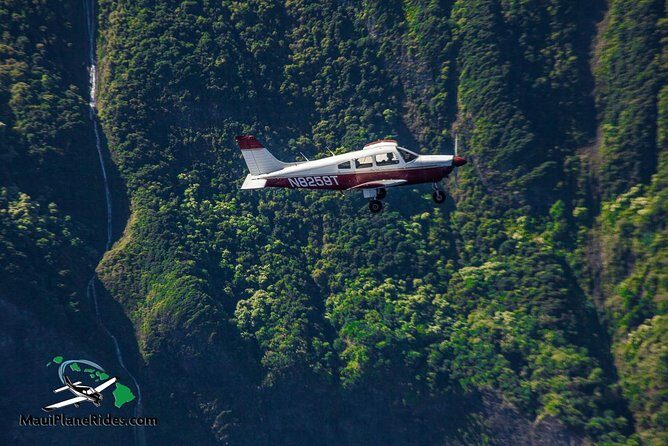
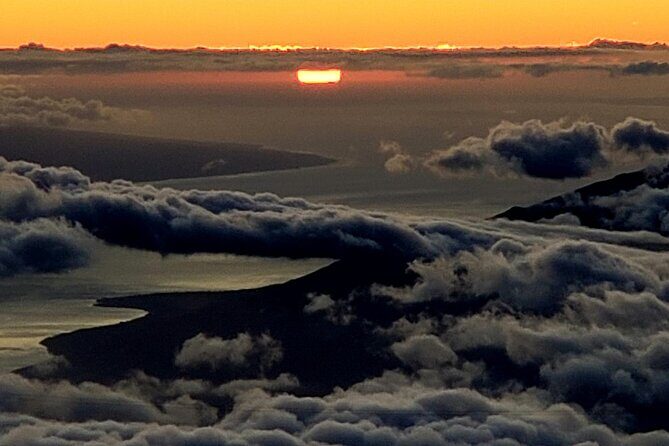
A private air tour in Maui is all about shortcuts. Driving gives you beauty, sure, but an air tour gives you scale: which bays curve where, how lava flows stopped, and why certain coasts feel dramatic even on a calm day.
This one leans hard into variety. You’re not just looking at beaches. You’re also flying over rugged coastline like Nakalele Blowhole, deep-water features around Honolua Bay, and volcanic ground in Makena State Park’s lava fields. The result is a flight that feels like Maui’s geography gets explained in real time.
You can also read our reviews of more private tours in Maui


Your plane time is short. Your viewpoints are not.
With about 75–90 minutes in the air, you don’t have the slow, stop-and-gawk rhythm of a ground tour. Instead, you get a sequence of clear “look at this” moments—then another, then another—until the islands line up like a puzzle.
What the flight feels like: timing, small cabin, and motion sickness
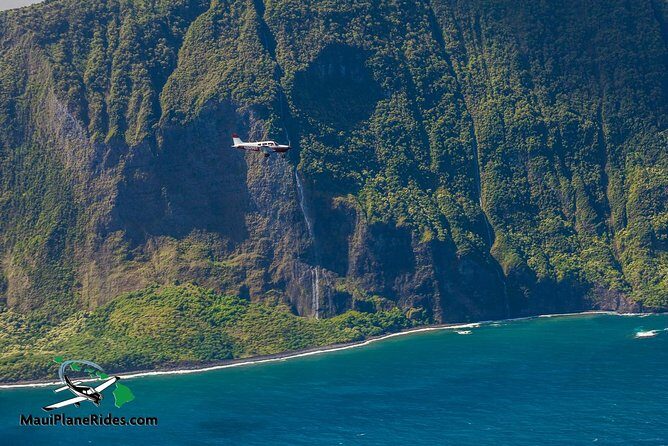
This isn’t a long-haul flight. It’s a quick hop where visibility matters. Weather matters too, because the experience requires good conditions; if it’s canceled due to poor weather, you’ll be offered a different date or a full refund.
The thing to plan around is how it feels in the air. One of the most repeated cautions is that the plane can be incredibly bumpy in certain conditions. Mountains and valleys can create air currents that jostle the aircraft around, so if you’re uneasy about flying or prone to motion sickness, consider taking preventive medication before you go (and follow your doctor’s advice).
Bring your own comfort plan
You’ll have headsets and bottled water onboard, which helps. But comfort is mostly on you:
- If you’re sensitive to air motion, sit in a position you can tolerate best.
- Keep your eyes on the horizon if you start to feel queasy.
- If you have questions, ask early so you’re not adjusting mid-flight.
Also note the practical requirement at booking: you’ll be asked to enter the accurate weight of each passenger in pounds. That’s not busywork. It helps the operator plan safely for performance in a small aircraft.
Your route in the air: blowhole, bays, WWII coasts, and crater water
This flight has a strong “north to south to back again” rhythm, with each part chosen for what you can actually see from above.

Nakalele Blowhole and Honolua Bay: raw coast meets clear water
You start with Nakalele Blowhole. From ground level, a blowhole is dramatic; from above, it becomes a lesson in coastline shape—where the ocean funnels energy and where the rock breaks the water’s flow.
Then you move to Honolua Bay. This is the part where water color often steals the show. In at least one real flight experience, killer whales were seen from the air, along with the kind of coral-and-water contrast that looks different depending on light angle. You can’t count on whales, but you can count on the bay looking good.
Lanai: prehistoric coastline plus a WWII shipwreck line
Next is Lanai, including an overflight tied to a WWII shipwreck along Lanai’s prehistoric coastline. It’s the kind of detail that makes aerial geography feel more human. You’re not only sightseeing; you’re connecting islands to events that shaped the region.
If you like history but don’t want a museum pace, this is a nice middle ground. You get a reference point and then you see the terrain that made it memorable in the first place.
Kahoolawe and Molokini Crater: a “why it looks like that” moment
Kahoolawe comes next, described as a WWII aerial bombing practice target. From the air, you can understand how an island’s surface changes and why the terrain reads differently than the lush, inhabited islands around it.
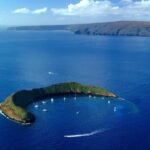
Then you fly toward Molokini Crater. This is one of those Maui stops where the viewpoint does half the work: you see the crater shape, the surrounding ocean contours, and often the water’s clarity patterns. It’s a strong candidate for your best photos, especially if you’re the kind of person who zooms in mentally even before taking shots.
Wailea and central Maui Valley: resorts meet the bigger picture
As you pass over the famous resorts and golf courses of Wailea, you get a chance to see how development sits alongside valleys, ridgelines, and coastal breaks. It’s not just “pretty vacation.” It’s a bird’s-eye map of how Maui’s geography supports the places people go.
Then you head over the entire central Valley of Maui before returning for landing. That “valley sweep” is where the flight feels efficient. You’re getting a sense of distance without leaving your seat.
Makena State Park: Little Beach, Big Beach, lava fields
Makena State Park is one of the strongest selling points of the route. You’ll see a higher perspective of Little Beach and Big Beach, and then the lava fields that make this part of Maui look otherworldly.
One reason this works so well on an air tour is the texture. Lava fields read as patterns—bands, flows, and breaks—that are hard to notice from the road. From above, they start to look like geology you can trace.
Kihei’s Kamaole Beach Parks and the old sugar-cane ghost factory
Over Kihei, you fly over all the Kamaole Beach Parks. Instead of picking one beach and hoping you chose right, you see the whole stretch.
Near the end, you pass over the ghost factory tied to Maui’s historic sugar-cane industry. That detail helps finish the story on a grounded note: islands aren’t just natural wonders. They’re also shaped by work, industry, and time.
Why live pilot commentary makes the flight better
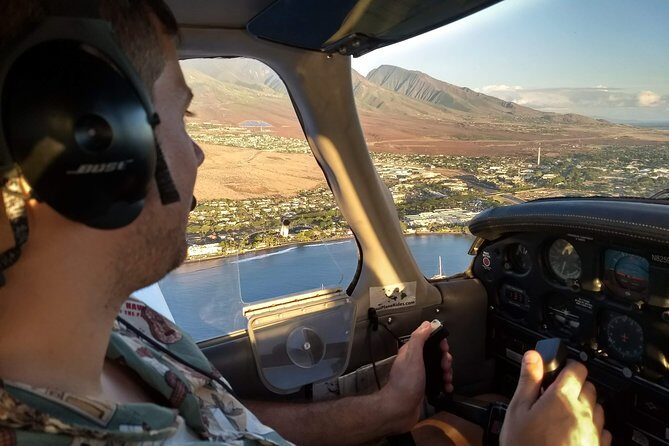
A recorded tour can be nice. Live commentary is better because it adapts to what you ask and what you’re seeing right then.
Here, you’ll have headsets so you can hear the pilot clearly and follow along in English. You can ask questions while you fly, which is a big deal when the pilot notices something overhead and can explain what you’re looking at.
A pilot named Eric is mentioned with praise for being informative and making passengers feel special, which fits the private-plane setup. In practice, this means the flight doesn’t have to feel like a scripted loop. It can feel like a conversation with Maui from above.
Price and value: $536 per person for five islands
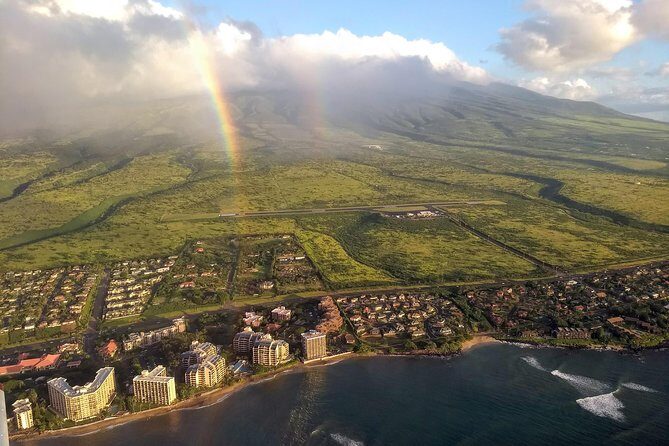
At $536 per person, this isn’t a budget activity. The value comes from three specific things the price buys you:
First: time efficiency. In 1 hour 15 minutes to 1 hour 30 minutes, you’re covering multiple island areas and key features that would take a lot of driving, planning, and guesswork.
Second: access to a private small-aircraft viewpoint. You’re not squeezed into a big group. You’re in a private cabin setup for a small number of people, with live conversation and headsets.
Third: variety that’s hard to replicate by car. Blowhole, crater, lava fields, and the WWII-linked overflights are the kind of sights that look very different from the air.
That said, price disappointment happens if you expect heavy history storytelling or if audio doesn’t work for you. There’s at least one experience where someone struggled to hear well even with headsets and wished for more stories. If you’re the type who needs narrative depth to stay engaged, you should consider that live commentary quality can depend on conditions and how you set up your headset.
What’s included on board (and what to bring)
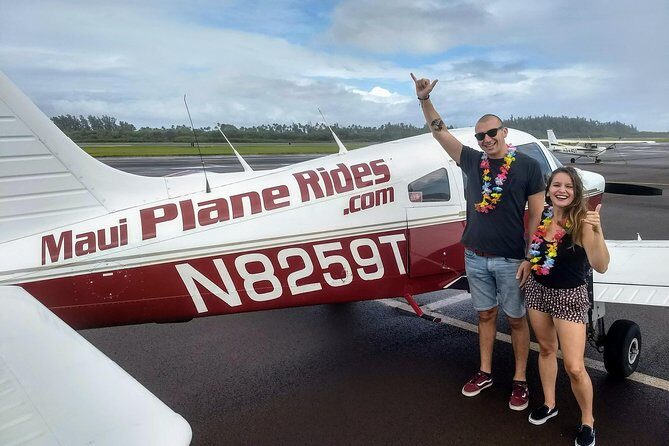
This flight includes bottled water and soda/pop, plus headsets to hear the pilot clearly. You also get live commentary and landing/facility fees, along with parking fees. On the logistics side, you’re guaranteed to skip the long lines.
For your side of the checklist, bring:
- Anything you need for comfort if you’re prone to motion sickness.
- A light layer if you get chilly easily.
- Your camera/phone fully charged, since you’ll have repeated photo chances while passing over major sights.
Who this Maui private air tour is best for
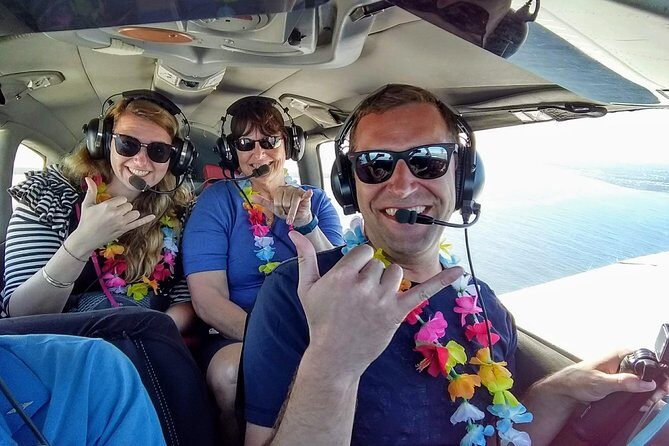
This is a smart fit if you want:
- A high-impact Maui experience without spending your whole day in traffic
- The best chance to see multiple islands and coastline features in one go
- Live guidance you can question while the aircraft is still in view
It’s also a good match for people who like geology, ocean features, and WWII-related references that show up directly in the route.
Who should be cautious
Be cautious if:
- You get air sick easily or you’re very uneasy about flying.
- You expect a lot of history-heavy narration. Live commentary is helpful, but the depth you get depends on your questions and how the flight unfolds.
- You’re uncomfortable with a more direct communication style from the pilot. One experience noted that the pilot was pushy about photos and leaving a review, which may not be your vibe.
Should you book this private Maui air tour?
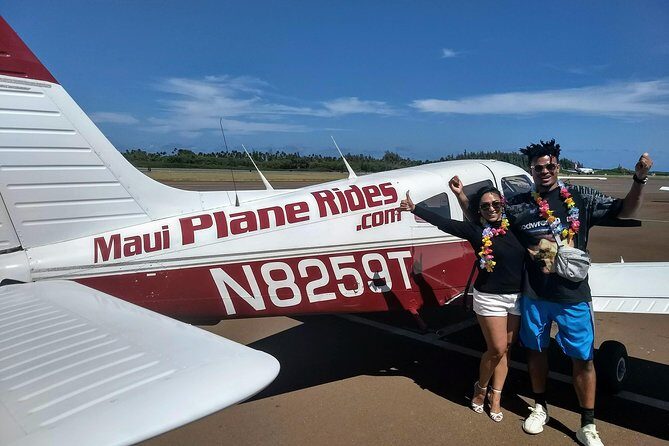
Book it if your top priority is seeing Maui from above and you’d rather spend money on viewpoints than on long drives. The route is packed: blowholes, bays, Molokini, lava fields, Kihei beaches, and sugar-cane remnants—all in one tight flight.
Skip it or choose a different option if you know you’re vulnerable to bumpy flights or if you need very steady, gentle conditions. Also think carefully if you’re sensitive to audio quality; even with headsets, there can be moments when listening is tough.
If weather is good and you’re comfortable with the idea of a small, bumpy-when-it-needs-to-be aircraft ride, this private five-island flight is one of the most efficient ways to understand Maui’s shape and scale fast.
FAQ
How long is the Maui private air tour?
The flight time is approximately 1 hour 15 minutes to 1 hour 30 minutes.
How many islands are included?
The tour is described as a 5-island flight over Maui County features.
Where do we meet in Kahului?
You meet at 90 Kuhea St, Kahului, HI 96732, and the activity ends back at the meeting point.
Is this tour private?
Yes. It’s a private tour/activity, and only your group will participate.
Will I be able to hear the pilot during the flight?
Yes. Headsets are provided so you can hear the pilot clearly, and you’ll get live commentary on board.
What is the cost per person?
The price is $536.00 per person.
What happens if the weather is poor?
This experience requires good weather. If it’s canceled due to poor weather, you’ll be offered a different date or a full refund.
Is mobility required?
Full mobility is required for this experience.
What’s included with the ticket?
Included items are bottled water, soda/pop, headsets, live onboard commentary, landing and facility fees, and parking fees.