REVIEW · MAUI
2-Hour Surf Lessons with a Pro
Book on Viator →Operated by Maui Local Adventures · Bookable on Viator
Surfing in Maui is one of those things that feels simple—until you try it. This lesson is built to keep it practical: find the right surf conditions and spend most of your time in the water.
I especially like the small group size (up to 8), because you’re not fading into the background while someone else gets the attention.
The second big win for me is the way the instructor plans your session: you’ll check the day’s conditions and pick a spot that fits your level. One consideration: the activity runs only when the weather is good, so plan for the fact that your session could shift if conditions don’t cooperate.
In This Review
- Key highlights worth your time
- How the 2-Hour Lesson Really Plays Out
- Picking the Right Maui Surf Spot for Your Level
- On Land: Safety, Surf Basics, and the History Piece
- In the Water: Riding Waves, Not Waiting Your Turn
- The Pro Factor: What Braiden’s Coaching Brings to the Session
- Who This Surf Lesson Fits Best (And Who Should Rethink It)
- Meeting Point on Honoapiilani Highway (HI-30) and What to Expect Logistically
- Value: Why This Feels Like Progress, Not Just Entertainment
- Weather Rules and the Chance of a Schedule Shift
- Should You Book This Maui Surf Lesson?
- FAQ
- FAQ
- How long is the surf lesson?
- How much time is spent on land versus in the water?
- What group size should I expect?
- Where do I meet for the lesson?
- What level of surfer is this for?
- What language is the lesson taught in?
- Is the lesson weather dependent?
- What’s the cancellation window for a full refund?
Key highlights worth your time
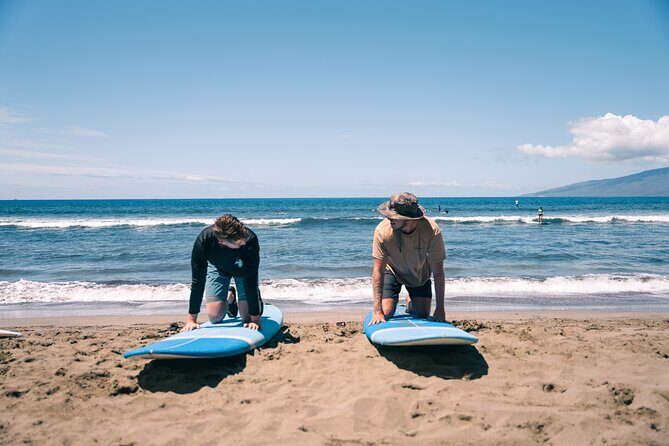
- Small-group lesson (max 8): more coaching touches, less waiting around.
- Skill-matched spot selection: you’re guided to waves that match beginner through experienced surfers.
- Most time in the water: about 2 hours total, with only 15–20 minutes on land.
- Pro instruction style: instructors have been riding Maui’s waves for years, and Braiden has been praised for his friendly, hands-on coaching.
- Safety + surf basics first: you get on-land instruction covering safety and the history of surfing.
- Good-weather requirement: helps keep the lesson safer and more fun, but it can affect timing.
How the 2-Hour Lesson Really Plays Out
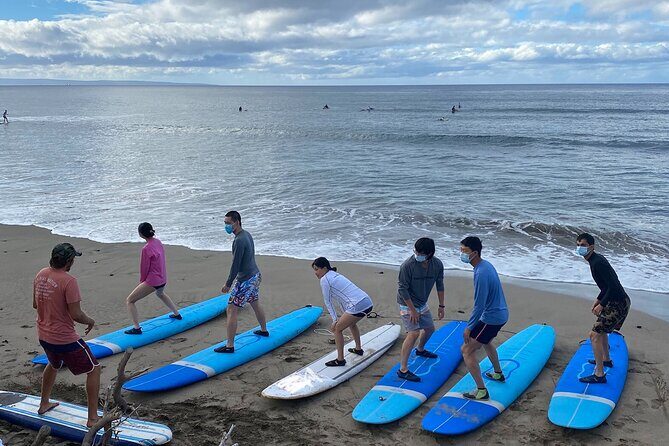
This is an action-heavy surf session. You’re looking at about 2 hours total, and the plan is to keep you learning while also getting plenty of wave time.
A typical flow goes like this. First, you’ll start with the basics on land for roughly 15–20 minutes, focused on safety and the fundamentals you’ll need immediately. Then you’ll head into the water and spend the rest of the session riding waves rather than standing around.
That ratio matters. If you’ve ever taken an activity where you spend half the time listening and the other half watching, you’ll appreciate this setup. It’s built for progress that feels fast, not for a slow, lecture-style pace.
You also end right where you started. The tour begins on Honoapiilani Highway (HI-30), Hawaii, USA, and it finishes back at the same meeting point.
You can also read our reviews of more tours and experiences in Maui


Picking the Right Maui Surf Spot for Your Level
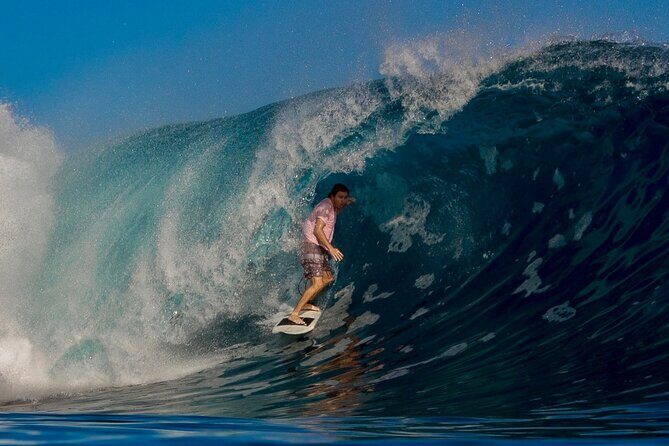
Maui doesn’t do one-size-fits-all surf. The day’s conditions change, and the lesson uses that reality instead of fighting it.
You’ll have someone check the conditions for the day and then choose the best spot on the island for your level—so beginners aren’t thrown into chaotic waves, and more experienced surfers still get something worth working on.
In plain terms, it’s a big deal because surfing mistakes often come from mismatches. Wrong waves can mean wipeouts that teach nothing (except how quickly you can lose your dignity). When the spot fits you, you spend more time practicing the moves that actually transfer to better surfing.
On Land: Safety, Surf Basics, and the History Piece

Before you’re in the water, you get a short block of instruction: 15–20 minutes on land. That time is deliberately limited, and it should feel like the minimum you need to stay safe and surf smarter right away.
What you’ll cover is straightforward:
- basic surf instruction
- safety guidance
- and a bit about the history of surfing
That history part might sound optional, but it can actually help the mindset. Surfing isn’t just a sport here—it has deep local roots. Even a short primer can make the whole experience feel more grounded, not just like a random adrenaline session.
Just remember: this is not the kind of lesson where you get a long “classroom day.” You’re getting the essentials so you can start moving in the right direction quickly.
In the Water: Riding Waves, Not Waiting Your Turn
Once you’re in the ocean, the lesson shifts gears hard. The majority of your time is designed around wave riding, with coaching aimed at helping you adjust while you’re actually surfing.
With a small group—again, up to eight people—the instructor can give more frequent feedback. That’s the difference between hearing one tip and then forgetting it ten minutes later versus getting nudges while your body is still in the learning mode.
Also, this is a pro-led session, and that shows in how coaching tends to work in Maui. You’ll get pointers that help you handle:
- timing and positioning (so you don’t always end up paddling too late or too early)
- how to respond when conditions shift
- and how to build consistency instead of only chasing the longest wave
If you’re a beginner, your win is getting comfortable enough to catch waves. If you’re more advanced, your win is refining technique and not wasting time on waves that don’t let you practice what you need.
The Pro Factor: What Braiden’s Coaching Brings to the Session
One name came up for this experience in the feedback: Braiden. And the praise wasn’t vague. People specifically highlighted that he was fantastic, knew how to teach adults and kids, and gave clear, useful pointers.
That matters because “pro” can mean a lot of things. Some instructors are great surfers but less effective coaches. In this case, the strong signals are about communication and encouragement—being friendly, knowledgeable, and hands-on.
If you’re worried about feeling clumsy in front of strangers, that coaching tone can help. Surf is physically humbling. The lesson structure helps, but the instructor’s style can make the difference between frustration and momentum.
You can also read our reviews of more tours and experiences in Maui






Who This Surf Lesson Fits Best (And Who Should Rethink It)
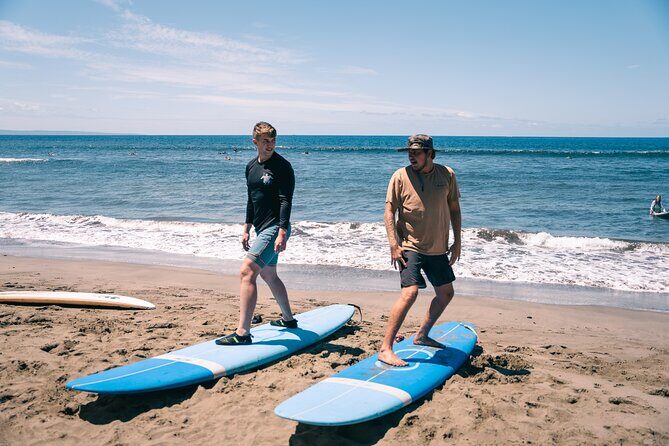
This lesson is designed for all levels, from beginner up through experienced surfers. So if you’re brand new, you’ll still get a path forward. If you already surf sometimes, the spot selection should prevent you from getting stuck in waves that are too easy or too messy for your goals.
That said, there’s a practical requirement: the experience notes a moderate physical fitness level. Surfing isn’t a sit-and-stretch activity. You’ll likely be paddling, getting up, and dealing with the ocean’s surprises.
If you’re dealing with injuries or you know you’re not comfortable with swimming and active water time, you’ll want to consider whether moderate fitness is realistic for you. It’s better to make that call ahead of time than to hope adrenaline covers the rest.
This is also a good choice if you like instruction with structure. The blend of quick safety fundamentals, then direct time riding waves, makes it easier to track progress during the same day.
Meeting Point on Honoapiilani Highway (HI-30) and What to Expect Logistically
Your start point is listed as Honoapiilani Highway (HI-30). The experience also returns you back there at the end, so you’re not dealing with complicated drop-offs.
Because the session is weather-dependent, you should aim to be ready for timing adjustments if conditions require a change. The schedule is still planned, but the ocean is the boss, not a calendar.
Language is English, which is handy if you don’t want to worry about translating basic safety instructions. And the lesson being offered in a mobile-ticket format makes it easier to handle quickly—no need for paper hunting.
Value: Why This Feels Like Progress, Not Just Entertainment
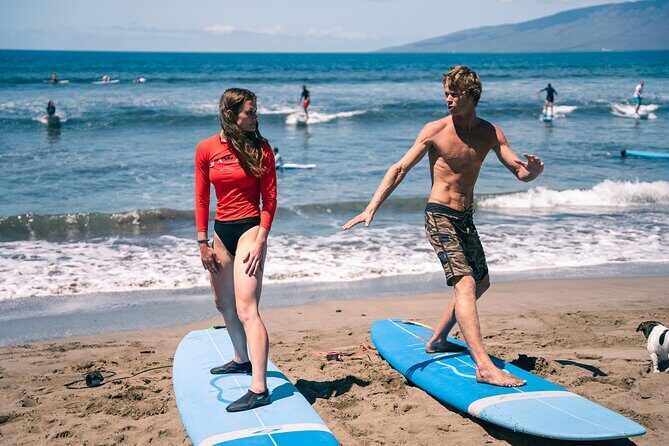
There’s plenty of Maui surf content that looks fun in photos. This experience is different in the way it’s structured.
Here’s why it tends to feel good value:
- You spend most of the time in the water. Even if you’re tired, at least the effort is producing real practice.
- Small group size improves feedback. When you have fewer people, your instructor can actually see what’s going wrong and help adjust.
- Spot selection matches your level. That reduces wasted attempts and helps you learn faster because the waves aren’t random.
- Safety is covered first. You’re not just rushed into the lineup without the basics.
And while “value” is often about price, in this case it’s more about how effectively your time gets used. Two hours can be either a quick thrill or a real skill step. The lesson design leans toward the second.
Weather Rules and the Chance of a Schedule Shift
This is a good-weather-required activity. If conditions are poor, the experience can be canceled for weather reasons, and you’ll be offered a different date or a full refund.
That’s not a flaw—it’s a safety and quality measure. Bad conditions can turn a lesson into survival mode, and that’s not what you want when your goal is learning.
So I’d book this when you have at least some flexibility in your Maui days. If your trip is tightly packed with no wiggle room, consider building in a backup day for this type of ocean activity.
Should You Book This Maui Surf Lesson?
If your goal is to learn or improve in a structured way, I think this is a smart bet. The combination of up to 8 people, a pro instructor, and focused time riding waves makes it likely you’ll leave with more confidence than you started with.
You should strongly consider booking if you:
- want a lesson that prioritizes real water time
- like the idea of safety and basics up front
- appreciate coaching that can actually be tailored to your level
- would feel better with an instructor known for friendly, capable teaching (Braiden comes up for that)
Skip it or plan carefully if you:
- don’t have the moderate physical fitness needed for active water time
- can’t handle possible weather changes and rescheduling
FAQ
FAQ
How long is the surf lesson?
It runs for about 2 hours total.
How much time is spent on land versus in the water?
You’ll spend about 15–20 minutes on land for instruction and safety, and the rest of the lesson is in the water riding waves.
What group size should I expect?
The lesson has a maximum of eight travelers, which helps keep the coaching more personal.
Where do I meet for the lesson?
The start location is Honoapiilani Highway (HI-30), Hawaii, USA, and the activity ends back at the same meeting point.
What level of surfer is this for?
It’s suitable for all levels, from beginner to experienced surfers.
What language is the lesson taught in?
The experience is offered in English.
Is the lesson weather dependent?
Yes. The activity requires good weather. If it’s canceled due to poor weather, you’ll be offered a different date or a full refund.
What’s the cancellation window for a full refund?
You can cancel up to 24 hours in advance of the experience for a full refund.