
REVIEW · MAUI
Maui Lahaina Group Surf Lesson
Book on GetYourGuide →Operated by Royal Hawaiian Surf Academy · Bookable on GetYourGuide
Lahaina is where surfing starts. This 2-hour beginner group lesson in West Maui focuses on getting you safely onto real waves, with hands-on coaching and a tight class size. You’ll trade ocean worries for practical wave technique, plus a pro photographer who captures the moments that actually matter.
What I love: first, the small group of up to 5 surfers. That means you’re not stuck watching from shore while someone else gets all the time. Second, I like that you get full surf training from instructors who are CPR certified, and you also get geared up with a board, long-sleeve UV rash guard, and water shoes.
One possible drawback to consider: while most instruction is patient and upbeat, there is at least one reported experience where a specific instructor’s approach felt rough at the end of the lesson. That’s rare, but it’s worth knowing that your vibe can depend on who you get.
In This Review
- Key Highlights You’ll Feel During This Maui Surf Lesson
- Lahaina’s West Maui Setup: Why This Break Works for First-Timers
- Meeting Point at Lahaina Guardrails: How to Show Up Smoothly
- What You Get in the Box: Gear That Actually Makes Learning Easier
- The 15-Minute Land Lesson: Safety, Etiquette, and Fast Confidence
- In the Water With Up to 5 Surfers: How the Coaching Works
- Learning Wave Technique and Etiquette (Without the Surf-Speak)
- The Pro Photographer: Your Souvenir Comes From Real Sessions
- Timing: How the 2 Hours Really Feel
- Price and Value: Is $125 Worth It for a Beginner Lesson?
- Who This Maui Lahaina Lesson Fits Best
- One Caution: Instructor Match and Ocean Reality
- Should You Book This Lahaina Group Surf Lesson?
- FAQ
- Where do I check in for the Maui Lahaina group surf lesson?
- Where is the lesson located?
- What gear is included, and what should I bring?
- How many people are in the group?
- Are there age requirements?
- Is there a photographer during the lesson?
Key Highlights You’ll Feel During This Maui Surf Lesson
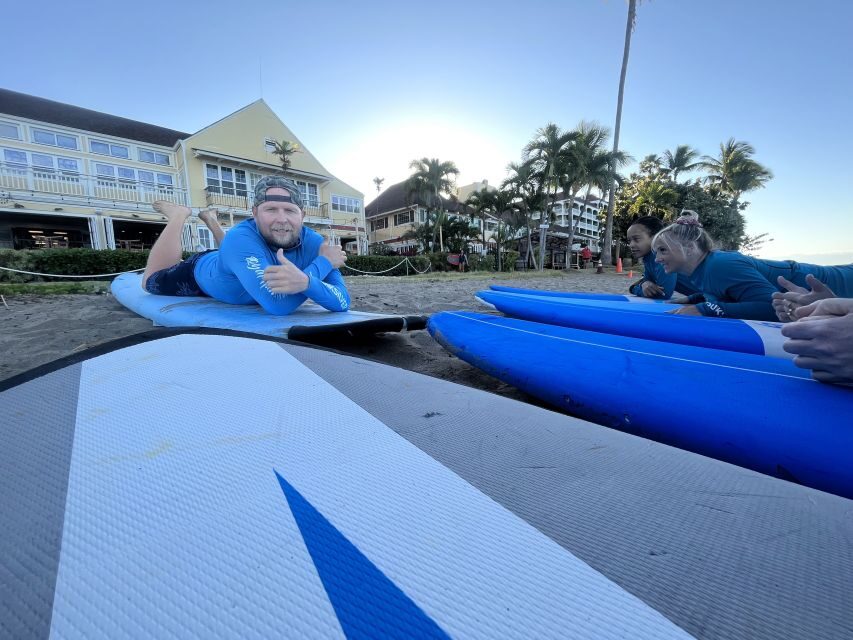
- Max 5 in the water so you get real attempts, not just lectures
- 15-minute land safety lesson before anyone heads into the break
- Beginner-friendly conditions in calm West Maui waters for learning wave basics
- Turn-based coaching: ride, rest, then ride again when the instructor calls you back
- Optional professional photo package with close-up shots you can buy afterward
Lahaina’s West Maui Setup: Why This Break Works for First-Timers
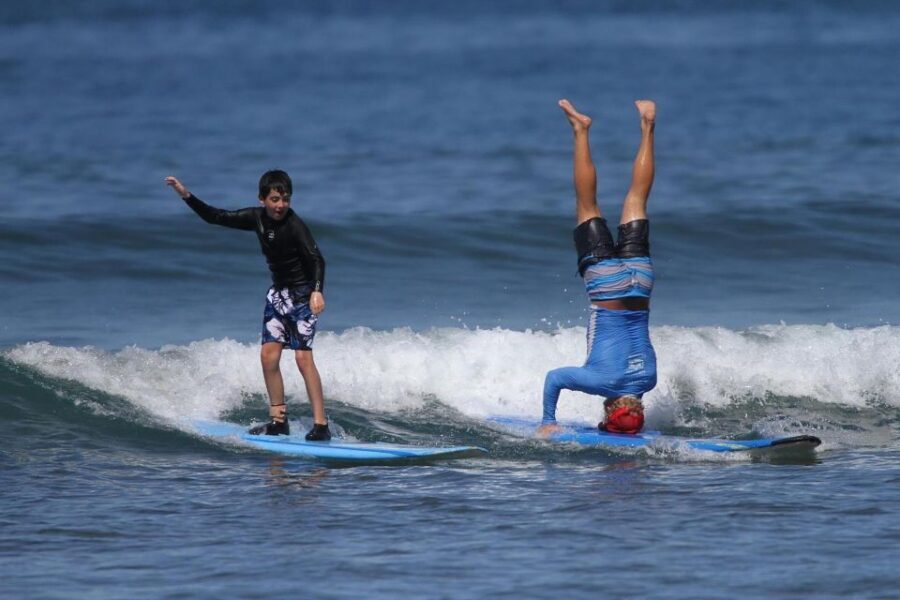
If you’re brand new to surfing, the hardest part isn’t the ocean. It’s the mental math: when do I paddle, where do I place my feet, and what do I do if I fail on wave one?
This lesson is built around that reality. They run it in West Maui near Lahaina, where the lesson is designed for beginner surfers and year-round surf. The big win for you is that you’re not trying to “figure it out” in random conditions. You’re learning in a controlled progression: land basics first, then your turn on actual waves, with the instructor guiding your technique.
Also, the class is set up so you’re not alone out there. One of the strongest themes from the experience is that instructors stay involved the whole time. People describe feeling comfortable and supported, even when it gets choppy or you’re nervous about the ocean.
That matters because surfing is equal parts skill and confidence. Good coaching doesn’t just teach what to do. It helps you believe you can do it.
You can also read our reviews of more tours and experiences in Maui



Meeting Point at Lahaina Guardrails: How to Show Up Smoothly
Logistics are simple, but you have to be on time.
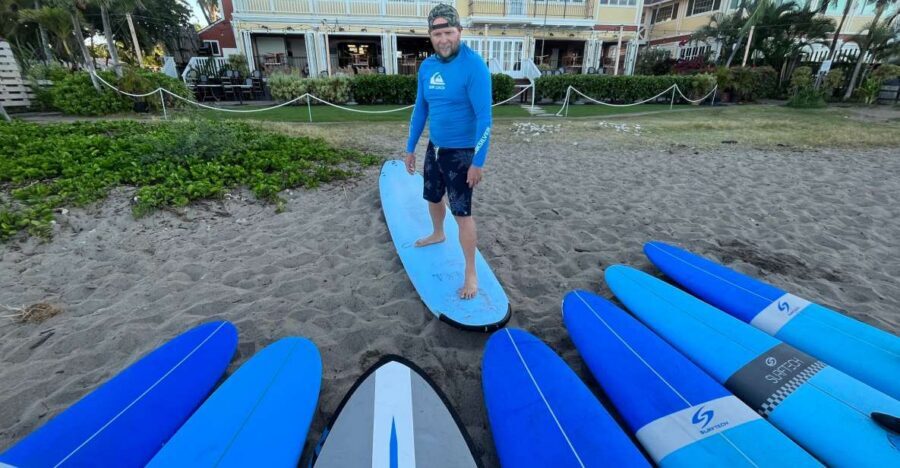
You check in 30 minutes before your lesson at 505 Front Street, Lahaina. You’ll sign a liability release form there, then head to the lesson area. The surfing location is at Lahaina at guardrails, between Puamana Beach Park and Launiopoko Beach Park.
Parking note: you’re asked to park at the yellow flag on the mountain side of the highway. I treat that kind of detail as time insurance. If you arrive late or parked far off, you’ll feel rushed, and surfing is better when you’re calm.
Once you’re set, the surf shop handles your setup. In practice, this reduces the most common first-timer stress: you don’t have to hunt down gear or guess how anything works.
What You Get in the Box: Gear That Actually Makes Learning Easier
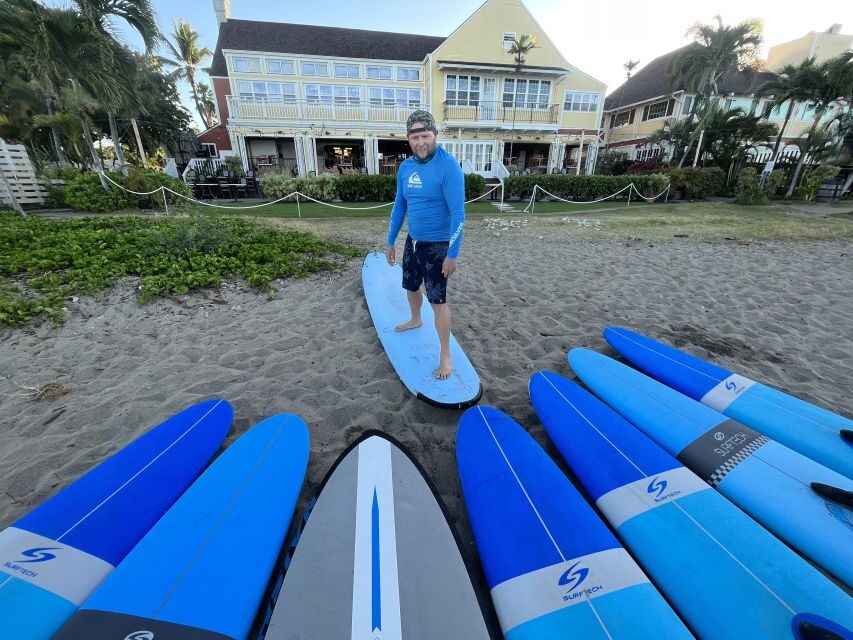
For $125 per person, the value isn’t just that they teach you. It’s that they give you the tools to practice comfortably.
Included gear:
- Surfboard
- Long-sleeve UV rash guard
- Water shoes
- Group surf instruction with a professional surf instructor
- An instructor who is CPR certified
- Small-group coaching (max 5)
Not included:
- Towel
- Sunscreen
- Swimsuit (you’ll need one)
Here’s how I’d think about it. When you’re learning, you don’t want to waste energy on discomfort. Rash guards help with sun and abrasion. Water shoes improve footing and reduce sand-glue frustration. And having boards provided means you start with the right equipment instead of borrowing something sketchy.
Practical tip: bring sunscreen anyway. One of the few things you’re explicitly told to pack is sunscreen, and the Maui sun can turn a fun lesson into a painful one fast.
The 15-Minute Land Lesson: Safety, Etiquette, and Fast Confidence
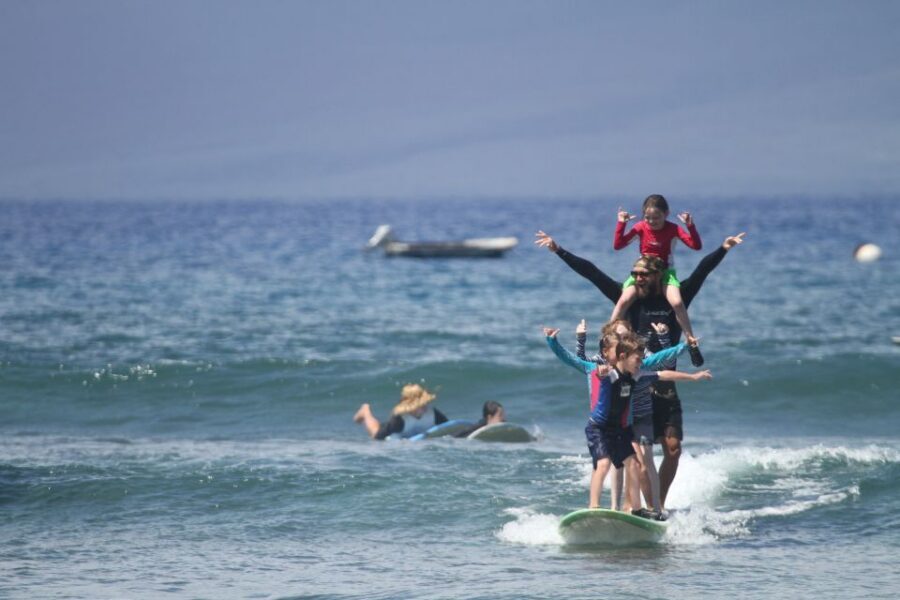
Before you hit the water, you get a short land lesson on safety and procedures. It’s about 15 minutes—just long enough to give you the rules without turning the day into a lecture.
You’ll cover the basics that matter in the ocean:
- how to move safely near other surfers
- what to expect during your turns
- how to follow instructor directions quickly
This pre-flight step helps beginners for two reasons. First, you learn the “why” behind what you’re about to do. Second, you reduce panic when you’re out there and everything feels louder than expected.
In several accounts, people mention getting instruction beforehand on dry sand, then moving into the waves. That progression is exactly what you want for your first time.
In the Water With Up to 5 Surfers: How the Coaching Works
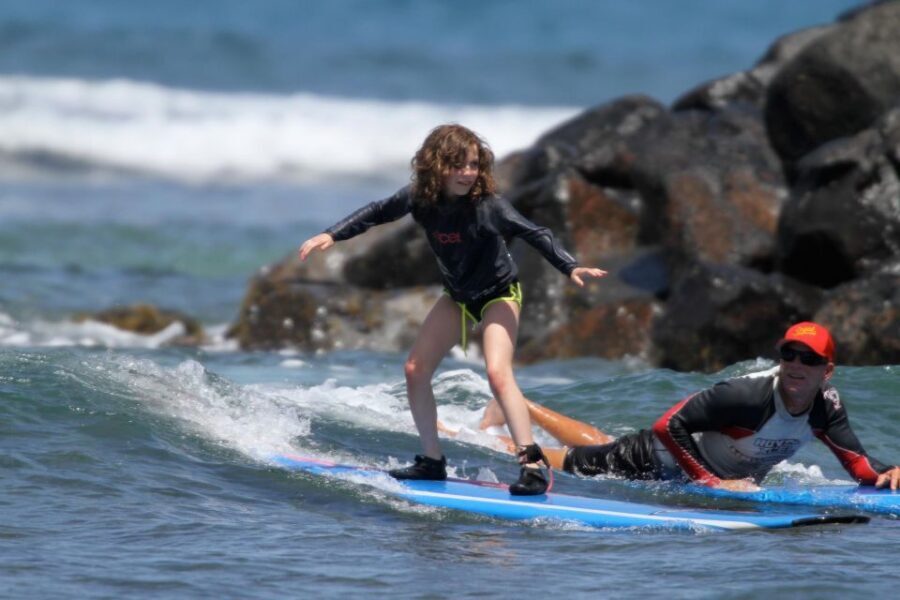
Once the group is ready, you head into the designated waiting area and start catching waves.
The structure is simple and very beginner-friendly:
- Each surfer gets their turn to ride.
- After your ride, you head back to the waiting area.
- The instructor signals the next turn when the group is reset.
Because the class size is capped at five, you’re not waiting forever. Some early rides may take time, especially if you’re learning paddling and timing. But the lesson generally starts moving faster once everyone gets the rhythm.
I also like that you’re not just left to the wave gods. In multiple experiences, instructors are described as patient and hands-on, giving direct feedback during turns, and helping you manage the hardest moment: getting out, then taking off.
One neat coaching detail that came up: instructors use real-world support to help beginners conserve energy and reposition. For example, one instructor was described as towing beginners back out by using a toe on the board when paddling was too much. It’s a small moment, but it can be the difference between quitting and getting a few more waves.






Learning Wave Technique and Etiquette (Without the Surf-Speak)

Surf lessons can be full of technical jargon. This one focuses on what you need to succeed in the next wave, not a dictionary.
You’re taught proper wave techniques and etiquette. For beginners, etiquette is not fluff. It’s how you avoid collisions and understand who has priority. And technique is how you turn a stall-and-fall session into an actual ride.
What you’ll likely work on during the lesson:
- how to paddle in a way that sets up your takeoff
- how to position your body so you don’t feel stuck or backwards
- how to react after a wipeout without losing the whole session
The best results reported are usually tied to clarity and patience. People mention feeling comfortable and successful, even on a first attempt. And many describe standing up quickly with the instructor’s support and cues.
The Pro Photographer: Your Souvenir Comes From Real Sessions
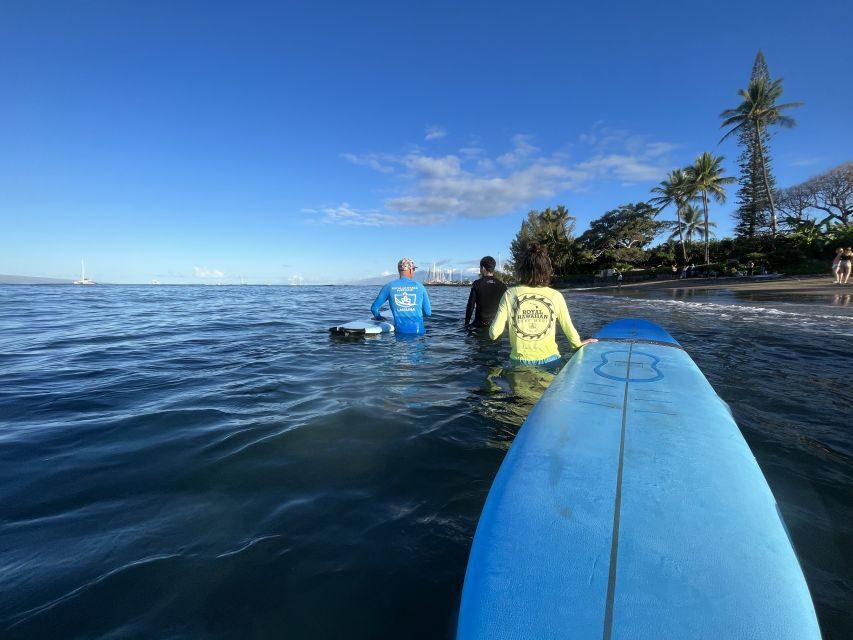
One of the quietly brilliant adds is the professional photographer who takes close-up shots throughout the lesson.
You don’t have to bring your phone for action photos. That’s not because the ocean will suddenly become a perfect photo studio. It’s because the photographer is there specifically for this moment: your first real wave.
After the class, you can check out your photos and purchase them. One person noted a photographer fee of about $25 per person (with payment options like cash, Venmo, or card). Prices can change, but the key point is this: the photos are optional, and they’re tied to your actual ride attempts.
If you’re on Maui for a short time, photos matter. Not because you need proof, but because the lesson becomes a memory you can actually revisit.
Timing: How the 2 Hours Really Feel
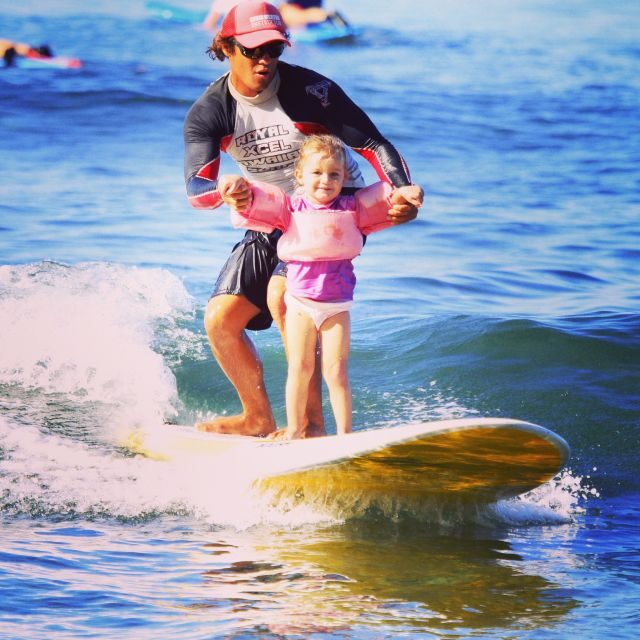
The stated duration is 2 hours total, measured from the time you leave the surf shop until the instructor signals you back in.
That time window is short enough to keep your energy up. Surfing is exhausting. Even if you’re athletic, you’ll feel your shoulders and legs. In practice, you’ll spend a lot of time waiting for turns and resetting, then short bursts of effort when you’re up.
If you finish early, you’ll have a beach area to sit on while the rest of the class wraps up. That’s important if you’re sore, winded, or just need a breather before you get back to the shop.
After the lesson, you carry your surfboards back to the shop, then head back to the beach to shower off with fresh water. You also return your surf gear, then you can look at the photos.
Price and Value: Is $125 Worth It for a Beginner Lesson?
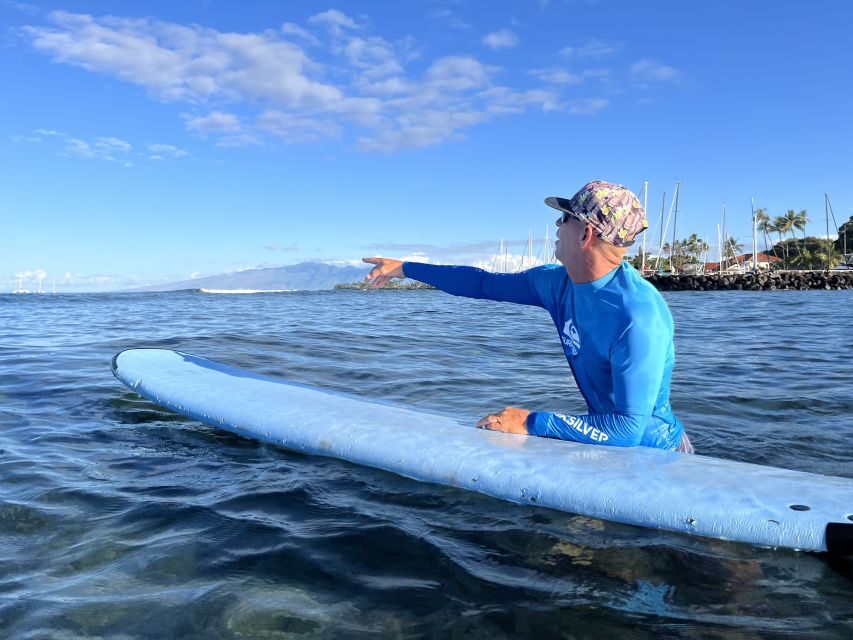
$125 for a 2-hour group lesson in Lahaina feels like a real number, not a cheap try-it-and-hope-it-works price. So the question is: what do you get for that money?
You get:
- instructor-led coaching with a max 5 group size
- surfboard + UV rash guard + water shoes
- an instructor who’s CPR certified
- time-on-waves built around turns
- optional professional photos
In many surf lessons, the hidden cost is inefficiency: too many students, too much shore time, and too little attention. Here, the small group format helps justify the price. You’re paying for time with an instructor and for gear that removes guesswork.
The photo option adds another layer of value if you want a tangible memory. And if you’re nervous about ocean conditions, paying for safety and guidance tends to be money well spent.
Who This Maui Lahaina Lesson Fits Best
This is a strong fit if:
- you’re a true beginner or close to it
- you want the structure of a guided group lesson
- you want personal attention without paying for private instruction
- you’re okay with doing a lot of work in the water for a short period
The lesson age limit is 10 years old and older for the group format. 9 and younger are recommended to do private or semi-private lessons instead. If you’re traveling with younger kids, plan accordingly.
It may also fit well for older teens and adults who want a confidence boost. Several accounts mention success across ages, including people in their 60s and mixed groups of family members.
One Caution: Instructor Match and Ocean Reality
I’ll be honest. There’s one reported experience where the instructor’s behavior felt unkind at the end of the lesson, including scolding related to an incident near rocks.
That’s not something I can ignore because it affects how you feel in the moment. The lesson is designed around safety and comfort, but like any service, the human factor matters.
Your best move is to go in with a beginner mindset and be ready to follow instructor directions quickly—especially around rocks, leash handling, and where you’re told to go.
Also, ocean conditions can change. One person noted rainy and choppy weather but still had a good time. Surf learning is always weather-dependent. The instructor and group make the difference.
Should You Book This Lahaina Group Surf Lesson?
If you want a beginner surf experience in Maui that’s built around small-group attention, included gear, and hands-on coaching, I think it’s a smart booking.
Book it if:
- you want the classic Maui surf lesson vibe without the “too many people” problem
- you value time in the water and clear coaching cues
- you’d like optional photos taken during your actual attempts
- you’re ready to work hard for a couple hours and then relax
Skip or consider private/semi-private if:
- you’re traveling with a child 9 or younger (group age limit starts at 10)
- you know you need extra patience or slower pacing
- you’re worried about being in a mixed group and would rather have one-on-one attention
FAQ
Where do I check in for the Maui Lahaina group surf lesson?
You must check in 30 minutes prior at 505 Front Street, Lahaina, where you’ll sign a liability release form.
Where is the lesson located?
The lesson operates at Lahaina at guardrails, between Puamana Beach Park and Launiopoko Beach Park.
What gear is included, and what should I bring?
Included: surfboard, rash guard, and water shoes. Bring sunscreen. Not included: a towel, swimsuit, and sunscreen.
How many people are in the group?
This is a small group capped at up to 5 participants.
Are there age requirements?
Group lessons are for age 10 and older. 9 and younger are recommended to sign up for private or semi-private lessons.
Is there a photographer during the lesson?
Yes. There is a professional photographer taking close-up shots throughout the lesson, and you can purchase the photos afterward.