REVIEW · MAUI
2 Hour Private Group Surf Lesson in Lahaina Maui
Book on Viator →Operated by Keep It Simple Hawaii Surf School & Private Tours · Bookable on Viator
First-wave nerves melt fast. In Lahaina, this private surf lesson pairs you with a 3-to-1 student–instructor ratio (for groups up to 12 from the same family or travel group), so you get real feedback instead of watching other people struggle. I love how the lesson starts with a 20–25 minute land session that builds confidence quickly, and I also like that most of the 2 hours is spent in the water with direct in-water support and wave pushing. One thing to consider: the ocean day depends on good weather, and essentials like towels, sunscreen, and water aren’t included.
You also get flexibility with two lesson times, plus the pace is tailored to your group’s ability—first timers, kids, and experienced surfers can all be handled in the same session. The good news is you’re not hunting for gear: you receive a surfboard, water shoes, and a rashguard to make the whole experience feel simple.
In This Review
- Key Highlights Worth Noticing
- Why Lahaina Surf Lessons Feel More Relaxed
- The 20–25 Minute Land Lesson: Where You Actually Learn to Surf
- In-Water Coaching That Focuses on Catching Your First Waves
- Included Surf Gear and What You Still Need to Bring
- Who This Private Lesson Is Best For (And Why)
- Price and Value: What $125 Really Buys You
- Timing, Location, and How the Day Runs
- Weather, Safety, and the Reality of Learning Waves
- Should You Book This Private Surf Lesson in Lahaina?
- FAQ
- How long is the private surf lesson?
- What does the price include?
- Is this a private experience?
- How many people are in the group?
- Where does the lesson start?
- Is the lesson offered in English?
Key Highlights Worth Noticing
- Private, not mixed: Up to 12 people from your own family or travel group, with no strangers added to your class.
- 3-to-1 coaching time: A tight student–instructor setup that helps you improve fast.
- Land lesson first (20–25 min): Safety, paddling, popping up, and how to ride a first wave—before you go out.
- Most time in the water: Instructors keep coaching as you work your way into catching waves.
- Included gear: Surfboard, water shoes, and a rashguard—just bring what’s missing.
Why Lahaina Surf Lessons Feel More Relaxed

Lahaina is one of those Maui bases where you can feel the surf culture without the chaos. A private group lesson is the big reason this experience feels calmer: you’re not stuck dodging unfamiliar surfers while trying to learn basics. Instead, your instructor team can keep your group organized and focused, especially right after the land lesson.
I also like the way the format supports real confidence. Even when your group includes nervous first-timers and kids who are curious but unsure, the coaching is built around your level. In past sessions, instructors like Z, Mac, Mario, and Mack have been praised for being patient and positive—exactly what you want when you’re learning how to paddle, pop up, and read the moment a wave offers you a shot.
The other nice touch: there’s room for adults and kids to share the same session. One of the recurring themes is that multi-age groups often come out successful, not just one or two people. If you’ve got a whole ohana to teach, this is a smart way to do it together.
You can also read our reviews of more private tours in Maui



The 20–25 Minute Land Lesson: Where You Actually Learn to Surf
The lesson doesn’t start with you sprinting into the ocean and hoping for the best. You’ll get a 20–25 minute land lesson first, and it covers the stuff that usually makes surfing either click fast or feel frustrating for the whole trip.
Here’s what that land time is for:
- Safety basics: how to handle yourself around waves and other surfers in a practical way.
- Paddling technique: how to position your body so you can get moving instead of fighting the water.
- Popping up: a step-by-step way to shift from lying prone to a stable stance.
- How to ride your first wave: what to watch for so you can understand what your body is supposed to do once you’re up.
In many lessons, the instructor also demonstrates from shore so you get a clean mental picture of the right movement before you attempt it. In the feedback from real groups, instructors like Mario and Luke have been specifically praised for giving clear on-shore guidance and then adjusting coaching once people are in the water.
This land-to-water flow matters. If you’re learning with kids, it keeps them from getting overwhelmed. If you’re an adult beginner, it stops that panicky feeling that comes from not knowing what you’re supposed to do next. Either way, you’re setting yourself up for that first real moment of standing and catching a wave.
In-Water Coaching That Focuses on Catching Your First Waves
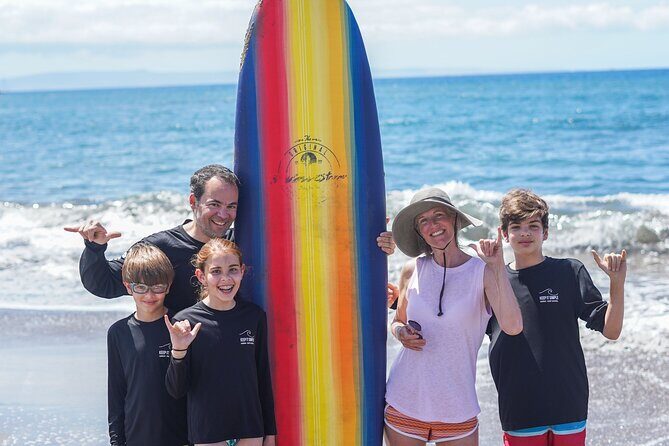
After the land lesson, the rest of your ~2 hours is spent in the water. This is where you’ll feel the value of the private format. Your instructors can watch you closely, correct small issues, and help you try again immediately—no waiting for the group to catch up.
A few things you can expect once you hit the lineup:
- Hands-on coaching: instructors provide direct feedback based on what they see.
- Wave pushing: support in getting into position so you can actually catch waves while learning.
- In-water support: help that reduces the guesswork when waves are coming fast or you lose your timing.
This is also where the tight ratio shows up. A 3-to-1 setup makes it easier for instructors to handle different skill levels within the same group. That’s a big deal if your party includes a mix like teens, adults, and younger kids—some sessions have gone from first-timer to catching waves repeatedly by the end, including people who were initially nervous.
In the real-world stories attached to this experience, instructors have also been praised for giving tips after each attempt—so you don’t repeat the same mistake three times in a row. If you’re someone who learns best with quick feedback loops, this format matches that style well.
One fun bonus that you might catch on certain days: as you wait for sets, you could spot whales playing in the water. It’s not something you can plan on, but it’s a reminder that Maui surf days can come with more than just waves.
Included Surf Gear and What You Still Need to Bring
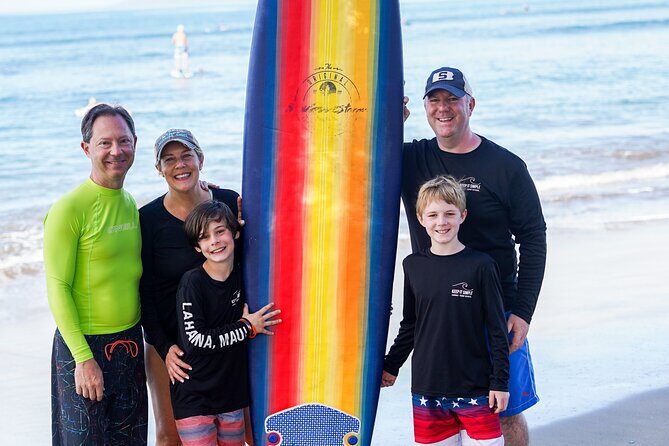
This lesson includes what you’ll need to get on the board:
- Surboard
- Water Shoes
- Rashguard
That’s a practical win because it saves packing space and avoids last-minute gear rentals. Rashguards also help with comfort while you’re learning (and they can reduce the irritation you’d otherwise get from repeated paddling and wiping out).
But there are a few notable items that are not included:
- Towels
- Sunscreen
- Water
So I’d plan for those basics. Sunscreen is especially important because you’re lying on your stomach while you wait for waves, and sun can hit your back and legs fast. In one set of notes from groups who did the lesson, people recommended putting extra sunscreen on areas that are easy to miss when you’re focused on paddling.
Also think about hydration. You’re out there working—paddling, standing, trying again—and you’ll want water before and after.
If you’re trying to keep the day easy, pack a small kit with:
- sunscreen
- water
- towel
- a swimsuit-ready change of clothes for afterward
That way you’re not trying to solve basic problems mid-lesson.
Who This Private Lesson Is Best For (And Why)
This is built for groups that want personalized coaching without mixing with strangers. It’s designed for groups up to 12 from the same family or travel group, and it stays private for your people only.
It’s a great fit if:
- You have kids and adults together and you want everyone to learn without splitting your plans.
- You’re traveling as a family and want a shared activity that still feels tailored.
- You’re a first-timer who gets anxious and needs calm, patient instruction.
- You have a mixed ability group and you don’t want a one-size-fits-all class.
Age ranges mentioned in the feedback include everything from kids around 10 up through adults and teens. One of the strongest patterns: instructors consistently keep people safe while pushing for progress, and they celebrate small wins—like standing even once at the beginning—so people stay motivated.
If you’ve already surfed before and want to improve, the private format can still be helpful because you can get adjustments based on what you’re doing wrong that day, instead of hearing generic advice for the whole crowd.
You can also read our reviews of more tours and experiences in Maui


Price and Value: What $125 Really Buys You
At $125 per person for a roughly 2-hour private lesson, the value depends on one thing: how much you care about learning efficiently without time wasted.
Here’s what you’re getting for the money:
- a private group format (not mixed with strangers)
- a 3-to-1 student–instructor ratio for groups up to 12
- instruction that starts on land with safety and core skills
- substantial in-water coaching time
- gear included (board, water shoes, rashguard)
When you compare this to crowded surf lessons, the price can start to make sense quickly. In a larger group, you often spend more time waiting, watching, or taking turns. In this setup, you’re more likely to get repeated attempts with coaching between tries.
There’s also an optional photography angle. Some sessions reported a photographer on shore, with photos available for purchase afterward—one group cited $110 for three people. That’s not required, but it’s a nice add-on if you want proof that you actually got up and rode waves on your first Maui day.
So for $125, you’re paying for time, attention, and gear—then you get the payoff of real wave time under guidance.
Timing, Location, and How the Day Runs
The session is about 2 hours total, and you can choose from two lesson times. That helps a lot if you’re juggling naps, family schedules, or trying to avoid the hottest part of the day.
The meeting point is:
Hawaii 30HI-30, Lahaina, HI 96761, USA
Your lesson ends back at the meeting point. Confirmation happens at booking, so you should have what you need ahead of time.
What I recommend: arrive early enough to settle. Even if the instruction is friendly and straightforward, you’ll enjoy it more if you’re not rushing to suit up. Once you’re in your rashguard and ready, you’ll move into that land lesson portion and get oriented fast.
Weather, Safety, and the Reality of Learning Waves
Surfing is weather-dependent, and this experience is no exception. The lesson requires good weather, and if poor conditions cancel the activity, you’ll be offered another date or a full refund.
That matters because surfing isn’t about forcing the ocean to cooperate. The coaching is designed to help you learn safely, which is why the session is structured: start on land, then transition to in-water support.
With a tight ratio, your instructors can also respond better if conditions shift. You’re not stuck watching others figure out what to do. Instead, the coaching can focus on keeping your group moving through the basics with the right safety rhythm.
Also, remember what the ocean feels like when you’re brand new. You’ll likely work hard paddling and adjusting your timing. The groups that have had the best outcomes often come prepared—bringing what’s needed for sun and hydration—so they can stay comfortable enough to keep trying.
Should You Book This Private Surf Lesson in Lahaina?
I’d book it if you want a beginner-to-waves experience that’s calm, organized, and focused on getting you standing on a board without wasting time. The private format and 3-to-1 coaching are the big selling points, especially for families or mixed-age groups.
If your group’s priorities are:
- more instructor attention
- a low-stress way to learn
- included gear
- a real shot at catching waves quickly
…this lesson fits well.
Just plan for the practical stuff: bring sunscreen, water, and a towel since they aren’t included, and keep your fingers crossed for good weather. If that’s manageable, this is one of the most satisfying Maui activities you can choose.
FAQ
How long is the private surf lesson?
It runs for about 2 hours (approx.).
What does the price include?
The lesson includes a surfboard, water shoes, and a rashguard. Towel, sunscreen, and water are not included.
Is this a private experience?
Yes. It’s private for your group only, and your group won’t be mixed with strangers.
How many people are in the group?
Your instruction uses a 3-to-1 student–instructor ratio, and groups can be up to 12 people from the same family or travel group.
Where does the lesson start?
You meet at Hawaii 30HI-30 in Lahaina, HI 96761, USA, and the activity ends back at the meeting point.
Is the lesson offered in English?
Yes, it’s offered in English.
If you tell me your group size and ages (and whether anyone is a true first-timer), I can help you figure out what lesson time to pick and how to pack for a smooth surf day in Lahaina.