REVIEW · MAUI
Lahaina: Day or Sunset Whale Watching Tour with Naturalist
Book on GetYourGuide →Operated by Dive Maui/Hawaiian Rafting Adventures · Bookable on GetYourGuide
Seeing humpbacks on a small raft feels closer than most big-boat trips. I especially like the custom-made inflatable raft setup and the chance to hear whale songs through the hydrophone and speakers while you watch them surface and move.
What makes this one stand out is the day trip style: you head out from Lahaina, work in the Maui whale sanctuary area, and you get a naturalist on board explaining what you’re seeing as it happens. The possible downside is the ocean can get choppy when the weather turns windy, and this kind of ride isn’t a great match for everyone’s health or mobility.
For the best experience, show up ready for a working marine environment: good weather matters, glass items aren’t allowed, and you’ll want to think ahead if you’re prone to motion sickness.
In This Review
- Key takeaways before you go
- Lahaina whale watching on a raft: what you’re really paying for
- Getting to Auau Channel: timing and practical logistics
- What to bring (and what to leave behind)
- Maui Nui whale sanctuary: what you’re looking for
- The hydrophone experience: hearing whale songs while you watch
- Naturalists and captains: why the guide talk matters
- What you’ll likely hear about
- The ride itself: inflatable raft feel, wind, and motion
- Who this trip fits best
- Price and value: is $80 a fair deal?
- How the Lahaina timing works for the rest of your Maui day
- Should you book this Lahaina whale watching tour or skip it?
- FAQ
- How long is the whale watching tour?
- Where do I meet for the tour?
- Does the tour include hotel pickup and drop-off?
- Is there a naturalist on board?
- Are food and drinks included?
- What’s included for whale audio?
- Is there a guarantee for whale sightings?
- What items aren’t allowed on the tour?
- What happens if poor weather cancels the tour?
- Is the tour suitable for young children or pregnancy?
Key takeaways before you go
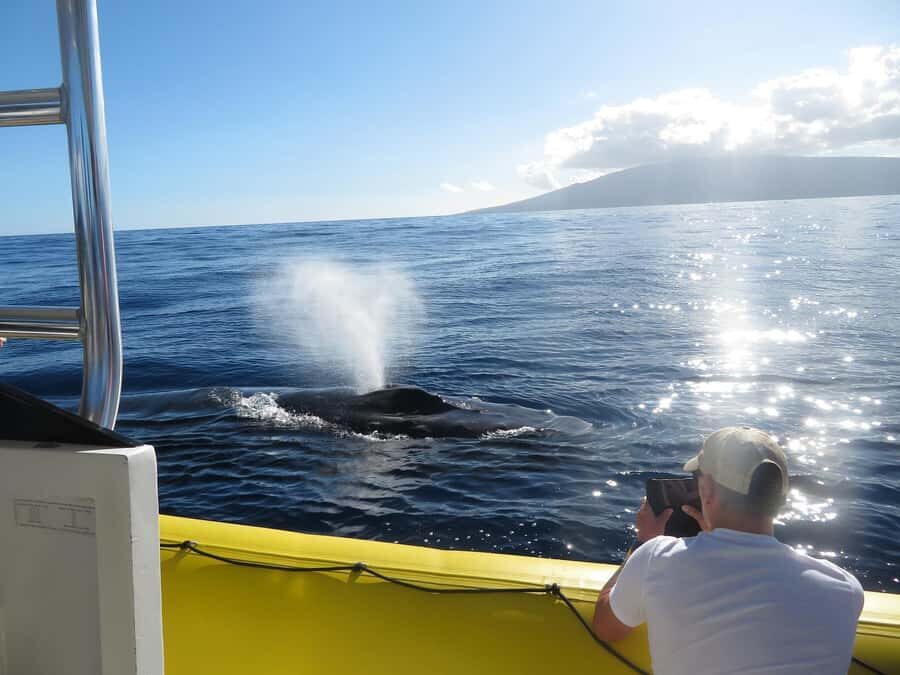
- Small-raft positioning can put you at a more intimate viewing distance than larger vessels
- Hydrophone + speakers let you hear whale songs and get context for behavior
- Maui Nui sanctuary focus helps you spend time where humpbacks are most likely to be active
- Naturalist-led education turns random sightings into a real understanding of mating, calves, and migration
- Guaranteed sightings or a free return trip if you don’t connect on the day
Lahaina whale watching on a raft: what you’re really paying for
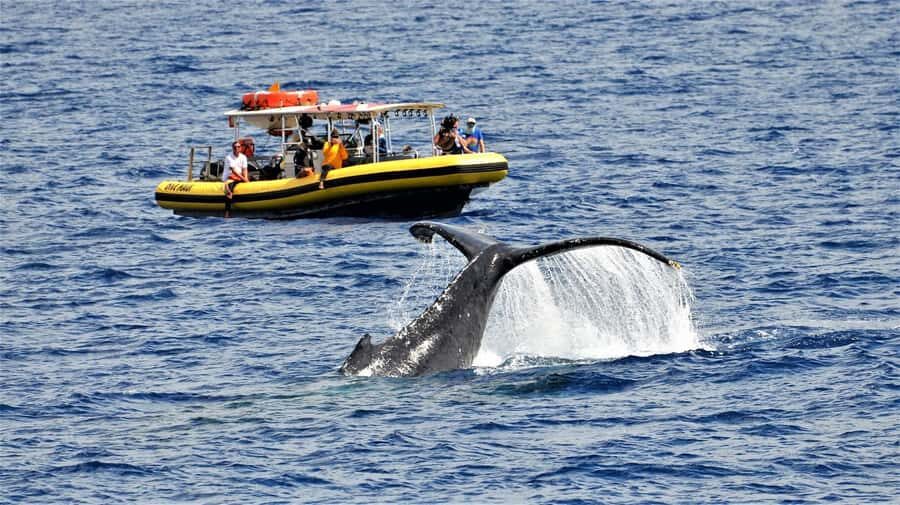
At $80 per person, this trip sits in the midrange for whale watching in Maui, but the value comes from how the experience is built. You’re not just buying time on the water. You’re buying (1) a smaller, more intimate raft format and (2) a naturalist-style explanation that helps you understand what’s happening when a whale surfaces, breaches, or swims close to the boat.
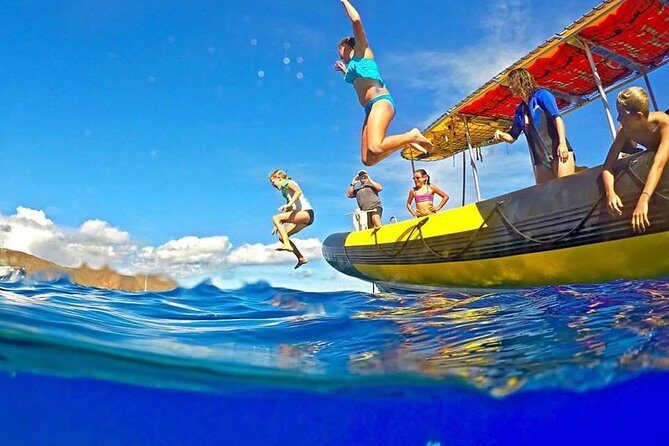
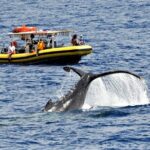
The “raft” part matters because it changes the feel of the encounter. Higher boats can keep whales at a distance, even when you’re technically close. An inflatable craft can keep you lower and closer to the waterline, which is often what people remember later: the way spray feels part of the scene, and the sense that you’re watching whale life unfold right under your view.
Then there’s the tech: the onboard hydrophone. Seeing a whale is great, but hearing it can make the whole trip feel more real. With speakers carrying the whale song (and related sounds) into the cabin/boat area, the naturalist can connect behavior to sound, like calling, communicating, or moving through the water column. If you’ve ever wondered what those famous whale songs sound like beyond recordings, this is one of the few ways to experience it live while you’re still watching the same animals.
You can also read our reviews of more evening experiences in Maui



Getting to Auau Channel: timing and practical logistics
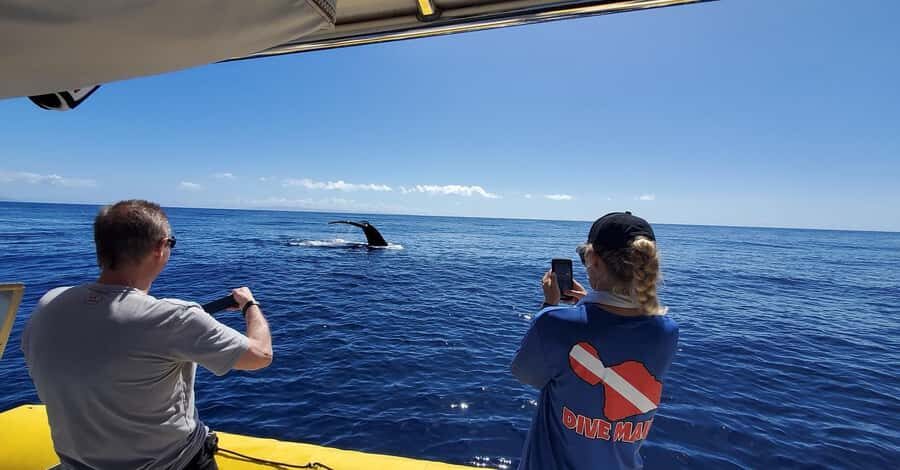
Your day starts at 1223 Front St, where you’ll meet at Dive Maui. From there, it’s a short walk to the harbor area and then out toward Auau Channel for the main viewing time. The ride window is typically about 2 hours on the water, with the full experience landing in the 90 minutes to 2 hours range depending on conditions and scheduling.
Why this matters: whale watching in Maui is a weather-and-location game. Staying flexible and leaving on time can mean the difference between finding active whales and spending time cruising around with nothing much happening. The operator emphasizes punctual departures, so plan to arrive a few minutes early rather than exactly at the listed meet time.
Also, it’s a no-frills day-trip setup. There’s no hotel pickup or drop-off, and no food or drinks included. That’s fine if you treat it like an activity you build around: quick meal before you go, water on hand, and a plan for what you’ll do after you’re back in Lahaina.
What to bring (and what to leave behind)
A few details can make your life easier on the water:
- Bring what you need for sun and splash (wind can still slap you even on bright days)
- If you get motion sickness easily, consider packing what works for you. One common tip from previous riders: taking something like Dramamine can help when the boat feels a bit rocky in wind
- No glass objects are allowed, so skip glass bottles and glass containers and opt for plastic or cans
Maui Nui whale sanctuary: what you’re looking for
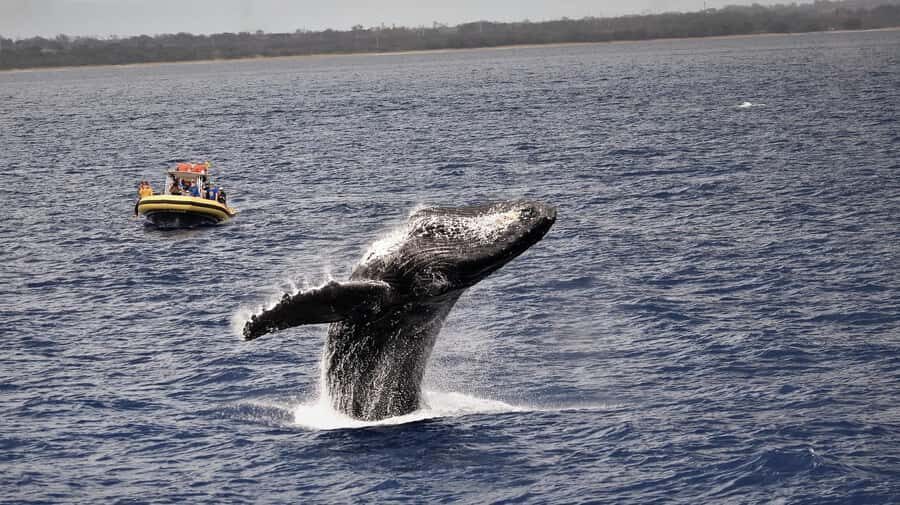
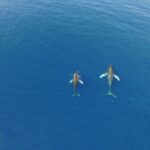
This is aimed at humpback whales in the Maui-area migration season. Each winter, humpbacks move into waters around Maui to mate and give birth. That sets up the most exciting scenes: adults escorting others, mothers and calves staying close, and lots of surface activity when whales are communicating or feeding while still moving through their route.
On the water, you’re likely to encounter different kinds of whale behavior, depending on where the pod is at that moment:
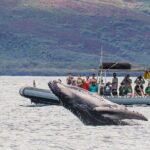
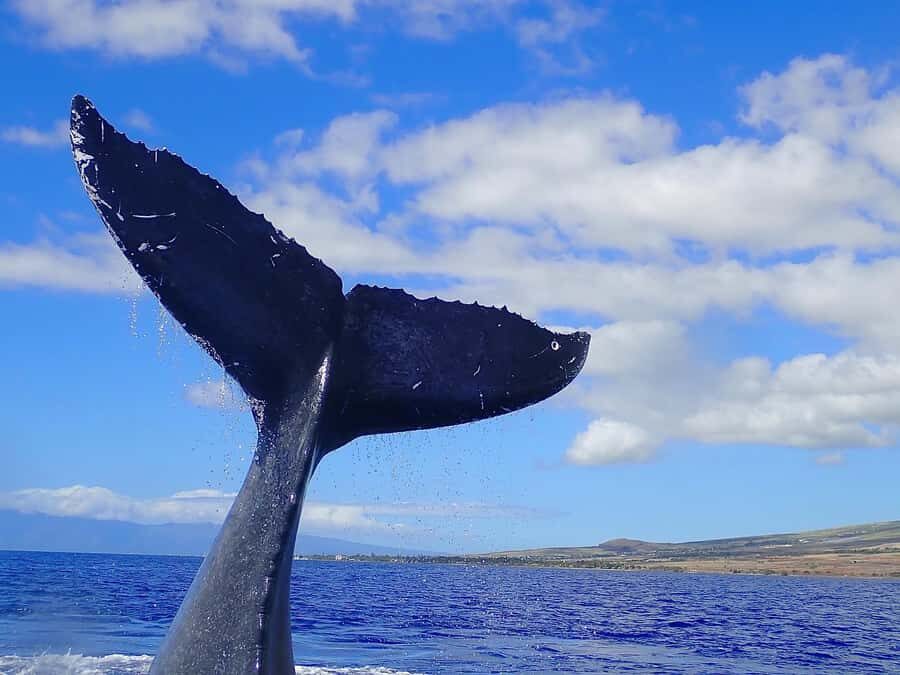
- Breaches and splashes, when whales rise sharply and land with a spray effect
- Curious close passes, where whales turn and move around the boat area
- Longer stays nearby, when a group hangs out in a productive patch of water rather than moving right through
The whale activity level can vary. Even on a great tour, nature decides the show. The operator’s response to that is part of the value: the experience includes guaranteed sightings, and if you don’t get them, you can receive a free trip for another day. That’s not a guarantee of a specific number of breaches, but it does shift the risk away from you.
The hydrophone experience: hearing whale songs while you watch
One of the most practical reasons this tour earns high marks is the sound component. The hydrophone brings whale audio up from below the surface, and the boat’s high-quality speakers make that sound clear enough to follow along while a naturalist explains what you’re hearing.
This changes the experience in two ways:
- You stop treating sightings as luck.
Instead of only watching for surfaces, you get cues about whale presence and behavior through the audio. Even if whales aren’t right at the surface every minute, the sound gives you a more continuous connection.
- You learn faster in real time.
Naturalist talk hits differently when it’s tied to what’s happening right then: a call, a pattern, or a shift in movement.
If you like marine biology, soundscapes, or just want something beyond “look, there’s a whale,” this is a big part of why the trip feels complete.
You can also read our reviews of more whale watching tours in Maui


Naturalists and captains: why the guide talk matters
This activity is led by a naturalist on board, and that’s where you get the real “aha” moments. A good naturalist doesn’t just point out whales. They help you interpret what you’re seeing: why humpbacks group up, what adults may be doing when calves are present, and how the pod’s movement connects to the surrounding marine environment.
And then there’s the captain’s job: getting the raft to the right spot at the right time. Multiple crews have been described as getting straight to whales quickly and repositioning with the sea conditions in mind. You can feel the difference when the captain is actively hunting for encounters versus following a generic route.
You may meet different staff members across days, and names that show up include naturalists like Rene and Marina, and captains such as Captain Joe, Captain Mark, and others. Regardless of the specific team, the best part is consistent: clear explanations plus strong hands on the helm.
What you’ll likely hear about
Based on the structure of the trip and the way staff describe humpback behavior, expect talk that connects:
- seasonal migration to what’s happening now
- mating and calving context (why winter matters here)
- how whales use sound, surface behavior, and movement patterns
- what to look for so you can spot changes quickly without needing to be a marine expert
The ride itself: inflatable raft feel, wind, and motion
It’s an ocean tour on a smaller craft. That can be a dream when seas are calm, and it can be a test when the wind pushes waves closer together.
Here’s the key consideration: the experience requires good weather. If it’s canceled due to poor weather, you’ll be offered a different date or a full refund. That’s important for comfort and safety.
Even when the day goes, wind can still make the boat feel a bit rocky for stretches. Some people find the ride manageable and report that it can smooth out toward the end. If you have a sensitive stomach or you’ve had motion sickness on boats before, I’d treat this as “prep day,” not “wait and see.”
Who this trip fits best
The tour isn’t suitable for everyone. It’s listed as not suitable for:
- children under 2 years
- pregnant women
- people with back problems
- people with heart problems
- wheelchair users
If any of those apply to you or someone in your party, it’s worth rethinking the format. The raft and ocean conditions can add physical strain even when everyone is doing their best.
Service animals are allowed, which is a helpful practical note for many families.
Price and value: is $80 a fair deal?
Let’s talk money like grown-ups. $80 per person buys:
- a day-trip style outing from Lahaina
- a naturalist-led learning experience
- a smaller-raft format that can increase your chance of close encounters
- hydrophone whale song access
- and a safety net via guaranteed sightings or a free return trip
So what are you really paying for?
You’re paying for the combination of experience quality and risk reduction. Whale watching is never fully controllable. But when a tour includes both an educational guide component and a guarantee that you’ll connect (or return another day), it tilts the value toward you.
If you compare to bigger boats where whales can stay at a distance and the narration can feel generic, the raft format plus hydrophone often makes the difference.
If you’re a casual observer who just wants the simplest chance at seeing whales with minimal learning, you might feel like paying $80 is more than you need. But if you want the story behind the sighting and the sound experience in real time, this is money well spent.
How the Lahaina timing works for the rest of your Maui day
One of the nice parts of this is the trip length. It’s short enough that you’re not trapped on the ocean for half a day, but long enough to find whales and have a meaningful viewing run.
You’ll start at 1223 Front St, do a short walk, then spend the bulk of the time out around Auau Channel, and return back to Dive Maui at the same address.
That means it fits neatly into a day where you:
- want something unforgettable without giving up your whole daylight window
- plan to eat and relax in Lahaina afterward
- have multiple activities booked and don’t want one to blow up the schedule
Should you book this Lahaina whale watching tour or skip it?
If you’re deciding today, here’s my straight answer.
Book it if:
- you want a more intimate feel via a custom inflatable raft
- you care about explanation, not just spotting
- hearing whale songs through the hydrophone is part of your must-do list
- you like the idea of a guarantee (or free return) when whales don’t cooperate
Consider skipping or switching tours if:
- you’re not able to handle choppy water or you’ve had serious motion sickness
- anyone in your group falls into the listed non-suitable categories (pregnancy, heart/back issues, wheelchair use, or very young children)
- you’re traveling on a tight schedule that can’t handle weather-related date changes
My final tip: plan for sun, wind, and ocean movement even on a good day. Arrive on time at Dive Maui, skip anything glass, and if you’re prone to nausea, take something that works for you before you’re out there.
FAQ
How long is the whale watching tour?
The tour lasts about 90 minutes to 2 hours, depending on the starting time and on-the-water conditions.
Where do I meet for the tour?
Meet at Dive Maui at 1223 Front St. Parking is available along Front St or at the Lahaina Cannery Mall.
Does the tour include hotel pickup and drop-off?
No. Hotel pickup and drop-off are not included.
Is there a naturalist on board?
Yes. Whale watching includes a naturalist as the live guide.
Are food and drinks included?
No. Food and drinks are not included.
What’s included for whale audio?
You’ll have access to a hydrophone and speakers so you can hear whale songs.
Is there a guarantee for whale sightings?
Yes. The trip is described as having guaranteed sightings or a free trip for another day if you don’t get them.
What items aren’t allowed on the tour?
Glass objects are not allowed.
What happens if poor weather cancels the tour?
If the tour is canceled due to poor weather, you’ll be offered a different date or a full refund.
Is the tour suitable for young children or pregnancy?
It is not suitable for children under 2 years and not suitable for pregnant women.