REVIEW · MAUI
Road to Hana Halfway and Haleakala National Park
Book on Viator →Operated by Aloha Eco Adventures · Bookable on Viator
Two volcanoes in one long, scenic day. This Haleakalā plus Road to Hana combo gives you both the high-altitude wonder of Maui’s dormant volcano and the famous rainforest drive down to the coast. The Haleakalā portion is built around the summit experience (up to 10,023 feet) and even includes rare access options for the kind of sunrise views that started pulling visitors here in the 1800s.
I really like that this day is structured to give you strong payoff without feeling like you’re rushing stop-to-stop. You’ll get a short crater hike (Pa Ka‘oao Trail) plus observatory time, and the Road to Hana side is packed with quick, photo-friendly nature hits like Rainbow Eucalyptus and the bamboo forest. The other big win is what you’re eating and drinking: bottled water, juices, soda/seltzers, and lots of snacks, with parking fees covered for the Haleakalā portion.
One thing to think about before you book: it’s a long day on curvy roads, and the pacing can vary a bit in practice. If you’re sensitive to motion sickness or you’re hoping for a very strict timing at every single stop, plan for a little flexibility.
In This Review
- Key takeaways before you go
- Why this Haleakalā-to-Hana day works so well
- Haleakalā summit: your first big ticket item at 10,023 feet
- The Pa Ka‘oao Trail crater overlook: short hike, strong views
- Haleakalā High Altitude Observatory: Science City at 10,000 feet
- Ho‘okipa Beach Park: honu turtles and trade-wind windsurfing
- Road to Hana magic: waterfall walls, Rainbow Eucalyptus, and bamboo cathedral
- Ke‘anae Point and taro fields: culture plus lava views
- Snacks, coffee, and how the day stays manageable
- Pua‘a Ka‘a State Park and the waterfall break you’ll remember
- Getting in the right headspace: pace, motion sickness, and comfort
- Should you book Aloha Eco Adventures?
- FAQ
- How much does the tour cost?
- How long is the tour?
- Is hotel pickup available, and where does it start?
- What’s the maximum group size?
- What parts of Haleakalā are included?
- Does the tour include admission tickets?
- Is food and drinks included?
- Is gratuity included in the price?
- What happens if weather is poor?
- What is the cancellation policy?
Key takeaways before you go
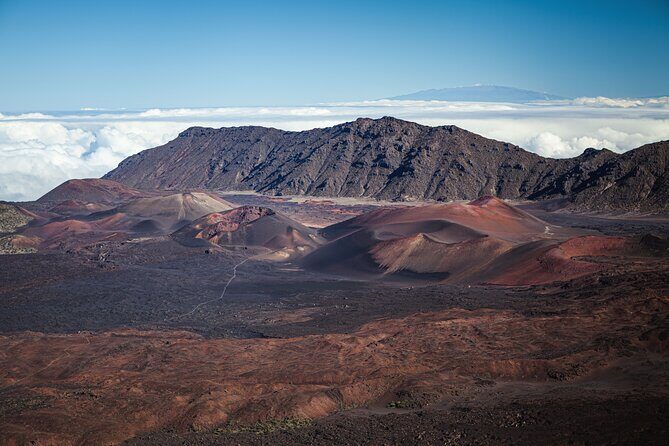
- Permitted Haleakalā access with options tied to sunrise viewing
- Pa Ka‘oao Trail (about 0.4 miles) for a crater overlook that’s better than the visitor-center view
- Haleakalā High Altitude Observatory included, located at high elevation and run by the University of Hawaii
- Ho‘okipa Beach Park honu spotting plus windsurfing in steady trade winds
- Road to Hana photo hits from the van: Rainbow Eucalyptus and bamboo “tunnel” vibes
- Max 11 travelers in a smaller group setup (reported as an 11-passenger van)
Why this Haleakalā-to-Hana day works so well
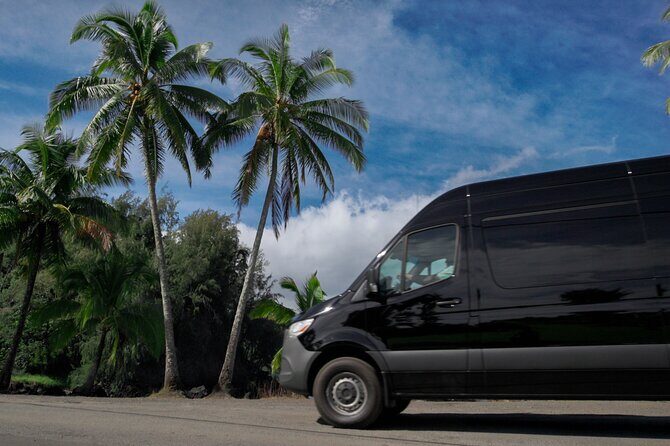
This is the kind of tour that makes sense if you want Maui highlights without spending your whole vacation driving, parking, and figuring out timing. You’re doing two “icon” regions in one go: first the summit world of Haleakalā, then the wet, twisting Road to Hana corridor with waterfalls, forests, and small coastal stops.
You also get a sensible mix of big wow moments and quick breaks. Haleakalā is the slow, altitude-heavy part. Road to Hana is the grab-your-camera part. Between those, the day is softened by included snacks and drinks, which matters because you’ll likely be out close to 10 hours.
You can also read our reviews of more tours and experiences in Maui.

Haleakalā summit: your first big ticket item at 10,023 feet
Your day begins with Haleakalā National Park. You’re heading up to the summit area of Maui’s dormant volcano, with the top experience reaching 10,023 feet above sea level. At this height, the weather can feel like a different world compared to the coast, so it’s worth thinking about layers even if Maui temps are warm where you start.
This portion is also special because it’s tied to authorized access for Haleakalā tours. One of the selling points here is the chance to witness sunrise views that have attracted visitors for generations. Even if sunrise isn’t the focus of your particular outing, the crater-world atmosphere up top is still the main draw: wide volcanic views and the feeling of standing on a real high point in the Hawaiian Islands’ story.
What I like: the way this stop is framed isn’t just “drive up and look.” You’re meant to experience the summit area, the crater surroundings, and the unique high-elevation ecosystem—down to the rare silversword plants, which only grow in that kind of place.
Possible drawback: weather. The tour notes that it requires good weather. On Maui, clouds can mean you lose some visibility, and you’ll want that clear-sky view for the full impact.
The Pa Ka‘oao Trail crater overlook: short hike, strong views
Next you’ll spend time at the Haleakalā Crater area. The crater itself is huge—11.25 miles across, 3.2 miles wide, and nearly 2,600 feet deep—so the key is getting a viewpoint that helps your brain wrap around the scale.
That’s where the Pa Ka‘oao Trail, also known as the White Hill Trail, comes in. It’s a short hike—listed at about 0.4 miles—starting at the visitor center and ending at an elevated overlook. This is one of those “you’ll be glad you did it” walks: the views from the overlook beat what you can get right at the visitor center.
Practical note: since it’s short, it still counts as a hike. Wear shoes with decent grip, especially if conditions are damp or windy.
Haleakalā High Altitude Observatory: Science City at 10,000 feet
After the crater time, you’ll head to the Haleakalā Observatory area, known as the Haleakalā High Altitude Observatory (sometimes described as Science City). This isn’t a casual photo stop. The observatory was erected in 1958, sits at high elevation (about 10,000 feet), and covers 18 acres. It’s operated and managed by the University of Hawaii.
Visitors can view the observatory complex from the summit and visitor center areas, but the facility itself is for ongoing astronomical research. That’s why the stop is brief and focused. You’re there for the context: why this spot is so valuable for looking at the sky, including the fact that the area has low light pollution and high-altitude viewing conditions.
What I like: you get science that feels connected to place, not just a lecture. It’s a different kind of Maui highlight than “pretty views” and it adds variety to an otherwise nature-heavy day.
One timing reality to keep in mind: on at least one outing, the observatory stop was reported as missed or shortened without clear explanation. I’d treat the observatory as the one stop you should confirm you’ll actually get time for, especially if it’s the reason you booked this exact tour.
Ho‘okipa Beach Park: honu turtles and trade-wind windsurfing
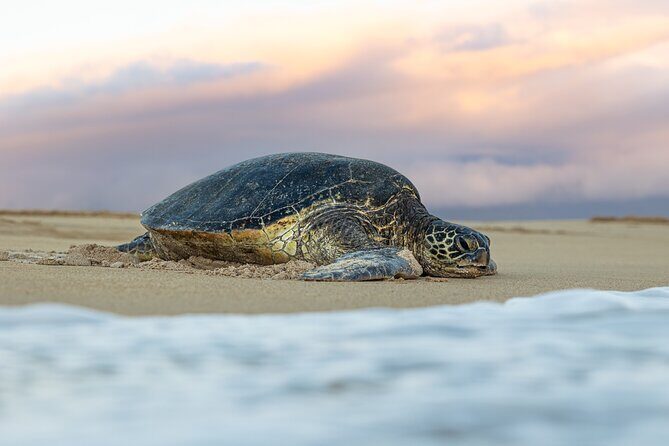
Then the day pivots from volcanic heights to coastal action at Ho‘okipa Beach Park. The meaning of the name is tied to hospitality, but the reason you’ll remember the place is what’s happening on the water.
Ho‘okipa is described as the birthplace of modern windsurfing, and it’s known for consistent trade winds. Even if you’re not into wind sports, it’s exciting to watch athletes do aerial moves with regular conditions.
And then there are the turtles. This park is one of Maui’s best places to observe Hawaiian green sea turtles (honu) basking on warm sand. Your stop is short—about 20 minutes—so the best strategy is simple: don’t wander too far from where you can spot activity, and give your eyes time to scan before you assume they’re not there.
What I like: this stop works for both types of people—nature lovers and action-watchers. You’re not choosing one; you’re getting both.





Road to Hana magic: waterfall walls, Rainbow Eucalyptus, and bamboo cathedral
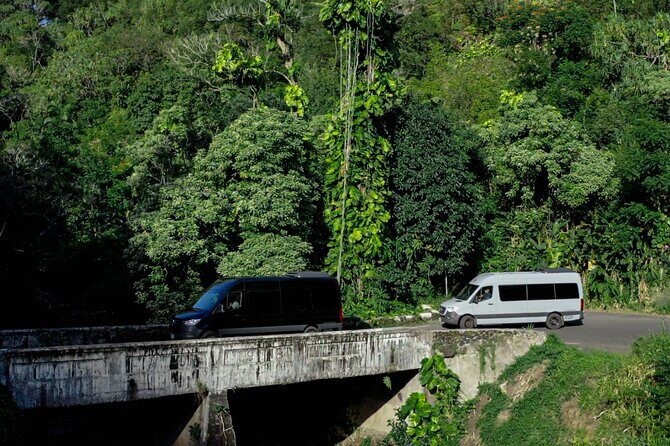
Now you’re on the Road to Hana segment, and this is where the tour earns its reputation for “camera stops.”
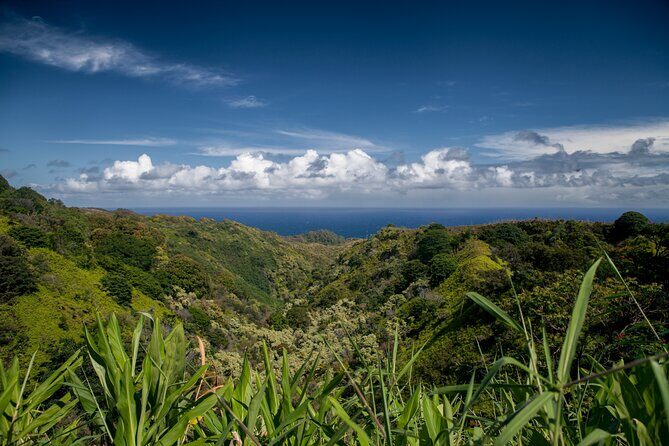
You’ll see waterfall walls along the highway—especially dramatic after heavy rains, when multiple streams turn rock faces into curtain-like flows. Even when the day isn’t drenched, these roadside waterfalls are still the kind of thing that makes you slow down your own thoughts and just watch.
Next come two signature roadside “wow” sights:
- Rainbow Eucalyptus (near mile marker 7): the multicolored bark peels to reveal layers in green, orange, red, purple, and yellow. The beauty here is that you don’t need to hike. You experience it right from the vehicle as you pass.
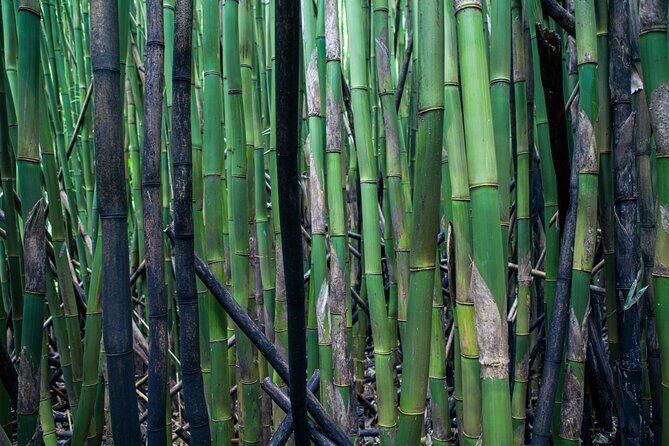
- Na‘ili‘ili-Haele Bamboo Forest (near mile marker 6.7): tall bamboo stalks create a cathedral-like tunnel feeling. It’s a quick look, but it’s one of those spots where the shape of the road plus the density of the plants makes your photos look like they took effort—even though you barely got out of the van.
What I like: this stretch is designed around short stops with big visual payoff. It’s a good match for a day that already includes summit-level walking.
Ke‘anae Point and taro fields: culture plus lava views
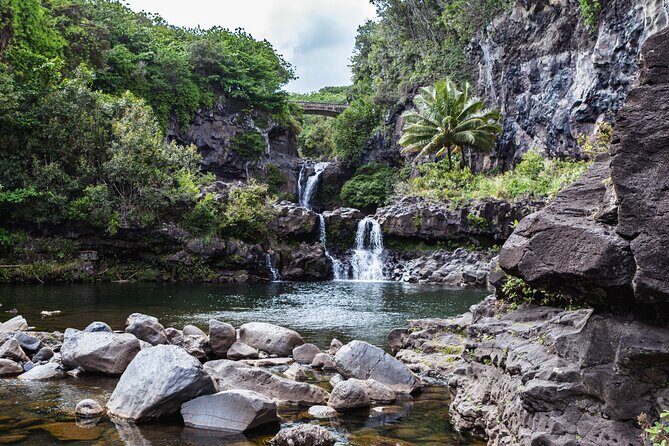
At Ke‘anae Point, you get a true mix of scenery and rural Hawaiian life. This stop centers on the peninsula where a half-mile finger of ancient lava extends into the Pacific. Nearby, you’ll see traditional taro fields still cultivated by local families, giving you a glimpse of island agriculture that hasn’t changed overnight.
There’s also a historical church: the Lanakila Ihiihi O Iehova O na Kaua Congregational Church, built in 1860. It sits among black lava rock formations and the working fields, which makes it more than a quick “nice building” moment.
You also get a chance to buy Aunty Sandy’s banana bread, which is exactly the sort of practical stop that turns into a memory. If you’re going to snack during this whole day, this is a place where the snack feels like part of the experience rather than an afterthought.
One thing to expect: even though your time here is about 20 minutes, you’ll likely walk around a bit to see taro fields and the lava views properly.
Snacks, coffee, and how the day stays manageable

This is a tour where the included food matters because the schedule is intense. You’ll have bottled water, local juices, soda, seltzers, and a large assortment of snacks: breakfast bars, protein bars, granola bars, trail mix, nuts, chips, and more.
On the Road to Hana side, this also commonly includes a coffee-and-banana-bread break. And in one example of a day like this, lunch was described as salad and fresh made pizza—very helpful if you don’t want to burn vacation time searching for a meal while you’re already bouncing from one highlight to the next.
Why this is good value: at $259 per person, you’re not just paying for views. You’re paying for:
- guide time across multiple major sites
- admission coverage where noted
- parking fees for the Haleakalā National Park area
- and a steady flow of food so you’re less likely to arrive cranky and hungry
Pua‘a Ka‘a State Park and the waterfall break you’ll remember
The later Road to Hana stops bring you to Pua‘a Ka‘a State Park area, which includes multiple waterfall moments.
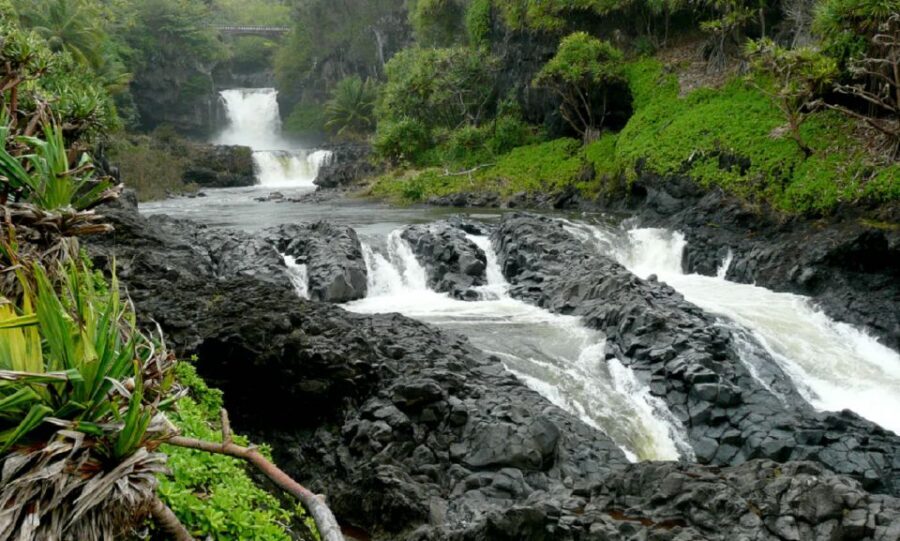
You’ll first see Waikane Falls, also called Three Bears Falls, visible from the highway between mile markers 19 and 20. Then you’ll continue to Pua‘a Ka‘a Falls located at mile marker 22.5 inside the Pua‘a Ka‘a State Wayside Park. The park is described as ultra-green and features two waterfalls dropping into pools.
There’s also a clear note: you can swim at your own discretion. I don’t treat that as a guarantee that the water will be comfortable, but it is an option if the conditions look right and you’re confident.
This is also where the rainforest vibe feels most grounded. By now, you’ve seen the crater and the coast. This part connects the drive to the “why Maui looks so alive” idea.
Getting in the right headspace: pace, motion sickness, and comfort
A lot of people book this because it combines big sites, but the real key is whether you’ll be okay in a long seated day on a curvy road. One practical note from the experience: the roads are curvy, and if you’re prone to motion sickness, bringing anti-nausea meds can be smart.
The group size helps. This runs with a maximum of 11 travelers, and it’s described as a comfortable 11-passenger van setup. Smaller groups tend to feel calmer than huge buses, and it’s easier for a guide to manage timing on crowded pull-offs.
Should you book Aloha Eco Adventures?
I’d book this tour if:
- you want Haleakalā summit + crater + observatory in one day without piecing it together yourself
- you’re doing your Maui highlights as efficiently as possible
- you like the idea of short Road to Hana stops that you can enjoy without a full day of constant driving chaos
- you appreciate included snacks and drinks for a long outing
I’d hesitate if:
- you’re highly sensitive to motion sickness on winding roads
- you need guaranteed time at every single stop (the observatory timing issue has happened on at least one reported day)
- you’re only interested in one region (Haleakalā or Hana) and don’t want an “everything day”
If you’re open to a full, guided day with a solid mix of nature, science, and cultural stops, this is the kind of itinerary that makes Maui feel focused instead of scattered.
FAQ
How much does the tour cost?
The tour price is $259.00 per person.
How long is the tour?
It runs about 10 hours (approx.).
Is hotel pickup available, and where does it start?
Pickup is offered, and the start point listed is The Ritz-Carlton Maui, Kapalua (1 Ritz Carlton Dr, Lahaina, HI 96761). You also need to pick a hotel on the correct side of the island for pickup.
What’s the maximum group size?
The tour has a maximum of 11 travelers.
What parts of Haleakalā are included?
You visit Haleakalā National Park (including summit experience) and the Haleakalā Crater area with the Pa Ka‘oao Trail (about 0.4 miles). The observatory stop at Haleakalā High Altitude Observatory has admission included.
Does the tour include admission tickets?
Admission ticket for Haleakalā National Park and Haleakalā Crater is listed as free. Admission for the observatory is listed as included.
Is food and drinks included?
Yes. Bottled water is included, along with local juices, soda, seltzers, and a large assortment of snacks.
Is gratuity included in the price?
No. A gratuity for your driver is not included, and 15–20% is recommended.
What happens if weather is poor?
This experience requires good weather. If it’s canceled due to poor weather, you’ll be offered a different date or a full refund.
What is the cancellation policy?
You can cancel up to 24 hours in advance for a full refund. If you cancel less than 24 hours before the start time, the amount paid is not refunded.