REVIEW · MAUI
Maui Small-Group Kiteboarding Lesson – Kite Beach
Book on Viator →Operated by Action Sports Maui · Bookable on Viator
Kiteboarding lessons start on the sand. This Maui small-group session at Kite Beach focuses on real kite control, not just watching videos, with coaching that’s matched to your level from first steps to practice on your own. I especially liked how the instructors keep things structured and patient, and how the lesson builds toward becoming a confident kiteboard partner. The main thing to consider is that you must be able to SWIM and you’ll need a moderate fitness level.
You start at Action Sports Maui (Kalama Beach Park, Kihei) and then head into the full lesson flow: gear selection, Kite beach orientation, ground school training, on-water exercises with the instructor, and then solo practice once you can do the basics. In the reviews, I saw the same theme from instructors like Troy and Mikalea: calm guidance when it’s not easy at first, plus practical pointers that make a difference the moment you’re holding the kite and moving through the water.
In This Review
- Quick Key Points to Know Before You Go
- Why Kahului Harbor and Kite Beach Work for Beginners
- Getting Started at Kalama Beach Park (and Why the Meeting Spot Matters)
- Gear Selection and Kite Beach Orientation: Your Foundation on Land
- Ground School on the Beach: Where Control Clicks
- On-Water Training Exercises: From Launch to First Real Movement
- Solo Practice: Becoming a Kiteboard Partner in Real Time
- Price and Value: What $295 Buys You on Maui
- Who This Lesson Is Best For (and Who Should Think Twice)
- Weather, Timing, and What to Plan for on Maui
- Should You Book the Maui Small-Group Kiteboarding Lesson?
- FAQ
- Where does the kiteboarding lesson start?
- How long is the Maui small-group kiteboarding lesson?
- Do I need previous kiteboarding experience?
- What’s required physically?
- Do I need to provide my weight during booking?
- What’s included in the $295 price?
- What happens if weather is poor?
Quick Key Points to Know Before You Go
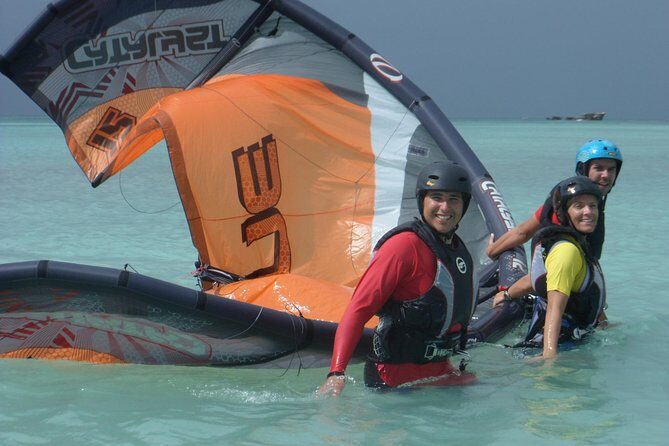
- Max 10 people: you get more personal attention in a shared lesson.
- No experience required: you can come as a total beginner and learn the fundamentals.
- Ground school on the beach first: you’ll get the rules of kite control before you go out.
- On-water training, then solo practice: you progress from guided drills to doing it yourself.
- Instructors Troy and Mikalea are standout mentions: the reviews emphasize patience and clarity.
- Good weather matters: the activity needs solid conditions to run safely.
Why Kahului Harbor and Kite Beach Work for Beginners
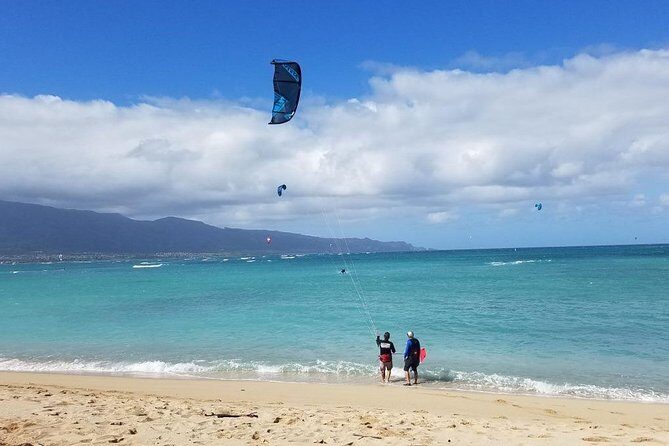
Learning kiteboarding is all about control: wind, lines, kite angle, and timing. This lesson is set up on Maui’s Kahului Harbor area at Kite Beach, which is the kind of environment where instructors can teach the essentials without throwing you into chaos. You’re not just learning what to do, you’re learning what to feel—how the kite responds when you steer and how that affects your body position and balance in the water.
This is one of the reasons I like this style of lesson. Instead of treating it like a single “try it once” session, it uses a step-by-step approach: first orientation and ground training, then you move to the water for guided exercises, then you practice on your own. That progression helps you build confidence without skipping the hard parts that usually scare people off.
It’s also a smart fit if you’ve watched plenty of videos but never had live instruction. The reviews highlight how Troy gave pointers beyond what videos typically teach, and how that clarity helped people actually get the kite flying and moving them through the water.
You can also read our reviews of more tours and experiences in Maui


Getting Started at Kalama Beach Park (and Why the Meeting Spot Matters)
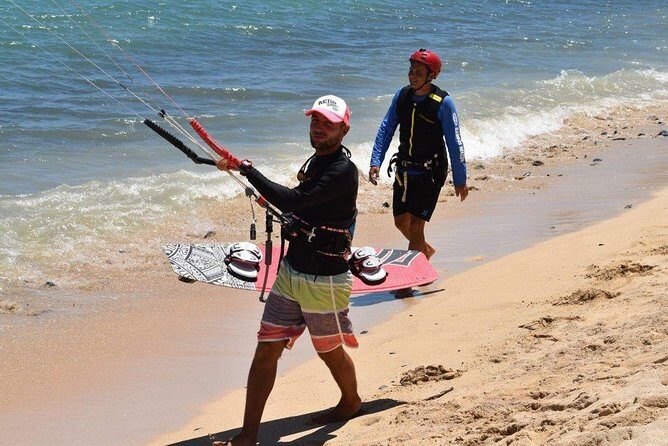
The lesson begins at Action Sports Maui, Kalama Beach Park, Kihei. That matters because it tells you the trip is built like an actual training session, not a casual meet-and-greet. You’ll arrive, get set up, and then transition through the phases of learning without spending time wandering around figuring things out.
The whole session runs about 2 hours 30 minutes. For first-timers, that duration is a good sweet spot. Long enough to learn the basics and practice them with coaching, but short enough that you’re still fresh when you do the solo portion.
Also note the pacing. You’ll do gear selection and Kite beach orientation before you go into ground school and then the water. If you’re arriving hungry or distracted, you’ll feel it later when you need to concentrate on kite control. I’d plan to arrive rested and ready to listen, because that first setup part sets the tone for everything after.
Gear Selection and Kite Beach Orientation: Your Foundation on Land
Before you hit the water, you go through gear selection and Kite beach orientation. This step is where the lesson earns its value. Kiteboarding gear is not one-size-fits-all. The right setup affects how the kite pulls, how the board feels, and whether you can manage the power safely while you’re learning.
Orientation also matters because kite conditions can change quickly. Getting your bearings on the beach, understanding how the kite is handled, and learning how to move and position yourself makes the water portion less intimidating. It’s the difference between guessing and knowing.
One important detail: you’ll need to provide your weight at booking. That’s not paperwork for paperwork’s sake. Kiteboarding setups and training can depend on size, strength, and how the gear behaves when it’s under load. If you skip that step, the lesson can’t be optimized for you.
Ground School on the Beach: Where Control Clicks
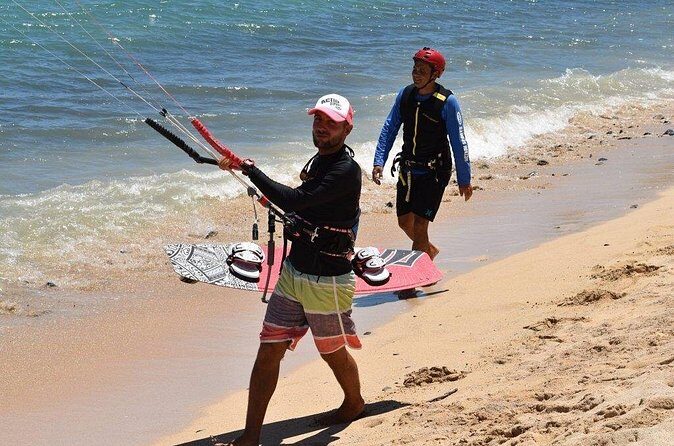
After orientation, the plan moves into ground school training on the beach. This is the part that helps you avoid the common beginner trap: launching into the water before you understand how the kite responds to your hands and stance.
In a good kite lesson, ground school isn’t just lectures. It’s practical, with repeated practice on kite handling—how to steer, how to manage the kite’s power, and how to coordinate your movements. The goal is to turn wind + equipment into a set of actions you can repeat.
The reviews back up that this is taught in a way that feels doable. People mention that the instruction made a difference even if they’d already watched videos at home. That usually means the coach didn’t just explain theory, they pointed out what to do when things go slightly wrong—like when the kite drifts, when you feel unsteady, or when you need to correct quickly.
On-Water Training Exercises: From Launch to First Real Movement
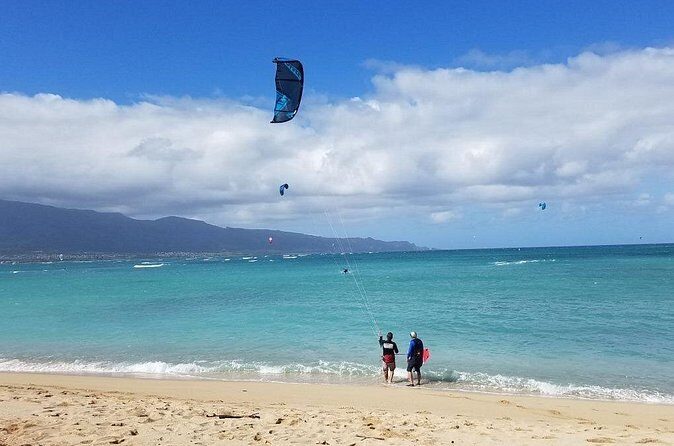
Once you’re ready, the lesson transitions into the water with training exercises while accompanied by the instructor. This is the stage where kiteboarding starts to feel real. You’re no longer just controlling the kite from the shore. The kite pulls, the lines load up, and your body has to respond instantly.
The reviews mention the fun of dragging in the water and doing the launch, and that’s a good sign. Beginner lessons shouldn’t only be about fear management. They should also give you moments of progress you can feel in your body. When the kite pulls in a controlled way, you can experience forward movement without the sense that you’re losing everything at once.
You’ll also need to keep the swim requirement in mind. You’re expected to be able to swim, which makes sense for a sport where you may end up in the water during learning. Even if you feel comfortable in the ocean, I’d still show up with the mindset that this is training, not a performance. Concentrate on kite control and let the instructor handle the safety rhythm.
Practical note: moderate physical fitness is required. You don’t need to be an athlete, but your arms and legs do work here—holding position, moving with the pull, and repeating actions enough times to learn the pattern.






Solo Practice: Becoming a Kiteboard Partner in Real Time
The final phase is going solo to practice what you learned. This is where the lesson earns its “partner” goal. “Become a kiteboard partner” basically means you’re learning skills that let you participate more confidently with others in the sport, not just ride in circles while someone else does everything.
Solo practice also helps you understand your own feedback loop. You’ll feel when you’re steering correctly. You’ll notice when the kite is too powered or not powered enough. And you’ll start to connect what you do with what the kite does in response.
The best part about moving to solo practice is that you’re not thrown into it cold. You’ve already built a foundation on the beach and you’ve done guided water exercises. In other words, solo doesn’t mean “figure it out.” It means you’re ready to try independently with the skills you just practiced.
In the reviews, the strongest praise is about instructors being patient and professional—exactly the kind of teaching you want right before you transition to doing it on your own. If the first solo moments feel awkward, that’s normal. The value is in how the coaching sets you up to make quick corrections.
Price and Value: What $295 Buys You on Maui
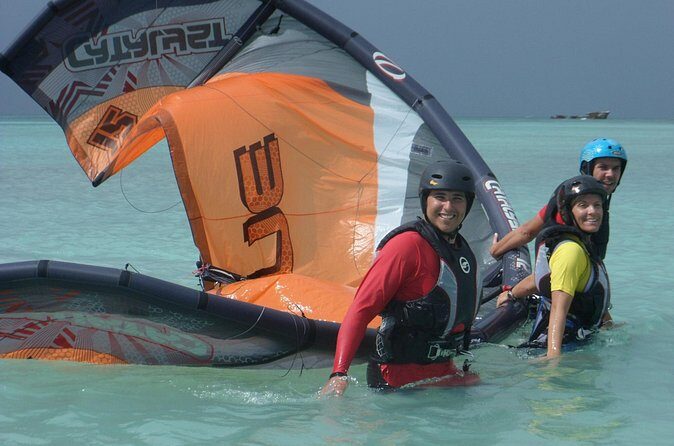
At $295 per person for about 2.5 hours, you’re paying for a trained coach, a structured progression, and the real-time practice time that makes skills stick. This isn’t a long, full-day activity where you’re mostly hanging around. It’s a concentrated lesson with a cap of 10 travelers, which usually helps keep attention focused.
What’s included:
- GST (Goods and Services Tax)
- Bottled water
- Professional guide
What’s not included:
- Food and drinks
- Transportation to/from attractions
Is that a good value? For beginners, yes, because you’re not paying for “a look.” You’re paying for instruction that covers the hard basics: gear setup, ground training, and on-water drills. That’s what shortens the learning curve. If you try kiteboarding without proper teaching, you can burn time (and energy) figuring out what to do next.
One more detail that affects value: this activity is often booked about 22 days in advance. If you want a specific date or good weather conditions, booking ahead matters.
Who This Lesson Is Best For (and Who Should Think Twice)
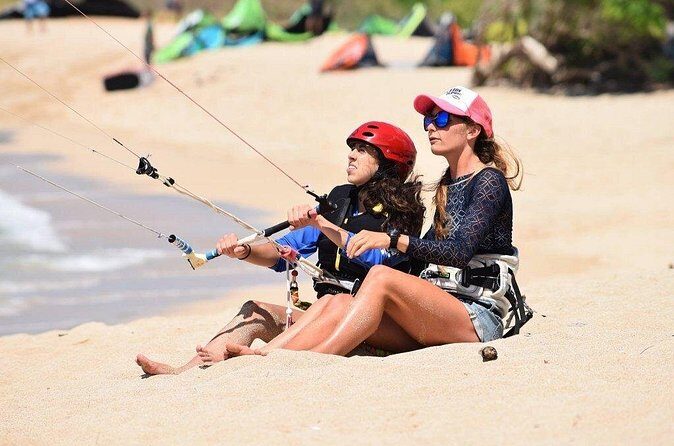
This lesson is best for you if:
- You’re a beginner and want structured coaching.
- You learn well with step-by-step progression from land to water.
- You want practical guidance you can’t get from videos.
- You’re comfortable in the water and can swim.
It may be a tougher fit if:
- You’re not comfortable swimming or you’re unsure about your ability in open water conditions.
- You have physical limits that make it hard to handle the activity’s moderate fitness demands.
- You can’t travel on short notice if conditions change, because the experience requires good weather and may be rescheduled.
Group format also matters. It’s a shared lesson, not a private one, but the group size is capped at 10. That typically keeps you from feeling lost, while still sharing the day with other beginners.
Weather, Timing, and What to Plan for on Maui
Kiteboarding runs on weather. The experience requires good conditions, and if it’s canceled due to poor weather you’ll be offered a different date or a full refund. That means you should build flexibility into your Maui schedule.
Because the lesson is about 2.5 hours, it fits well as an active part of your day. Just remember the included water helps, but food and drinks aren’t included. Bring snacks or plan a meal around it so you’re not fighting hunger after the workout.
You’ll also need to follow the provided requirements at booking, including your weight details. Do that early, because you want your gear setup and training plan to be ready before you show up.
And one more thing I appreciate: confirmation is received at booking and the lesson uses a mobile ticket. Less paper hassle, more time thinking about what to wear and when to arrive.
Should You Book the Maui Small-Group Kiteboarding Lesson?
I’d book this lesson if you’re serious about learning kiteboarding basics the right way, fast. The combination of ground school, on-water training with an instructor, and then solo practice is exactly what a beginner needs to move beyond theory. The reviews call out patient, professional coaching from instructors like Troy and Mikalea, and that kind of teaching shows up when the kite control feels tricky at first.
You should skip it or wait if you can’t swim, don’t meet the moderate fitness expectation, or you know you can’t deal with weather-based rescheduling. Kite sports are weather sports, and this one is no exception.
If you want a Maui experience that feels like real progress by the end of the session, this is one of the better bets.
FAQ
Where does the kiteboarding lesson start?
The lesson starts at Action Sports Maui, Kalama Beach Park, Kihei, HI 96753, USA, and it ends back at the same meeting point.
How long is the Maui small-group kiteboarding lesson?
The experience lasts about 2 hours 30 minutes.
Do I need previous kiteboarding experience?
No. The lesson is designed for beginners, and instruction is tailored to your skill level.
What’s required physically?
You should have a moderate physical fitness level, and you must be able to swim.
Do I need to provide my weight during booking?
Yes. All participants’ weights must be advised at the time of booking.
What’s included in the $295 price?
Included items are GST (Goods and Services Tax), bottled water, and a professional guide.
What happens if weather is poor?
The experience requires good weather. If it’s canceled due to poor weather, you’ll be offered a different date or a full refund.
If you want, tell me your group size and your comfort level in the water, and I’ll help you decide whether the timing on Maui is realistic for your schedule.