REVIEW · MAUI
Self-Guided Audio Driving Tour in Road To Hana
Book on Viator →Operated by GuideAlong (GyPSy Guide) · Bookable on Viator
The Road to Hana gets loud fast. This self-guided audio tour keeps it calm with turn-by-turn storytelling tied to your GPS.
What I like most is that it feels like a private guide in your car while still letting you control the pace. You’ll get step-by-step directions to key stops, plus behind-the-scenes local tips and cultural context as the audio autoplay matches where you are.
One thing to keep in mind: a few big sights come with extra requirements (like reservations) and most of the day is about driving long stretches on narrow roads.
In This Review
- Key things worth knowing before you go
- Price and value for a full-day Hana run
- How the location-based GPS audio really works
- What you’ll actually see: the Hana route stop by stop
- Stop 1: Hana Highway segments and the “choose your own day” approach
- Stop 2: Ke‘anae Arboretum for tropical plants and taro terraces
- Stop 3: Hana Lava Tube for an easy Maui underground adventure
- Stop 4: Ho‘okipa for turtles (and why you shouldn’t swim)
- Stop 5: Ke‘anae Point for ocean drama and a coral-and-lava church
- Stop 6: Twin Falls for the classic muddy-trail reality check
- Stop 7: Upper Waikani Falls, also called the 3 Bears Falls
- Stop 8: Koki Beach for Pele legends and the Alau Island viewpoint
- Stop 9: Hamoa Beach for sand time, showers, and the no-lifeguard warning
- Stop 10: Wai’anapanapa State Park for black sand, arches, and reservation reality
- Stop 11: Pipiwai Trail for the big walking payoff (and NPS pass needs)
- The practical “do this, not that” checklist for your Hana day
- Who this self-guided audio tour is best for
- The small drawbacks to plan for
- FAQ
- FAQ
- How much does the Road to Hana self-guided audio tour cost?
- How long should I plan for this drive with the tour?
- Do I need cell service during the Road to Hana?
- Are admission tickets included for the stops?
- Do I need a reservation for Wai’anapanapa State Park?
- Is there a special pass needed for Pipiwai Trail in Haleakalā National Park?
- Can I start and end the tour at different points along the route?
- Should you book this Road to Hana audio driving tour?
Key things worth knowing before you go
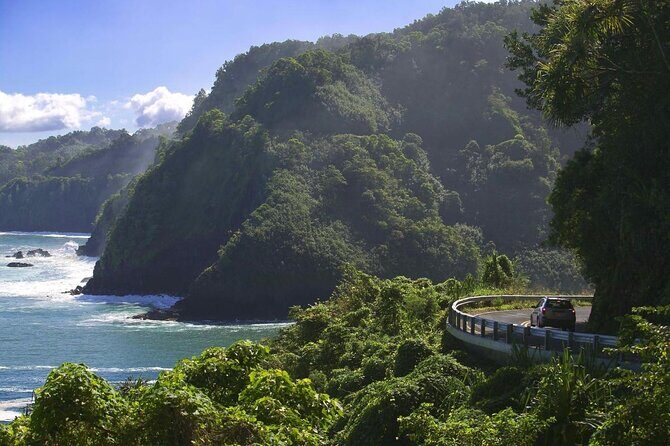
- GPS location-based audio plays as you drive, even when you have little or no cell service
- One purchase covers up to 8 people in your vehicle, which is great value for families and carmates
- Offline-friendly setup: download the tour ahead of time, then use it on the road without relying on data
- You set the rhythm: start, stop, and resume when you want and skip stops on purpose
- 140 points means more than “must-see” stops; you get options along the drive
- Some stops need prep: reservations for Wai’anapanapa and required entry passes for parts of Haleakalā area hiking
Price and value for a full-day Hana run

At $19.99 per group (up to 8 people), this tour pricing makes sense if you’re splitting the cost within a vehicle. Road-to-Hana tours can get expensive fast when the price is per person, and the Hana drive already has a lot going for it even before you add any paid activity.
For me, the best “value math” here is simple: you’re buying interpretation plus timing. The audio isn’t just reading facts. It’s telling you what to look for, when to stop, and what kind of experience you’ll get once you’re out of the car. That saves you from the most common Hana mistake: spending your time at the wrong stops, or arriving without knowing what you’ll face (muddy trail, no lifeguards, reservation needed).
You should also know what’s not included. Admission tickets for several stops are not included, and the big reservation needs (like Wai’anapanapa State Park entry) aren’t included either. So this is not a “pay once and forget everything” deal. It is, however, a smart way to spend less than a guided bus tour while still getting good structure.
You can also read our reviews of more guided tours in Maui


How the location-based GPS audio really works
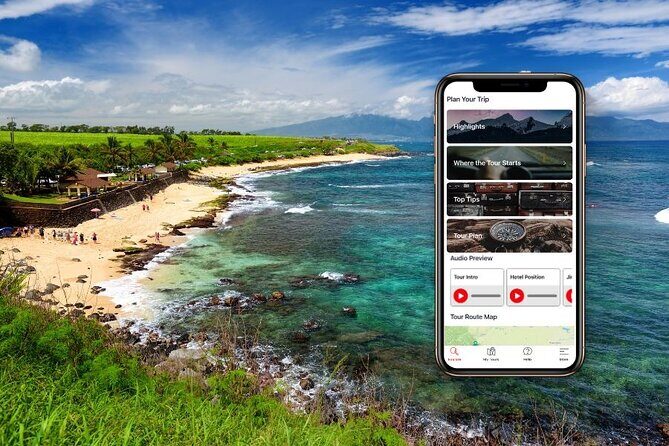
The tour is built around your phone’s GPS location. Once you start the tour in the GuideAlong app, the commentary plays automatically based on where you are along the route. That matters on the Road to Hana because signal can disappear for stretches, and landmarks are spaced out over winding roads.
The workflow is practical:
- After booking, you get instructions to sign in and redeem your voucher code.
- You open the GuideAlong app and download the tour so it works offline.
- You drive, and the audio triggers as your GPS dot passes points on the route.
That autoplay feature is the heart of why this feels so easy. When you’re dealing with one-lane bridges, switchbacks, and quick parking decisions, you don’t want to be scrolling through maps at every moment.
Small but important pro tip: bring a USB/car charger and keep your phone fully charged before you leave. Reviews for this type of setup often turn on battery life, and the Road to Hana is long.
One more note: the tour is private in the sense that your group participates only in your vehicle. You’re not waiting on strangers or getting pulled along on someone else’s agenda.
What you’ll actually see: the Hana route stop by stop
The tour is flexible. You can follow the stops in order, pick a half-day or full-day plan using the built-in trip planners, or skip anything that doesn’t fit your mood. The audio is designed to support all of that, so you’re not locked into one long checklist no matter what.
Here’s what the itinerary emphasizes, and what you should plan for at each stop.
Stop 1: Hana Highway segments and the “choose your own day” approach

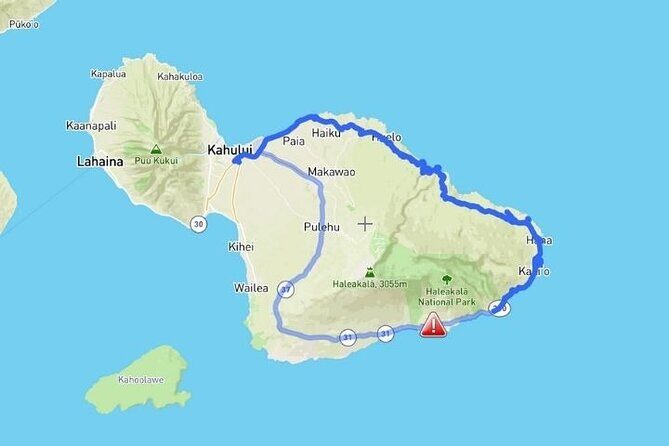
Your start experience is the Road to Hana drive itself—where the audio guide begins giving you step-by-step notes tied to your position. The tour is built so you can create your own itinerary along the route(s), based on your interests and time.
This is useful because Hana days come in different flavors:
- some people want waterfalls and beaches,
- some want history and plants,
- some want hiking at the far end and then a relaxed return.
Either way, the tour tries to keep you from missing major sights while still letting you skip. Admission isn’t included at this stage, but this is mostly about direction and timing.
Practical expectation: treat this as a day that can run long. Even if you don’t stop at every listed spot, the Road to Hana still demands driving time and careful parking decisions.
Stop 2: Ke‘anae Arboretum for tropical plants and taro terraces
Ke‘anae Arboretum is one of those stops that’s perfect when you want nature without committing to a long hike. It’s described as easy, no-cost, and under 30 minutes for photos and a quick look.
What makes it memorable is the mix of modern and ancient:
- you’ll see tropical trees and plants like golden-stemmed bamboo, ginger, papaya, and hibiscus
- you can get up close to rainbow eucalyptus with brightly colored bark
- the trail connects toward areas associated with ancient Hawaiian taro cultivation, following the Piinaau Stream and terraces
Drawback to consider: it’s a short stop, but you’ll likely want to take your time. If you rush it, you’ll miss the best photo moments near the colorful bark and the stream-side pathway.
You can also read our reviews of more tours and experiences in Maui






Stop 3: Hana Lava Tube for an easy Maui underground adventure
The Hana Lava Tube is the tour’s accessible cave moment. You don’t have to go deep inside if you’re uncomfortable in enclosed spaces, but if you’re okay with it, it’s fun to explore more.
This stop is one of the best “breathers” because it changes the setting from rainforest roads to a geology-focused experience. Expect it to be more about cool air and textures than about big panoramic views.
Admission isn’t included here, so check what you’ll need when you arrive and plan your budget accordingly.
Stop 4: Ho‘okipa for turtles (and why you shouldn’t swim)
Ho‘okipa is a classic Maui viewing place, and the tour frames it correctly: it’s not recommended for swimming due to constant winds and currents. The winds are part of the show anyway—this is also where you can watch world-class windsurfers.
One of the tour’s specific wildlife tips is about turtles. You’ll often find turtles snoozing near the right side of the beach, and they can even sleep in the water. The important rule is simple: keep space and never touch.
Facilities are a plus. There are washrooms, showers, and some picnic areas, so it’s a solid stop if you need a reset.
Stop 5: Ke‘anae Point for ocean drama and a coral-and-lava church

Ke‘anae Point is on a flat peninsula jutting into the ocean. The tour explains it as an area shaped by volcanic lava from Haleakalā—then it ties that geology to everyday life, including taro farming.
You’ll also find a picturesque small church made from coral and lava rock. It’s an easy photo stop, and the tour adds a good vibe expectation: watch waves pound the rocky outcrops, and you might even find coconuts along the shore.
Admission isn’t included for this stop, but it’s basically a scenic drive-by plus a short walk and photos.
Stop 6: Twin Falls for the classic muddy-trail reality check
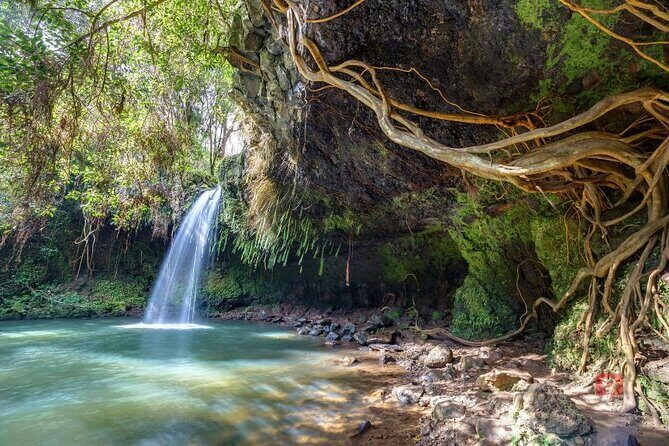
Twin Falls is often the first “worth getting out of the car” hike on the Hana drive. The tour notes a 1.5-mile trail through bamboo forest, with choices for how far you go.
The key practical warning is in the tour description: the trail is frequently muddy. Wear appropriate footwear. If you show up in flip-flops, you’ll end up doing the whole day with wet feet, and Hana already gives you enough unpredictability.
The tour also points out a farmstand, which can be a great morale boost if you want something refreshing like a tropical fruit smoothie.
What I’d plan: this is a great stop to do earlier in your day. You’ll be better able to judge conditions and get your pacing right before the later hiking.
Stop 7: Upper Waikani Falls, also called the 3 Bears Falls
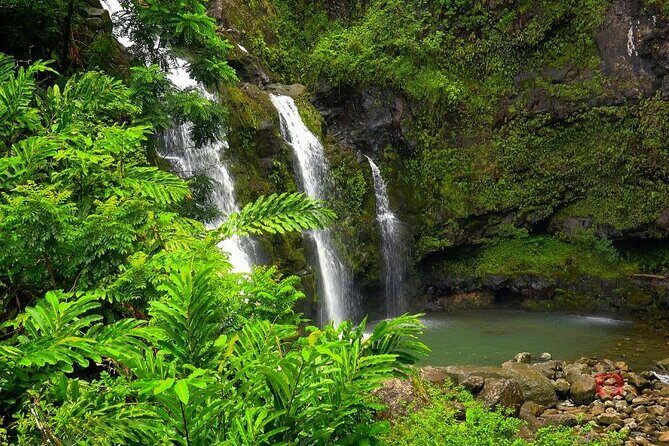
Upper Waikani Falls is a fan favorite on Hana days because it has a built-in story. The tour describes it as sometimes called 3 Bears Falls, tied to how much water is flowing.
After heavy rain, the water can come down in one big thick stream—one “bear.” With less water, it breaks into three separate falls: one large, one medium, and one small.
Practical consideration: your experience here depends on the weather. If you get there in drier conditions, you may not get the same dramatic single-stream flow. That’s not a disappointment; it’s exactly what makes it interesting.
Stop 8: Koki Beach for Pele legends and the Alau Island viewpoint
Koki Beach is close to the turnoff for Hamoa Beach, and the tour uses it for a specific payoff: the view to an ex-cindercone that created Alau Island. It’s described as quirky-looking and about a quarter mile off the beach.
The stop is also tied to Maui mythology. The tour frames the area as steeped in ancient Hawaiian legends about Pele, goddess of volcanoes, and Maui.
Admission isn’t included, but this is mostly a short stop for views and photos.
Stop 9: Hamoa Beach for sand time, showers, and the no-lifeguard warning
If you want a classic Hana beach break, Hamoa Beach is the stop for it in this itinerary. The tour calls it a little crescent-shaped sandy beach that’s timed well for stretching your legs and cooling off.
Expect practical beach basics:
- there are public bathrooms and showers
- there are no lifeguards
- it can be family friendly when conditions are calm, but keep close watch over younger swimmers
This is a good place to slow down and reset your energy before Wai’anapanapa and the later hiking.
Admission isn’t included here.
Stop 10: Wai’anapanapa State Park for black sand, arches, and reservation reality
Wai’anapanapa State Park is Maui’s famous black sand beach stop, and the tour treats it like the main event for a reason. You’ll follow signs to explore the volcanic coastline, with highlights like a sea arch and a blowhole.
Two big planning points:
- This is a must-stop in the tour’s flow.
- Reservations are required for entry, and timed-entry type needs are not included in the tour price.
So if you plan to do this stop, don’t assume you can just show up and walk in. Build your schedule and booking plan around it.
Admission isn’t included here either, so budget for whatever you’ll need at the park.
Stop 11: Pipiwai Trail for the big walking payoff (and NPS pass needs)
Pipiwai Trail is framed as the favorite hiking moment on the Road to Hana drive. It’s located at the Oheo Gulch area of Kipahulu, inside Haleakalā National Park.
What you should expect:
- the full hike is a 4-mile loop
- you climb about 650 feet (described as moderate)
- bamboo forest sections are especially peaceful
- along the way you’ll see views of Makihiku Falls
- many people continue toward Waimoku Falls as the highlight and farthest point
Time matters here. The tour guidance says the hike typically takes 2+ hours depending on fitness and conditions. It also suggests a good planning window: if you arrive at the trail by 2 PM, you should have time to hike and then drive back.
Entry requirements: since it’s inside Haleakalā National Park, you’ll need to show an NPS pass for entry or purchase one on arrival.
Admission isn’t included. Also, even though the stop note says “2 minutes,” that’s likely a formatting quirk in the route list—what matters is that the hike takes hours.
The practical “do this, not that” checklist for your Hana day
This tour helps with structure, but you still need to drive smart. Here’s how to make it work without losing hours.
- Start early. A long day on Hana roads is no joke, and doing it in daylight makes every stop easier and safer.
- Use a car charger. The tour runs through your phone’s GPS and audio.
- Keep expectations flexible. Waterfalls can change with rain, and beach conditions shift fast.
- Plan around reservations. Wai’anapanapa needs them.
- Wear real shoes for Twin Falls. Mud happens.
- Bring snacks and water. Even though there’s a farmstand at Twin Falls, your whole day won’t hinge on one stop.
And one more safety habit: if you see official safety warnings on the day you drive, check updates. Maui can be affected by ocean-related alerts, and you should follow official guidance if anything is issued.
Who this self-guided audio tour is best for
This is a strong fit if you:
- want a budget-friendly structure without paying for a bus tour
- like learning as you go and don’t want to stop to read every sign
- want flexibility to skip stops and linger where you care most
- are traveling in a group where one $19.99 purchase can cover up to 8 people in the same vehicle
It also works well for solo travelers, since the audio narration can keep the drive from feeling like you’re just white-knuckling curves.
You might reconsider if:
- you’re uncomfortable with smartphone setup or downloading apps ahead of time
- you hate using GPS-triggered audio and prefer fixed printed itineraries
- you’re trying to cram the entire Road to Hana into too little daylight
The small drawbacks to plan for
No tour is perfect, and this one has a few trade-offs you should know.
First: you still have to do the driving and the walking. The audio can guide you, but it can’t reduce the physical reality of Hana. If you get tired, you’ll still want to cut the day short.
Second: some key stops need extra planning, like reservations at Wai’anapanapa and park entry requirements near Kipahulu. If you don’t plan those, the tour can’t magically solve them.
Third: the phone setup is the whole engine. You’ll want battery, and you’ll want the app downloaded before you lose service.
Finally: a few audio details may not match your personal expectations if you arrive at different times or weather changes waterfall flow. That’s normal for Hana.
FAQ
FAQ
How much does the Road to Hana self-guided audio tour cost?
It’s $19.99 per group, with a maximum group size of up to 8 people in the vehicle.
How long should I plan for this drive with the tour?
The duration is listed as about 8 to 16 hours, depending on how many stops and how much hiking you do.
Do I need cell service during the Road to Hana?
No. Once you download the tour ahead of time in the GuideAlong app, it can be used offline. This helps in areas with limited or no cell service.
Are admission tickets included for the stops?
No. The tour lists that admission tickets are not included for multiple stops, and some stops are free while others have costs or entry requirements.
Do I need a reservation for Wai’anapanapa State Park?
Yes. Wai’anapanapa State Park entry requires reservations, and timed entry/reservations are not included in the tour.
Is there a special pass needed for Pipiwai Trail in Haleakalā National Park?
Yes. The tour notes that you’ll need an NPS pass for entry or you can purchase one on arrival.
Can I start and end the tour at different points along the route?
Yes. The audio plays based on your GPS location, so you have flexibility to start and end anywhere along the tour route.
Should you book this Road to Hana audio driving tour?
I’d book it if you want the Road to Hana to feel guided but not rushed. The GPS-triggered narration is exactly what you need on a day where cell service can drop and where parking decisions happen fast. At $19.99 per group up to 8, it’s also one of the better ways to get structured value without paying per person like a bus tour.
Skip it only if you already have a very solid written plan, you’re not comfortable with downloading and using a GPS-triggered app, or you know you can’t handle the reservation and entry requirements for the biggest stops. If that’s your situation, you’ll spend too much time managing logistics instead of enjoying the drive.
If you want a Hana day that matches your pace, this is a smart, budget-friendly way to get the stories, the stop timing, and the practical warnings that make the whole route more fun.