REVIEW · MAUI
Surf with ALOHA SURF SCHOOL
Book on Viator →Operated by Hawaiian Ocean Sports · Bookable on Viator
Surf lessons happen fast here.
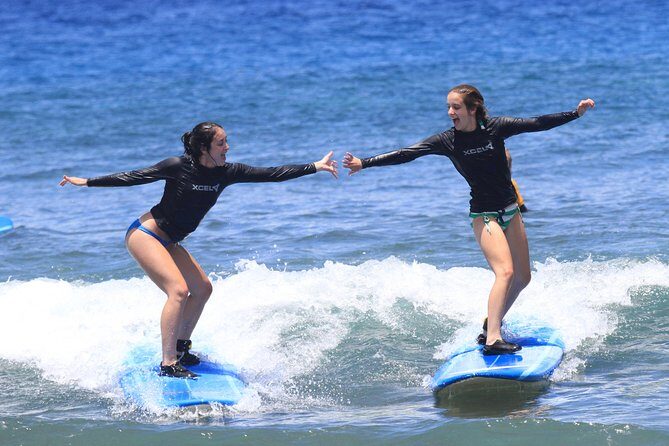
Aloha Surf School turns Maui into a hands-on classroom for he’e nalu (surfing), with small-group coaching that helps you learn safety and surf basics without feeling lost. I also like that your lesson includes key gear—rash guard, booties/protective footwear, and a surfboard—so you can show up ready instead of scrambling for rentals. The main drawback to keep in mind is that it’s highly physical, and the water area can be rocky/shallow, so you’ll want to plan for sun protection and grippy footwear.
You’ll meet at Kalama Park (1900 S Kihei Rd, Kihei, HI 96753), get a surf-and-safety briefing, then head to the water for coaching during your actual session. It’s designed for a range of experience levels, but it clearly expects you to be able to handle paddling, balance work, and getting up repeatedly over about two hours.
If you hate getting a little tired (or you’re expecting a casual stroll), this isn’t that kind of activity. But if you want a straightforward path from nervous newcomer to catching a few rides, it’s a very solid value for Maui.
In This Review
- Key highlights worth noting
- Entering Kalama Park: why this Kihei spot works for first surfers
- The 2-hour flow: from safety talk to coached rides on Maui
- Gear included: rash guard, booties, and a surfboard so you can focus
- Instructors who calm nerves: patient coaching in plain language
- What it feels like in the water: small waves, big effort
- Price and value in Maui: $120 for a 2-hour small-group lesson
- Who should book this surf lesson (and who should think twice)
- Practical tips so you enjoy every minute
- Should you book Aloha Surf School?
- FAQ
- Where do I meet for the surf lesson?
- How long is the Aloha Surf School lesson?
- What’s included in the price?
- Is the group large or small?
- What language is the lesson offered in?
- Do I need moderate physical fitness?
- Is this activity good for beginners?
- Is cancellation free?
- What if the weather is bad?
- Are service animals allowed?
Key highlights worth noting
- 2-hour lesson format that keeps the focus on safety + actually surfing
- Small group limit (max 15) for more individual attention and coaching time
- Gear included (rash guard, booties/protective footwear, and surfboard)
- Kalama Park start point in Kihei, easy to find and convenient to pair with other plans
- Instructors known for patience and clear coaching, including first-time stand-up success
- Strong sun-safety reminders like strap glasses and UV caps that people actually use
Entering Kalama Park: why this Kihei spot works for first surfers
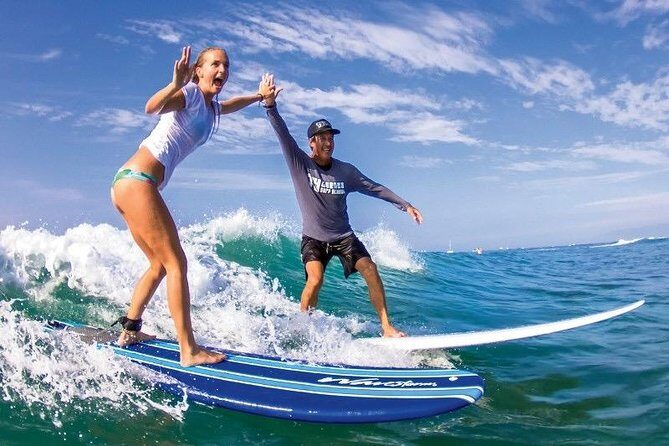
Kalama Park is a smart choice for a beginner lesson because you’re starting from a place built for people to gather, reset, and listen. Your group meets at the park address in Kihei, then your instructor takes you from the briefing area to the surf zone.
A practical detail: the shoreline and shallow water can be rocky, and it can be harder for you to see everything up close from the sidelines. That matters because surf lessons often require quick coordination—watching where you’re stepping, where your board is going, and when your instructor calls you in.
The good news is that Kalama Park is set up for learning. People describe it as gentle enough to work for first-timers and small groups, which helps you spend more time trying to surf and less time just watching.
You can also read our reviews of more tours and experiences in Maui.


The 2-hour flow: from safety talk to coached rides on Maui
Your session is built like a clear progression. First comes a surf-and-safety lesson with a certified instructor. The point here isn’t just rules—it’s helping you understand how to move safely in the water, how to position your body, and how surfing basics fit together.
Then you walk to the designated surf area. This “briefing first, then water” structure is one reason the lesson feels manageable. Instead of being thrown into the ocean immediately, you get the why and the how before you’re in the waves.
Once you’re out there, the coaching becomes the main event. Instructors emphasize basic technique and staying safe while you practice. Several people mention that nervous first-timers were able to stand up quickly, which usually comes down to two things: clear instructions and lots of chances to try, not one magical wave.
Expect a steady rhythm: instruction, paddling practice, getting into position, then trying to ride while your instructor adjusts your form and timing. Because it’s about two hours, you’ll likely feel the physical work by the end—paddling and balancing aren’t “easy mode,” even if the waves are small.
Gear included: rash guard, booties, and a surfboard so you can focus
You don’t have to treat this lesson like a gear-shopping trip. The package includes a rash guard, booties/protective footwear, and a surfboard. That’s a big value in Maui, where renting equipment separately can add up fast.
The booties and protective footwear also matter for the ground realities at a rocky shoreline. If you plan to go into the water area where the bottom is uneven, having proper footwear helps you feel more stable and less worried about slipping.
I’d still consider bringing extra sun protection even with the gear. A rash guard helps a lot, but it doesn’t cover everything, and bright Maui sun can still catch your face, neck, and scalp.
If you wear glasses, plan ahead. A smart tip you’ll hear from experienced participants: consider glasses with straps so eyewear doesn’t become a surfing distraction, and a UV cap for scalp protection.
Instructors who calm nerves: patient coaching in plain language
The most praised part of Aloha Surf School is the teaching style. People consistently highlight instructors who are patient, friendly, and very clear—especially for nervous newcomers and kids.
You’ll see names like Jesse, Donald, Sean, Indie, Chris, Jayden, and Cruz pop up in people’s stories. Across those different instructors, the theme is the same: they give directions you can follow, they watch what you’re doing, and they keep the mood positive instead of judgmental.
That matters more than you’d think. Surfing is one of those sports where small timing changes can unlock big progress. When an instructor explains the same concept in a way you can actually picture, you move from thinking too much to executing.
There’s also a “fun but serious” tone. One person described the lesson as chill and professional, with coaching that still felt relaxed. Another mentioned instructors staying out a bit longer when someone was having a great time. That extra time can turn a good lesson into a memorable one, especially on a honeymoon or a “first Maui activity” day.
Some lessons also come with photo support. People mention pictures taken during the session and even edited video of rides provided at no extra cost, which can be a nice bonus when you’re trying to capture your first real wave.
What it feels like in the water: small waves, big effort
This is a beginner surf lesson, but it’s not “beginner effort.” It’s described as highly physical, and that lines up with what surfing actually requires: paddling, repeated getting-up, and constant balance corrections.
If you’re moderately fit, you’ll probably manage just fine. The requirement calls for moderate physical fitness, which usually means you should be able to walk, bend, and handle sustained effort for about two hours.
The water itself is part of the challenge. With shallow and sometimes rocky areas, the lesson is about moving carefully while you focus on technique. It can also be hard for instructors to monitor everything from the shoreline because the area is uneven—so you’ll get the most out of the session if you listen closely to safety cues and follow your instructor’s positioning advice.
The payoff is real. Multiple stories mention that people who were nervous ended up standing and surfing more than they expected. If your goal is to learn fast, this session has the structure and coaching style that can make that happen.





Price and value in Maui: $120 for a 2-hour small-group lesson
At $120 per person for about 2 hours, this lesson isn’t the cheapest thing on Maui—but it’s also not a budget-buster once you look at what’s included. You’re paying for:
- a small-group lesson (max 15)
- certified instruction focused on safety and fundamentals
- gear included (rash guard, booties/protective footwear, surfboard)
When gear is included, you avoid the common hidden costs of surf lessons: rentals, last-minute purchases, and time spent trying to figure out what you actually need.
You’re also paying for coaching time. With a maximum group size, the instructor can give more direct attention than larger groups that feel like a conveyor belt. That’s especially valuable if you want to be helped specifically when you’re struggling to stand up or keep your balance.
One more practical point: the lesson is commonly booked ahead—on average, people reserve it about 17 days in advance. If you’re traveling during a busier season or you want a specific time window, booking earlier reduces stress.
Who should book this surf lesson (and who should think twice)
This is a great fit if you want a beginner-friendly surf experience with hands-on guidance. It’s described as ideal for nervous newcomers, and people mention first-timers learning to stand up quickly. It’s also a solid option for kids and teens, since the instruction focuses on safety and getting comfortable step by step.
It can also work well for adults of different ages. One story mentions a 51-year-old getting up on a wave or two, which suggests the approach is adaptable when instructors stay patient and focused on fundamentals.
You should think twice if you:
- want something low-energy
- have trouble with moderate physical activity
- are sensitive to bright sun and don’t plan for it
- don’t have proper footwear for rocky/shallow areas
If you’re unsure, remember the lesson is built around safety and basics. That’s not the same as “no challenge,” but it is a guided path.
Practical tips so you enjoy every minute
Here’s how to make the experience smoother and more comfortable.
Bring extra sun protection. Rash guard coverage isn’t total coverage. People recommend a UV cap and strap glasses, and that advice is worth taking seriously in Maui.
Use protective footwear—and consider water shoes if you’re prone to slipping. The park area can be rocky in the shallow water, and footing affects confidence.
Plan for a workout. Even if you’re excited, your body will do the work. Paddling and balance take energy, so hydrate before you go and listen to your instructor.
Wear secure eyewear. If you bring regular glasses, consider strapping them in. Losing them during a surf session is the least fun souvenir.
Stay focused on the safety cues. Since instructors can’t always get the same close-up view in rocky shallow zones, your best defense is following directions about where to stand, when to enter, and how to handle your board.
Should you book Aloha Surf School?
If your goal is a real Maui surf lesson—not just a photo stop—this is a strong option. The combination of small-group size, gear included, and instructors known for patience is exactly what you want when you’re trying surfing for the first time.
Book it if you’re willing to put in effort for a couple of hours and you’ll show up prepared for sun and uneven shallow water. Skip it if you want a leisurely activity or you can’t handle the physical side of learning to surf.
If you’re on the Maui checklist and surfing is a “someday” item, this lesson is the kind of structured practice that can turn someday into standing up.
FAQ
Where do I meet for the surf lesson?
You start at Kalama Park, 1900 S Kihei Rd, Kihei, HI 96753, USA. The activity ends back at the same meeting point.
How long is the Aloha Surf School lesson?
The experience runs about 2 hours.
What’s included in the price?
The lesson price includes a rash guard, booties/protective footwear, and a surfboard.
Is the group large or small?
It’s a small-group activity with a maximum of 15 travelers.
What language is the lesson offered in?
The experience is offered in English.
Do I need moderate physical fitness?
Yes. You should have a moderate physical fitness level to join.
Is this activity good for beginners?
The lesson focuses on surfing basics and safety instruction, and it’s described as beginner-friendly at the Kalama Park surf area.
Is cancellation free?
Yes. You can cancel for a full refund if you cancel at least 24 hours before the experience starts. If you cancel less than 24 hours before, the amount paid is not refunded.
What if the weather is bad?
This experience requires good weather. If it’s canceled due to poor weather, you’ll be offered a different date or a full refund.
Are service animals allowed?
Yes, service animals are allowed.