REVIEW · MAUI
Group Surf Lesson at Ka’anapali Beach
Book on Viator →Operated by Island Style Adventures - Maui Surf School Kaanapali · Bookable on Viator
A first surf lesson on Maui goes fast. Here, you get a 30-minute safety lesson on Ka’anapali Beach grounds and then about 1.5 hours actually surfing, with an instructor working with a small group.
What I really like is the hands-on coaching feel (you’re not just watching from shore), and the fact that reef shoes, a rash guard, and a board are included so you don’t burn vacation time shopping. One thing to consider: meet-up details can be confusing if you rely on the vague directions you might receive, so give yourself that required early check-in time.
In This Review
- Key points before you go
- Ka’anapali Alii Resort meet-up: timing, parking, and where to start
- What happens in the first 30 minutes on land (the part you’ll thank yourself for)
- The water session: 1.5 hours of coaching, waves, and first stands
- Instructor attention in a small group: why this setup feels personal
- Gear included: why rash guards and reef shoes are more than extras
- Photos on Ka’anapali: optional, and worth planning for
- Who this lesson fits best (and who should choose private)
- How to get the most out of your surf lesson (simple, high-impact tips)
- Weather and Maui scheduling: build your day around the ocean
- Should you book Island Style Adventures in Ka’anapali?
- FAQ
- Where does the surf lesson start?
- How early should I arrive?
- How is the lesson structured time-wise?
- What gear is included?
- Are there photos during the lesson?
- How big is the group?
- Is this suitable for young children?
- What fitness level do I need?
- What if weather is bad or I need to cancel?
Key points before you go
- Arrive 30 minutes early for check-in and to get oriented
- Short land safety session first, then a long time on the water
- Small-group instruction with a max of 15 people
- Gear is included: rash guard, water shoes/reef shoes, surfboard
- Staff photos are optional to purchase at the end
- Not recommended for kids under 8; private lessons are the better fit
Ka’anapali Alii Resort meet-up: timing, parking, and where to start
The lesson starts from a pretty specific spot: Kaanapali Alii Resort, 50 Nohea Kai Dr, Lahaina, HI 96761. Your activity ends back at the same meeting point, which makes it easier to build the rest of your Maui day without long returns or mystery shuttles.
They ask for check-in 30 minutes before your lesson time. That matters because surfing logistics are small and quick: wetsuit-style clothing, shoe setup, and getting a feel for where the group gathers. And the biggest practical tip from past confusion: don’t assume there will be obvious signage. Some people have reported that the meeting-point cues weren’t clear, so I’d treat early arrival as part of the plan, not extra time.
Parking is also covered in a useful way: you get parking validation for up to 3 hours. If you’re driving yourself, this can save you from last-minute parking math at the end of your surf session.
You can also read our reviews of more tours and experiences in Maui

What happens in the first 30 minutes on land (the part you’ll thank yourself for)
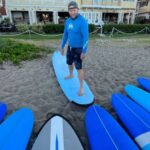
Before you’re anywhere near waves, you’ll do a 30-minute land lesson and safety briefing. This is where the lesson earns its value. A good surf coach isn’t just trying to get you wet; they’re trying to get you ready to move safely and efficiently when the ocean is doing its thing.
In practice, this land portion usually means:
- basic board handling and stance
- how to fall (yes, seriously)
- paddling technique cues
- safety expectations for your group in the water
If you’re a first-timer, this stage is the difference between struggling for an hour and understanding what to do when the board is under you. And if you’re nervous, it’s also a confidence builder: you’re learning a process, not just getting tossed into the ocean.
The water session: 1.5 hours of coaching, waves, and first stands
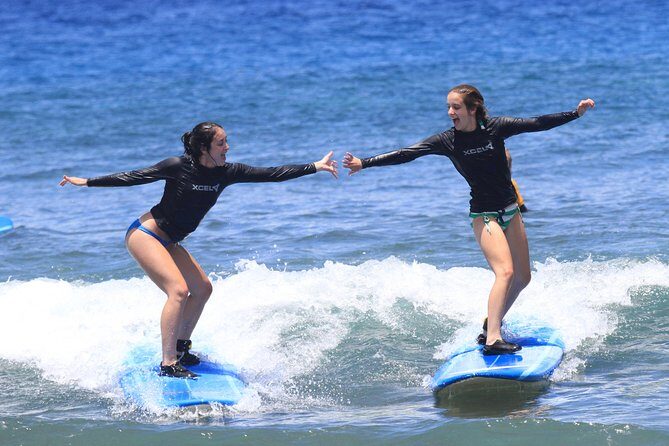
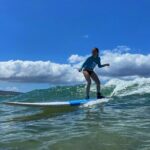
After the land lesson, you’ll be out in the water for about 1.5 hours. That long chunk is a big deal. One short paddle and a quick rinse often equals “we tried.” This format gives enough time for you to adjust, get feedback, and actually improve.
The teaching style matters here. The most consistent praise comes from instructors who are patient and quick to correct small details—things like paddling timing and the moment you transition to standing. Many beginners end up standing during the session, especially if they listen on the beach and apply the cues right away.
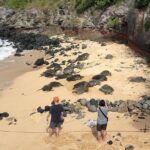
Also, keep your expectations realistic. Ka’anapali can deliver different conditions depending on wind and surf. Some people have noted that the group may be taken to spots that can feel a bit more rocky than they expected. If that’s the case, it’s a reminder to keep your attention on the coach’s guidance and move carefully with your water shoes on.
Instructor attention in a small group: why this setup feels personal
This is a small-group lesson with a max of 15 travelers. That number helps, but the bigger win is how the instruction often feels in the water: coach-to-student communication stays frequent enough that you can actually make corrections.
Some of the instructors you may hear about include names like Nick, Reef, Matt, Conan, Reed, Koa, and Juan. People repeatedly highlight the same pattern: coaches who explain clearly, then watch your attempts, then give immediate feedback when you’re close.
Here’s the balanced angle. A couple of experiences also point to a common coaching risk: if the group faces a more general setup, your ability to hear instructions can drop. If you know you struggle to hear over surf noise, arrive early, get yourself positioned where you can see and hear, and don’t be afraid to ask for a repeat on the beach before you go in.
Gear included: why rash guards and reef shoes are more than extras
You don’t need to bring much because the lesson includes:
- rash guard
- water shoes (often thought of as reef shoes)
- surf board
This is one of those “boring logistics” items that becomes a comfort upgrade fast. Rash guards help with friction when you’re paddling and bracing. Water shoes protect your feet on uneven surfaces and during entry/exit. And having the board provided means you don’t have to guess what size or type fits a beginner lesson.
The practical win: you can pack lighter and spend more of your day doing Maui things, not errands. Also, because you’ll be out for a while, having the right basic gear from the start prevents the session from turning into a constant adjustment.





Photos on Ka’anapali: optional, and worth planning for
There’s a staff photographer taking photos during the lesson. That’s a fun bonus if you want a record of that first stand—or at least proof you didn’t magically shrink into the ocean.
But here’s what you should do so you don’t end the session disappointed. Some people have said that they didn’t get clear instructions for how to purchase professional photos, even though photography was included in the booking expectations. So I’d treat this like any other “optional add-on” in travel: ask early how photo purchasing works, and confirm when and how you’ll be sent details after the lesson.
Even without photos, the experience itself is the main event. Still, if you’re celebrating a trip highlight, those pictures can be a nice keepsake.
Who this lesson fits best (and who should choose private)
This lesson works well for:
- couples and friends who want a guided first attempt
- families with kids old enough to follow instructions and move carefully in the water
- beginners who like structured coaching and a clear step-by-step progression
There’s also a clear boundary: group surfing is not recommended for children under age 8. If you’re traveling with a younger child, a private lesson is the safer bet because it gives more direct attention and easier pacing.
Fitness matters too, but the requirement is described simply: you should have a moderate physical fitness level. Surfing is mostly paddling effort, balance, and getting back up after falls. If you can comfortably handle a beach activity with some exertion, you’re in the right zone.
How to get the most out of your surf lesson (simple, high-impact tips)
I’d go in with three small habits that match what the better coaching experiences have in common:
First, listen on the beach. Multiple people credited success to paying attention to the coach’s setup cues before the water. Surfing rewards timing, not brute force.
Second, watch what works on the board. Good instructors keep adjusting tiny things, like where you place weight or when you paddle. If you notice you’re doing the same wrong step repeatedly, pause for feedback rather than continuing to guess.
Third, be ready to adjust expectations about waves. Coaches often choose where to surf based on conditions. If the water feels different from what you pictured, trust the instruction and focus on executing the coach’s actions, not comparing the ocean to someone else’s video.
If you do those three things, you’ll likely feel progress quickly—enough that the hour-and-a-half water time doesn’t feel like waiting for a miracle.
Weather and Maui scheduling: build your day around the ocean
This activity depends on good weather. If the ocean conditions aren’t right, you’ll be offered a different date or a full refund. That means you should plan with flexibility, especially if you’ve built your Maui day around tight times.
A smart strategy: schedule this earlier in your trip and avoid chaining it to another activity that can’t move if conditions change. Surf lessons aren’t like a museum ticket. They rely on what the day gives you.
Should you book Island Style Adventures in Ka’anapali?
If you’re choosing between doing nothing and trying Maui surfing, I’d lean yes—this lesson checks the right boxes for beginners: gear included, a real safety briefing, and a long enough time on the water to make learning stick. The strongest pattern in the experience is patient, hands-on instruction that helps many people get up and stand at least once.
I’d also book if you appreciate structure. The session is built so you learn a process: land cues first, then practice immediately in the ocean.
Hold off or consider a private lesson if you’re traveling with a child under 8, or if you know you need extra one-on-one support to manage nerves or hearing instructions in a noisy environment. And if you’re the type who hates vague meet-up directions, show up early and confirm where the group gathers so you don’t waste energy searching.
In the end, Ka’anapali surf is one of those Maui experiences where the details matter. This one focuses on time in the water and coaching that helps you actually try, not just watch. If that’s what you want, book it and plan your day with a little breathing room for the ocean.
FAQ
Where does the surf lesson start?
The meeting point is Kaanapali Alii Resort, 50 Nohea Kai Dr, Lahaina, HI 96761, USA. The activity also ends back at this same location.
How early should I arrive?
Check-in is 30 minutes prior to the lesson start time.
How is the lesson structured time-wise?
You’ll start with about 30 minutes of land/safety instruction, then spend about 1.5 hours in the water surfing.
What gear is included?
The lesson includes a surf board, rash guard, and water shoes (reef-shoe style footwear).
Are there photos during the lesson?
Yes. A staff photographer takes photos throughout the lesson. Photo purchase is optional at the end.
How big is the group?
The tour has a maximum of 15 travelers.
Is this suitable for young children?
Group lessons are not recommended for children under age 8. For younger kids, a private lesson is suggested.
What fitness level do I need?
You should have a moderate physical fitness level.
What if weather is bad or I need to cancel?
The activity requires good weather. If it’s canceled due to poor weather, you’ll be offered a different date or a full refund. For cancellations, you can cancel up to 24 hours in advance for a full refund, and within 24 hours you won’t get a refund.