REVIEW · MAUI
Semi-Private Surf Lesson – 3 Students 1 Instructor
Book on Viator →Operated by Maui Waveriders Lahaina · Bookable on Viator
Learning to surf in Maui sounds big. It is, but the setup is friendly.
This semi-private lesson in Lahaina turns a scary first time into something you can actually do, step by step. I like that you start with ocean safety and surf technique practice on land before you ever get out to the water, so you know what to do when it counts. The other thing I like: the group stays very small, so you get real attention instead of feeling like one more body in the lineup.
One possible drawback to plan for: Lahaina water conditions can vary, and the day can feel more intense if currents are rough. That does not mean it is unsafe when run well, but it does mean you should show up ready to listen, move carefully, and stay patient while you build confidence.
In This Review
- Key highlights you should know
- Lahaina Breakwall: why this surf session makes sense for first-timers
- The 90-minute rhythm: from land drills to popping up on waves
- How the small-group setup keeps the lesson personal
- Meeting point at Waikapu: keeping your day simple
- What to bring (and what will help you avoid a miserable first session)
- Instructors matter: names you might be coached by
- Safety and the reality of Lahaina currents
- Photos during your surf session: good memories cost money, but they may be worth it
- Value check: how $109 per person stacks up
- Who should book this surf lesson in Lahaina
- Quick FAQ for your surf prep
- FAQ
- How long is the semi-private surf lesson?
- Where does the lesson take place?
- Is this lesson only for beginners?
- How big is the group?
- What happens before you get in the water?
- Do I need to bring anything?
- Is this a private experience?
- Is there a photo option?
- What is the meeting point?
- What if weather is bad?
- Should you book this surf lesson?
Key highlights you should know
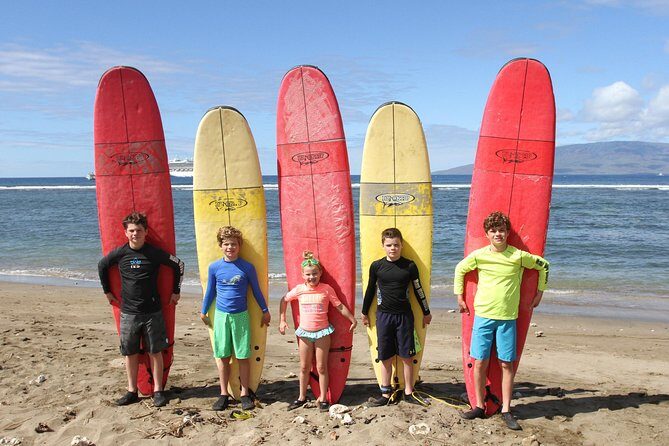
- Sand-first coaching: safety and technique practice before you paddle out
- Breakwall wave time in Lahaina: once you’re comfortable on the board
- Small group, personalized attention: 3 students is typical; groups can be up to six
- Beginner to intermediate friendly: built for first-timers and improving surfers
- Photo option during your session: professional images available
- Sun and comfort tips: a swim shirt helps with protection and board rub
Lahaina Breakwall: why this surf session makes sense for first-timers

Lahaina is one of those places where surfing is not a novelty. It is part of the everyday ocean culture, and that matters because it shapes how the lesson feels. You are not just learning tricks. You are learning how to respect the water, the board, and your own limits.
What makes this experience particularly workable for you is the target zone: the Breakwall in Lahaina. You are guided to paddle out there once you’ve done the basics on land. That flow helps because your brain stops treating the ocean like a giant mystery. By the time you see the waves you’re going to ride, you already know the key actions you practiced earlier, like getting your position right and understanding how to read what you are seeing.
Also, the lesson is built for both beginners and intermediate surfers. If you are totally new, you still get structure. If you’ve tried before, you can benefit from coaching that helps you refine technique instead of starting over from zero.
You can also read our reviews of more private tours in Maui



The 90-minute rhythm: from land drills to popping up on waves
This is a 1 hour 30 minutes lesson, and it is paced for learning, not for a long beach hangout. Expect a clear arc:
First comes ocean safety and surf techniques practice on land. This part matters more than most people think. Surfing is mostly timing and body position, and those basics are easier to learn when you are standing on solid ground. You get taught the safety rules and the physical movements you need to succeed, then you practice them before the ocean adds chaos.
Next you move into board time. The goal here is comfort: how the board feels under your stance, how it responds, and what you should do once you’re on top. Reviews point out that instructors kept lessons encouraging and focused on getting people standing up by the end, even when the first attempts take a while.
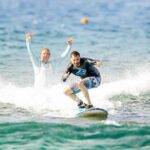
Then you head to the break to catch waves. Once you are paddling out and waiting, the earlier land coaching starts to click. You are not figuring everything out for the first time while bobbing in the surf.
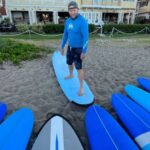
Practical note: bring a swim shirt. It helps with sun protection and also with rubbing from the surfboard. If you burn easily or you know board rash can ruin your day, plan to cover up.
How the small-group setup keeps the lesson personal
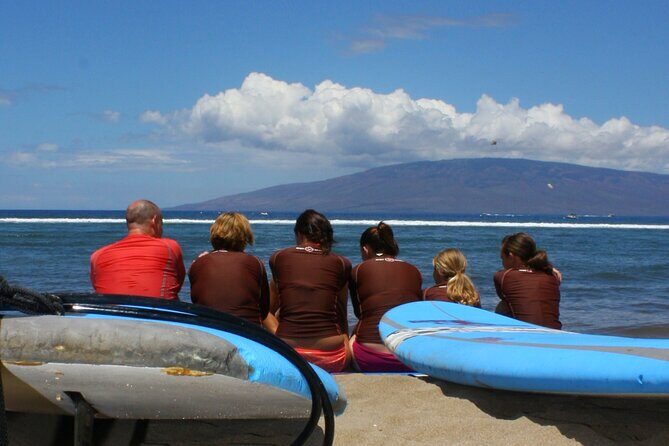
This is described as a semi-private lesson with 3 students and 1 instructor, and the highlights also mention groups limited to six. Either way, the point is the same: you get far more coaching time than you would in a large class.
For you, that translates into faster feedback. When you are learning to surf, small changes matter. A slightly better stance or a more consistent paddle rhythm can be the difference between wobbling off the board and riding farther than you expected. In a tight group, your instructor can notice what you’re doing and correct it without making you feel rushed.
Safety also benefits from this format. Surf conditions can be tricky, and multiple instructors running around a crowded group is not what you want when you’re trying to master basics. A small setup makes it easier to keep an eye on everyone and adjust plans if the water is behaving differently than expected.
And yes, you should expect the lesson to feel firm but supportive. Multiple instructors were described as focused on safety while still being patient with rookies. If you tend to get nervous, that steady coaching style can actually help you relax and learn faster.
Meeting point at Waikapu: keeping your day simple
The lesson starts at QCW7+M5X, Waikapu, HI 96793, USA, and it ends back at the meeting point. For most people, that round-trip structure is a win: you do not have to arrange a second pickup or figure out how you’re getting back after the ocean part.
You’ll also want to plan to arrive a little early. The experience uses a mobile ticket, so having your confirmation and ticket ready on your phone can save time. Confirmation comes at booking, and the experience is near public transportation, which can matter if you’re not renting a car.
Because the group is small and the schedule is tight, I recommend treating this like an appointment. Give yourself a buffer for parking, walking, and getting set before your instructor starts the safety briefing.
What to bring (and what will help you avoid a miserable first session)
You should come prepared for sun and friction. The lesson specifically requests a swim shirt, and it makes sense: Maui sun is strong, and surfboards can chew up skin pretty quickly when you’re learning.
Beyond that, think about your comfort and your ability to move in water. The experience notes that you should have a moderate physical fitness level. You do not need to be an athlete, but you do need to be able to paddle, get up carefully, and handle the repeated motions involved in trying multiple wave rides.
Here are the practical pieces that most help during lessons like this:
- A swim shirt for protection and less rubbing
- Sunscreen on anything not covered by your shirt (plus sun protection habits)
- Shoes or surf footwear if you’re prone to slipping on rocky areas before you get in
- A calm mindset. Surf learning includes waiting, resetting, and trying again
One thing I appreciate from the way people describe their sessions: staff are often very set up to help you get ready. Some reviews mention being provided surf attire such as a shirt and shoes, and that can lower the stress of figuring out gear before you go. Still, I would follow the stated guidance and plan to bring your own swim shirt so you’re not stuck if your day’s kit differs.
You can also read our reviews of more tours and experiences in Maui




Instructors matter: names you might be coached by
The big secret to a good first surf lesson is not the board. It is the instructor’s teaching style.
From the instructor names mentioned in experiences, you could be coached by people like Kahala, Fred, Jake, Trin/Trinity, Tiare, Waio/Waiola. Several reviews highlight traits that matter for beginners:
- patience with first-timers and kids
- clear, concise instruction
- a safety-first approach even when currents are rough
- encouragement that keeps you trying after the wobble
If you’re learning for the first time, look for coaching that focuses on repeatable steps. A lot of people get nervous at the ocean edge, and a calm instructor who breaks the process into small wins can flip your day from dread to fun.
Safety and the reality of Lahaina currents
Surfing lesson safety is not just words. It is what you do when the conditions change.
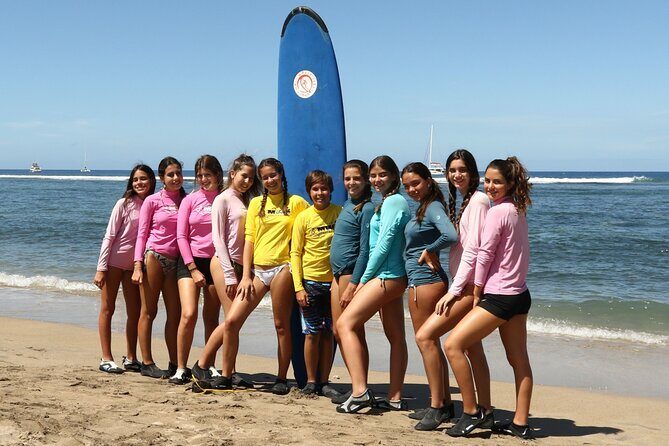
This experience emphasizes safety, and multiple writeups mention that instructors were focused on keeping everyone safe even when the session had challenging currents. That is a good sign for you as a learner, because the ocean is not a classroom with a perfect curriculum.
What you can do to help: listen closely during safety instruction on land, follow cues about when to paddle and when to hold position, and do not try to rush your first attempts. If you feel tense, speak up. A patient coach can usually help you troubleshoot what you’re doing instead of letting you panic through it.
Also, the semi-private format helps here. Fewer students means fewer surprises, and it is easier for your instructor to adjust on the fly.
Photos during your surf session: good memories cost money, but they may be worth it
A lot of first-time surfers want proof they actually stood up out there. This lesson includes an option for a photographer during your session.
Reviews describe the picture packages as reasonably priced, and multiple people say the photos were better than what they could take themselves. That tracks with what’s hard about filming surfing: the action moves fast, the light changes, and the phone camera is not exactly built for stable, zoomed-in shots of someone riding.
If you care about keeping the memories—especially for kids and teens—this can be a smart add-on. If you’re on a tight budget, you can also wait and decide after you see what’s offered. Just know that the photographer is there during your session, so the timing is tied to the water time.
Value check: how $109 per person stacks up
At $109 per person for a 90-minute lesson, you’re paying for more than a board rental. You’re paying for:
- guided instruction (safety + technique)
- support in the water
- a small-group ratio
- a structured path from land practice to wave riding
- and an optional professional photo opportunity
Here’s the value logic I use when deciding if a surf lesson is worth it. If the instructor helps you stand up and ride waves during the same session, the cost stops feeling like a generic activity fee. Several experiences describe people surfing by the end—families, teens, and true rookies—because the coaching got them there.
If you’re traveling with a group, this can also be a good spend. It tends to be more effective than trying to self-teach with a rental and hope you get it right. The ocean is not forgiving for beginners, and coaching can compress the learning curve into one day.
Also note: this is on average booked about 28 days in advance. If you know your Maui dates, I’d secure your spot early so you’re not stuck with limited options.
Who should book this surf lesson in Lahaina
This lesson fits best if you:
- want to learn surfing in a small-group setting
- are a true beginner or moving from beginner to intermediate
- prefer an instructor-led safety and technique plan
- want a family-friendly ocean activity with coaching, not just watching
It is also a strong choice if you’re traveling with teens or groups who want a sense of accomplishment. Many lessons like this turn into a morale boost because standing up on the board feels like a real win.
One note: the meeting point is in Waikapu area, and the lesson ends back there. If you’re staying far away, you’ll want to plan transport so you show up calm and on time.
Quick FAQ for your surf prep
FAQ
How long is the semi-private surf lesson?
The lesson runs about 1 hour 30 minutes.
Where does the lesson take place?
It’s in Lahaina, Maui, and you paddle out to the Breakwall for wave time.
Is this lesson only for beginners?
No. It’s designed for beginners and intermediate surfers.
How big is the group?
It’s described as semi-private with 3 students and 1 instructor, and groups are limited to six for a more personalized experience.
What happens before you get in the water?
You start with ocean safety and surf techniques practice on land, then you get comfortable on the board before heading to the break.
Do I need to bring anything?
Bring a swim shirt for sun protection and to reduce rubbing from the surfboard.
Is this a private experience?
It’s listed as a private tour/activity, meaning only your group participates.
Is there a photo option?
Yes. There is a photographer available for photos during your session, and you can purchase pictures afterward.
What is the meeting point?
Start at QCW7+M5X, Waikapu, HI 96793, USA, and the activity ends back at the meeting point.
What if weather is bad?
The experience requires good weather. If it’s canceled due to poor weather, you’ll be offered a different date or a full refund.
Should you book this surf lesson?
If you want a guided way to learn surfing with a real chance of standing up and riding waves, this is a solid pick. The combination of land-based safety practice, small-group attention, and Breakwall wave time is exactly what you want when you’re new or still building confidence.
Book it sooner rather than later since it’s commonly reserved about a month ahead. And if you’re worried about currents or you get nervous in the ocean, take comfort in how often people mention instructors kept things safe and encouraging. For $109 per person, that coaching value is what you’re really buying—and it’s the part that makes the lesson feel worth it.