REVIEW · MAUI
2.5-Hour Private Kiteboarding Lessons at Kanaha Beach in Kahului
Book on Viator →Operated by Action Sports Maui · Bookable on Viator
Wind and instruction meet on Maui’s Kite Beach. I love how this is truly private, with coaching that’s paced to your level, and how instructors (like Miki) explain the basics in a way you can actually follow. It’s the kind of lesson structure that helps you go from confused to confident without feeling rushed.
The main consideration is simple: you need to be able to swim, sign a waiver, and be ready for a weather-dependent session. If wind conditions aren’t right, your class timing can change or the experience may be rescheduled.
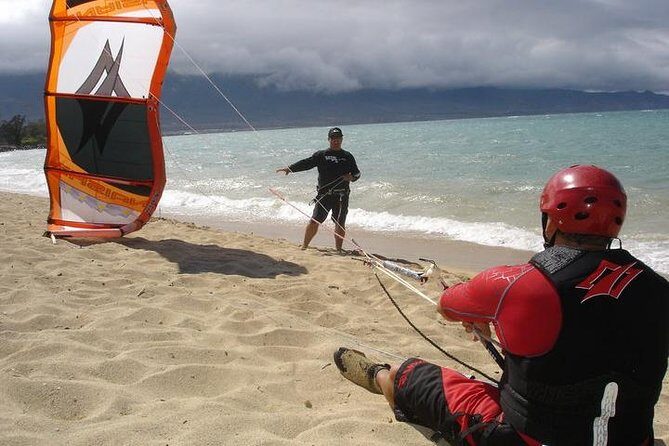
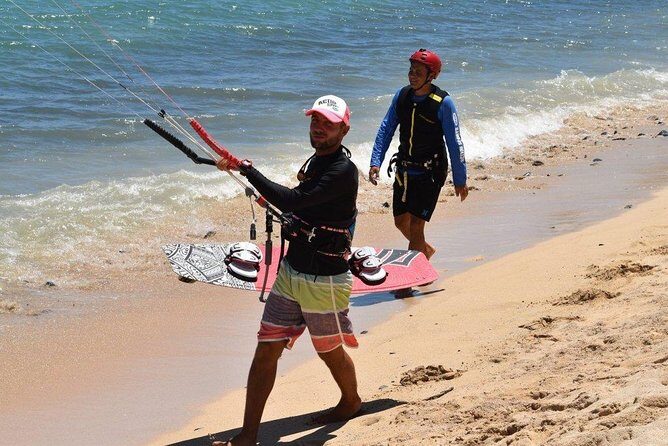
At Kanaha Beach Park near Kahului, you start with gear selection and beach orientation, then move into the water for guided drills before getting time to practice on your own. All kiteboarding, safety, and control gear is included, plus bottled water.
In This Review
- Key things to know before you go
- Kanaha Beach Park: the Maui “classroom” for kite control
- Your 2.5 hours: what happens from first gear to last practice
- Gear selection and beach orientation
- Ground school training on the beach
- Water training exercises with your instructor
- Solo practice time to apply what you learned
- What makes the instruction feel “private” (not just booked privately)
- Gear and safety gear: included, but still worth planning for
- Price and value: what $394.96 covers—and why it can be worth it
- Timing and meeting point: keeping your day stress-free
- Who this is best for (and who should rethink it)
- Weather-dependent reality: how to prepare for the Maui version of “maybe”
- Included vs. not included: what to bring and what to plan
- Included
- Not included
- Should you book this private kiteboarding lesson at Kanaha?
- FAQ
- Where is the lesson meeting point?
- How long is the private kiteboarding lesson?
- What’s included in the price?
- What should I know about swimming and fitness?
- Is there a minimum age?
- Is good weather required?
Key things to know before you go
- Private, all-level coaching: the instruction is tailored to your experience level.
- Progressive lesson flow: beach basics first, water drills next, then solo practice.
- Full gear included: kiteboarding, safety, and control gear are provided.
- You’ll get real feedback: close instructor attention while you learn kite control.
- Kanaha Beach Park is the classroom: a focused spot to practice safely with wind.
- Weather matters: good conditions are required for the lesson to run.
Kanaha Beach Park: the Maui “classroom” for kite control
If you want kiteboarding in Maui, you usually don’t have to look far—Kanaha Beach Park is a go-to spot for training because it’s built around the kind of open space kite students need. The lesson is designed around that reality: you’re not just watching from shore. You’re learning steps that connect wind, kite control, and your body position.
What I like about teaching in a dedicated kite zone is how quickly things click. When your instructor can repeat the same core ideas—kite setup, control basics, and safety—right where you’ll use them, you spend less time translating and more time actually practicing.
Also, this lesson is private, so you aren’t forced to keep up with a faster group or slow down because someone else needs extra help. That matters a lot in a sport where one small mistake can cause a big wobble.
You can also read our reviews of more private tours in Maui

Your 2.5 hours: what happens from first gear to last practice
This is built as a clear progression, and you should expect the pacing to feel logical rather than chaotic. The lesson runs about 2 hours 30 minutes, and it’s paced to your experience level, so beginners get more foundational time and returning riders can focus on technique.
Here’s the flow, in plain terms:
Gear selection and beach orientation
You begin with gear selection, plus orientation on Kite Beach. This matters because kiteboarding gear isn’t one-size-fits-all. Even if you’ve watched videos, your body size, comfort level, and how you hold the bar/lines can change how you learn.
Then you get grounded in where you are and what you’ll be doing. Think of this as the “don’t panic later” stage. When you understand the setup and the area, you spend less mental energy during the first real wind work.
Ground school training on the beach
Next comes ground school—training on the beach before you’re fully out on the water. This is where kite control gets taught step by step so you can build muscle memory before the ocean (and your nerves) get involved.
The practical benefit: you’re learning how to manage the kite’s response, not just memorizing steps. If wind direction changes, you’ll be better prepared because you practiced the fundamentals on land first.
Water training exercises with your instructor
Then it’s into the water with your instructor by your side. You’ll do training exercises designed to keep learning safe and structured. Expect this stage to include repeated attempts where feedback is immediate—because that’s how you correct control mistakes while they’re fresh.
Also note the safety angle here: the lesson includes kiteboarding, safety, and control gear, and you’ll be taught what you need to use and why. That takes the stress down a notch when you’re learning how to handle power in the wind.
You can also read our reviews of more tours and experiences in Maui

Solo practice time to apply what you learned
The final phase includes going solo to practice what you’ve just learned. This isn’t about throwing you in at the deep end. It’s about letting you apply corrections and feel what works without constant instruction.
For many students, this is the “lightbulb” time. You stop hearing your instructor’s words in your head and start making decisions based on what your body and the kite are doing.
What makes the instruction feel “private” (not just booked privately)
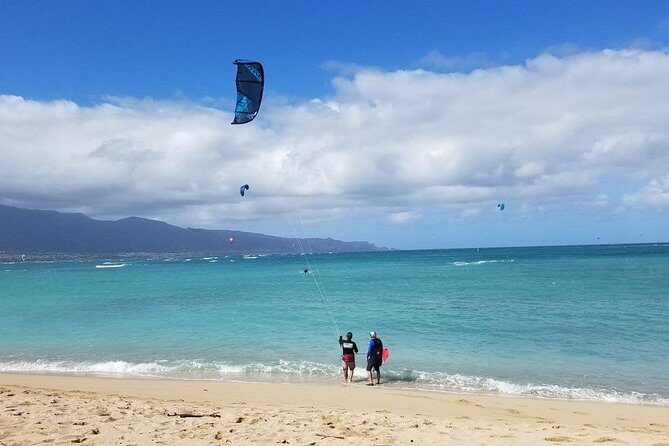
Private lessons can sometimes mean a crowded setup where everyone still ends up waiting. This one is different because the instruction is built around a personalized flow: ground work, then water exercises, then solo practice, all adjusted to your level.
The best example from the feedback is the way Miki taught. One rider highlighted that Miki took time to explain kiteboarding, made it easy to follow, and adjusted to their pace. That’s exactly what you want in kiteboarding, where frustration often comes from confusion, not effort.
If you’re nervous about learning a powered sport, this pacing is a relief. Instead of guessing what you’re supposed to do, you’re coached through the why and the how—then tested gently with your solo practice.
Gear and safety gear: included, but still worth planning for
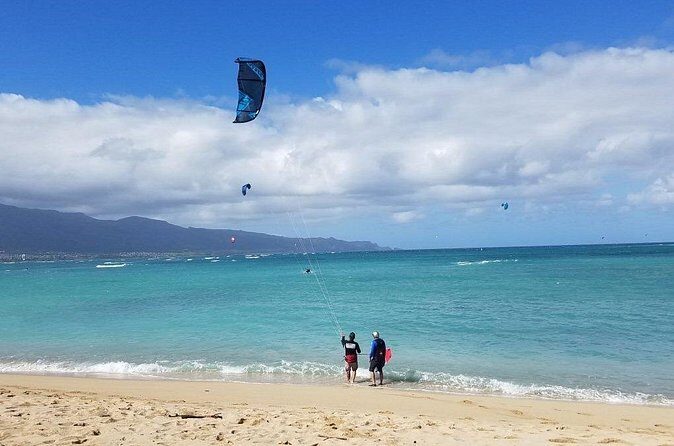
This lesson includes all kiteboarding, safety, and control gear, which is a major value point. Kiteboarding gear can be expensive, and buying or renting extra equipment on top of your lesson can quietly jack up the total cost.
Even with gear included, you’ll still want to show up ready to move. You should be prepared to wear and use the provided kit according to your instructor’s guidance. If you have any injuries or limits, you’ll want to communicate those early—because the lesson is physical and you’ll be working with wind.
One more practical detail: bottled water is included. It’s small, but it helps because you’ll likely be out in Maui sun for the whole session window.
Price and value: what $394.96 covers—and why it can be worth it
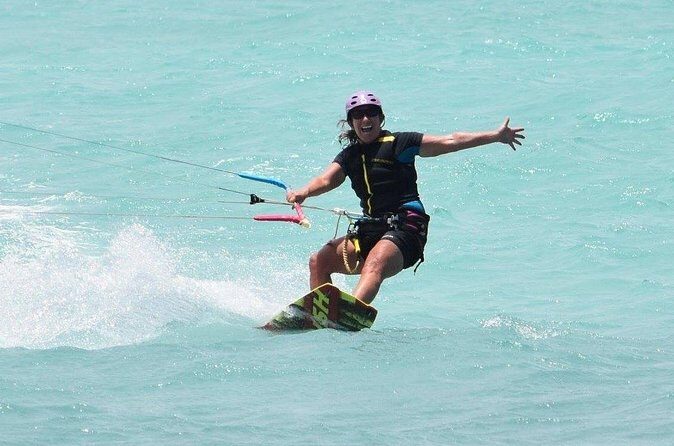
At $394.96 per person for a private 2.5-hour lesson, this isn’t the cheapest way to learn kiteboarding. But the value isn’t just “time with an instructor.” It’s the full learning path: beach training, water drills, then solo practice, with the appropriate gear included.
Here’s where the price starts to make sense:
- Private attention: the lesson is just your group, so your feedback is focused.
- Instructor-led progression: you’re not self-teaching your way through risky trial and error.
- Gear included: you don’t have to budget for kiteboarding, safety, or control equipment rental.
- Weather-aware planning: your lesson is tied to conditions, so rescheduling isn’t something you’re expected to solve alone.
Drawback? You’ll want to make sure you’re mentally ready to learn in the real conditions of kiteboarding: wind, water, and fast learning. If you’re only looking to “try something once” without any interest in practicing, a lesson may feel like a lot of cost compared to more casual activities.
But if you want a real start—one where you leave with clearer control and better safety habits—this is in the right price lane.
Timing and meeting point: keeping your day stress-free
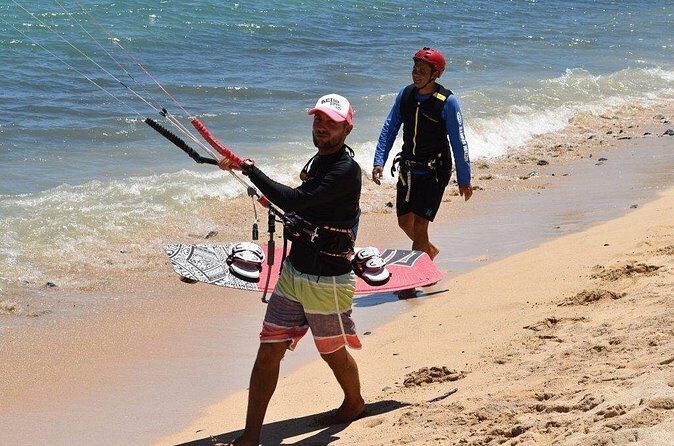
The meeting point is 1200 Amala Pl, Kahului, HI 96732, and the activity ends back there. That makes planning easier. You can build your Maui day around a known start location without complicated drop-off logistics.
You’ll also want to think about timing. Your booking includes a start time, but you’re asked to call the day before to reconfirm weather and the lesson start time. That’s not a hassle for fun; kiteboarding depends on wind and conditions, and instructors adjust based on what’s safe and workable.
If you have a preferred departure time request, you can advise it under special requirements when booking. Just know the final lesson timing can still be influenced by conditions, since good weather is required.
Who this is best for (and who should rethink it)
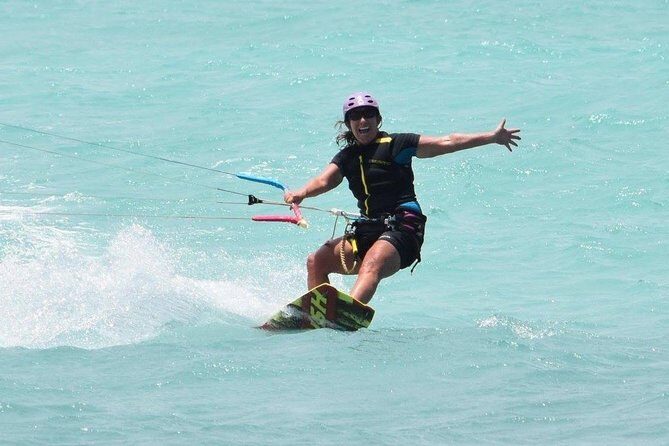
This lesson is designed for all experience levels, and the coaching is tailored to where you are now. If you’re a first-timer, you’ll start with gear selection and beach ground school before moving into water drills. If you have some experience, you’ll still benefit from focused feedback and the chance to refine control with guided practice.
It’s also a solid fit if you want a clean learning structure. Not everyone enjoys bouncing between activities; if you like step-by-step training, this fits.
However, it may not be ideal if:
- you don’t meet the basic swim requirement (all participants must be able to swim)
- you’re not comfortable with moderate physical activity
- you’re under the minimum age of 9 years
- you’re hoping for a guaranteed run regardless of weather (the experience requires good conditions)
If you’re the kind of person who gets overwhelmed by uncertainty, prepare for the reality that wind-based sports can change plans. The good news is that your instructor will handle the flow when conditions allow it.
Weather-dependent reality: how to prepare for the Maui version of “maybe”
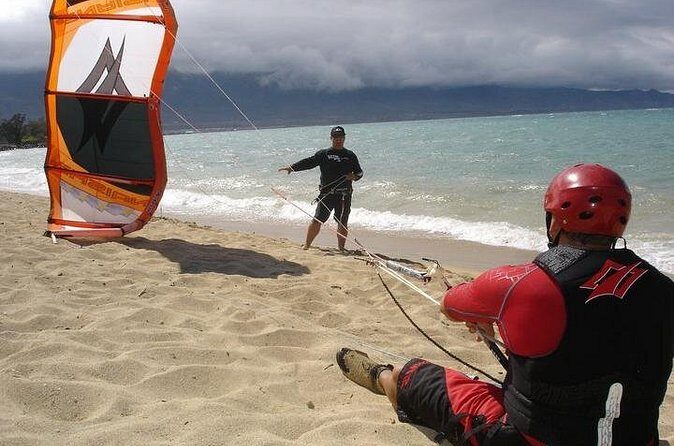
Kiteboarding isn’t a set-and-forget activity. This experience requires good weather, and if it’s canceled due to poor conditions, you’ll be offered a different date or a full refund.
So what should you do to set yourself up for success?
- Plan your day with flexibility. If your session shifts, you don’t want to be locked into something tight right after.
- Make that day-before call to reconfirm the start time. The requirement to check in isn’t optional, and it helps avoid surprises.
- Bring the right mindset: you’re learning a skill in changing conditions. Even on perfect days, the learning curve can be real.
If you do those three things, you’ll get the best chance of turning wind into skill instead of frustration.
Included vs. not included: what to bring and what to plan
Here’s what you can count on being handled for you, versus what you’ll need to sort out.
Included
- Instructor and professional guide
- Private tour (just your group)
- All taxes, fees, and handling charges
- Bottled water
- All kiteboarding, safety, and control gear
Not included
- Food and drinks (beyond the bottled water)
- Transportation to/from the lesson
That means you should plan to eat before you arrive unless you know you can grab food nearby. You’ll be outside and moving, so a light snack can help you feel steady for training.
Should you book this private kiteboarding lesson at Kanaha?
I’d book this if you want a structured start to kiteboarding with private coaching, included gear, and a lesson plan that goes from beach fundamentals to water practice to solo time. It’s a good value approach when you compare it to the cost of renting equipment and figuring out control on your own.
I’d hesitate if you’re not comfortable meeting the basic swim requirement or if you don’t have any flexibility for weather-driven changes. Kiteboarding is wind sports—sometimes you win, sometimes the day needs adjustment.
Best fit: first-timers who want clarity, and intermediate riders who want more direct feedback on control. If you’re hoping to learn in a way that reduces guesswork, this is a smart, focused choice at Kanaha Beach Park.
FAQ
Where is the lesson meeting point?
You’ll meet at 1200 Amala Pl, Kahului, HI 96732, USA. The activity ends back at the same meeting point.
How long is the private kiteboarding lesson?
The lesson runs about 2 hours 30 minutes (approx.).
What’s included in the price?
The price includes all taxes, fees, and handling charges, bottled water, an instructor and professional guide, and a private tour. It also includes all kiteboarding, safety, and control gear.
What should I know about swimming and fitness?
All participants must be able to swim, and travelers should have a moderate physical fitness level. A liability waiver must be signed before the class.
Is there a minimum age?
Yes. The minimum age is 9 years.
Is good weather required?
Yes. This experience requires good weather, and if it’s canceled due to poor weather, you’ll be offered a different date or a full refund.