REVIEW · MAUI
Haleakala Sunrise Self-Guided Audio Tour
Book on Viator →Operated by Shaka Guide Apps · Bookable on Viator
Haleakala sunrise, guided by GPS stories. I love the hands-free narration that plays as you drive and the offline map that keeps you on track with zero cell service. One thing to plan for: sunrise reservations and most entry fees are not included.
This is a private, self-paced drive up and around Haleakala with a story-first audio companion. You’ll get turn-by-turn directions, music, and Hawaiian legends as you hit viewpoints and short hikes—then you can slow down, pause, and explore at your own speed. The main drawback is that the audio experience depends on getting the app access right before you go.
If you want the crater views without paying for a bus or being stuck on someone else’s schedule, this fits well. It’s priced for groups (up to 15), so it can be a smart way to split costs—just make sure you’re ready to start the app in time.
In This Review
- Key highlights I’d plan around
- Why a GPS audio drive makes sense for Haleakala sunrise
- Price and value: $15.99 for up to 15 in your group
- Getting the app running: redeem code and meeting point quirks
- Plan for the ride: how a 6–7 hour route works
- Stop 1: Haleakala National Park base area for stories and first views
- Stop 2: Pukalani quick legend stop (and a breather)
- Stop 3: Sliding Sands Trail prompt—serious mileage, choose your level
- Stop 4: Pa Ka’oao Trail to a crater overlook (0.5 mile walk)
- Stop 5: Kalahaku Overlook—crater floor perspective shift
- Stop 6: Leleiwi Overlook Trail—cloud watch timing
- Stop 7: Halemau’u Trail—an all-day monster hike warning
- Stop 8: Hosmer’s Grove—picnic and reset before the drive down
- Stop 9: Maui County viewpoint—another crater floor angle
- Stop 10: Upcountry Farmers Market—plants, trees, and a casual wander
- Stop 11: Historic Makawao Town—art galleries and local food stop
- What you’ll hear and why the stories matter
- Hands-free use: how to get the best experience without rushing
- Who should book this Haleakala Sunrise self-guided audio tour?
- Should you book this Haleakala Sunrise self-guided audio tour?
- FAQ
- How much does the Haleakala Sunrise Self-Guided Audio Tour cost?
- How long is the tour?
- What language is the audio narration in?
- Does the tour include a sunrise reservation?
- Are entrance fees included for Haleakala or other stops?
- Does the audio guide work without Wi‑Fi or data?
- Does the audio play automatically while driving?
- Where does the tour start and end?
- How do I access the tour in the app?
- Can I cancel for a full refund?
Key highlights I’d plan around
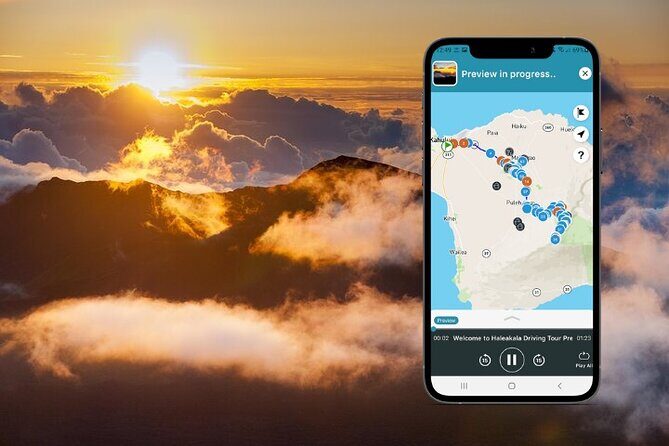
- GPS-activated audio that plays automatically while you drive
- Offline map access so you’re not hunting for service on the mountain
- Stop flexibility so you can skip the longer hikes and focus on viewpoints
- One purchase per vehicle idea (priced per group up to 15) rather than per person
- A mix of crater views and real breaks like Hosmer’s Grove and Makawao town
Why a GPS audio drive makes sense for Haleakala sunrise
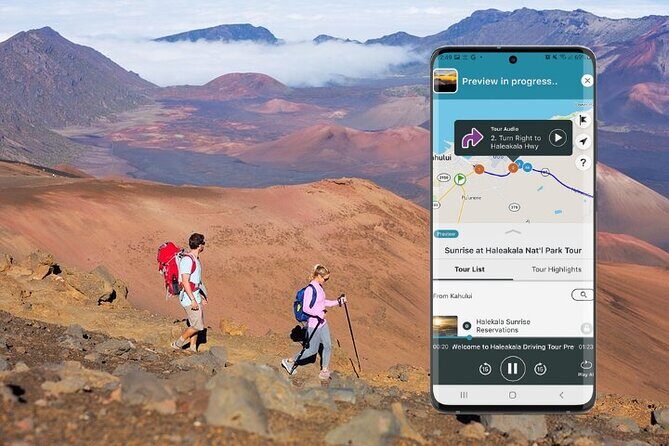
Haleakala sunrise is one of those experiences where timing matters—but not in a way that you should let a rigid schedule ruin your day. This tour is designed so you can do the big crater area at your own pace, with narration and directions that match where your car is.
Instead of listening to a guide talk over a bus engine, you get stories timed to the drive and the viewpoints. That matters because you’re moving through different elevations, light angles, and lookout points. You’ll also be able to pause when you want a full minute to take in the crater floor—then restart when you’re ready to go.
And because it’s private to your group, the “awkward silence” problem goes away. You’re not waiting for other people to form a line before you can move to the next stop.
You can also read our reviews of more guided tours in Maui


Price and value: $15.99 for up to 15 in your group

At $15.99 per group (up to 15 people), this is priced like a bargain tool for getting guided storytelling without turning it into a long, expensive day. The value is strongest when you have a carload—because the tour is described as one tour for the entire vehicle, not charged per person.
The other value angle: you’re not stuck with a single fixed itinerary. The tour gives you a set of high-interest stops, but you can choose what to do and skip what you don’t want. That flexibility is useful on Haleakala, where you might decide you want more overlook time and less hiking time, depending on how your legs feel at altitude.
The only real cost “surprise” to watch: the audio doesn’t include sunrise reservation or entrance fees. So budget for park entry/parking and your own hiking logistics, while counting the tour price as the “story + directions” piece.
Getting the app running: redeem code and meeting point quirks
Here’s the reality check that will save you frustration. The tour is accessed through the Shaka Guide app, and you use a redeem code in the app to unlock the tour. The instructions say you’ll receive confirmation and details by email, then redeem in the app using the redeem code.
If you’re booking through a third-party site, you should double-check that you’ll get the needed redeem code in time for your start. In at least one experience, the code access caused the tour to be missed because it arrived after the scheduled sunrise window.
Also, don’t expect the “meeting point” to be a labeled place you can stand in front of. The start location is in Kahului, and the narration starts when you’re nearby the GPS starting point. If you treat it like a physical kiosk, you can lose time and start grumpy.
My practical suggestion: once you book, download the tour using strong Wi‑Fi and do a test launch in advance. Then the day of, you’re not solving app puzzles while the mountain is calling.
Plan for the ride: how a 6–7 hour route works
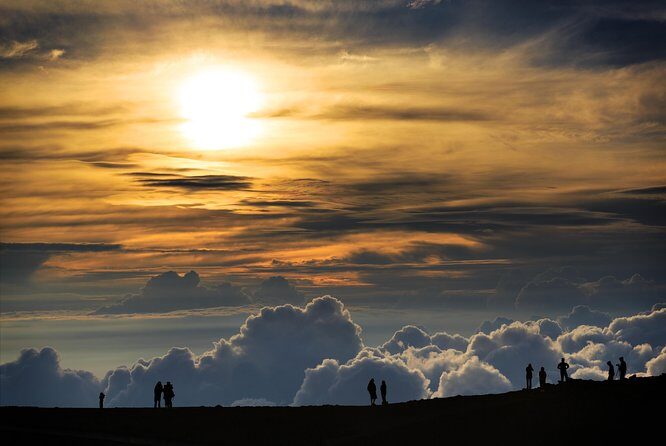
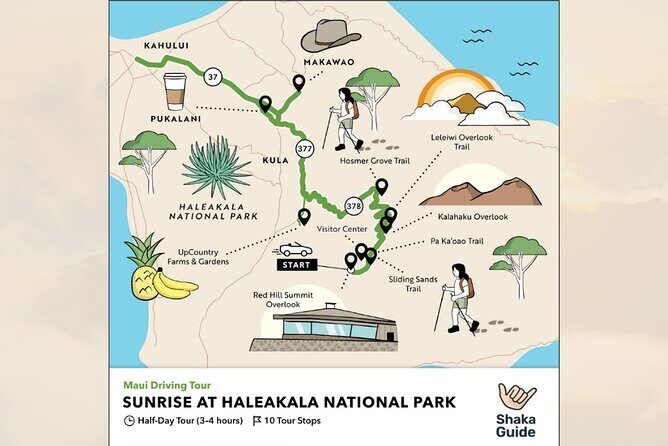
The experience is listed at about 6 to 7 hours and is available daily (opening hours show 12:00 AM to 11:30 PM). That matters because Haleakala sunrise plans are usually early and strict, but a self-guided audio tour can let you slide into the day without feeling trapped.
Tour start is customizable, and you can start, pause, and resume on your schedule. That’s good if your group splits up briefly for photos, or if weather and light change your pace.
Since the tour includes both short stops and longer trail prompts, I’d think of it as a menu. You’re driving the route, then choosing how hard you want the walking to get.
Stop 1: Haleakala National Park base area for stories and first views

Your first major stop is Haleakala National Park. This is where the turn-by-turn GPS and the story component really kick in. You’ll get information on what to look for, places to explore, and a stack of Hawaiian legends connected to the volcano.
Time allocated here is about 1 hour, and park admission is not included. So treat this like your “pay attention and get oriented” hour. If you want the day to feel smooth, you’ll do best by arriving ready to slow down and actually read the signs and look for what the narration mentions.
A good move: use this hour to set your expectations for the crater. If your first overlook is rushed, it’s harder to enjoy the later perspectives.
You can also read our reviews of more tours and experiences in Maui





Stop 2: Pukalani quick legend stop (and a breather)

Stop 2 is Pukalani, with about 15 minutes of audio focused on Hawaiian stories and legends as you ascend. Admission here is listed as free.
This is less about big scenery and more about pacing. It’s like the tour nudging you: take a small pause, absorb context, and then keep climbing. If you’re doing a sunrise-style day, it can also help you stay mentally engaged while the road and elevation do their thing.
I like stops like this because they remind you that the experience isn’t only “look at the volcano,” it’s also “learn how people connect to it.”
Stop 3: Sliding Sands Trail prompt—serious mileage, choose your level

Stop 3 is the Sliding Sands Trail. The tour describes it as a rigorous 9-mile hike one way and suggests a 30-minute visit window in the audio route.
This is the big “make a plan” stop. Nine miles one way is not a casual stroll, and the tour doesn’t pretend otherwise. What this stop is really good for is helping you decide early: are you doing part of the trail for a stretch and photos, or skipping it entirely to focus on viewpoints?
Admission is listed as not included, so treat trail access as your responsibility. Also, if your group includes mixed mobility, this is where you’ll want a quick decision so nobody feels dragged into the wrong effort level.
Stop 4: Pa Ka’oao Trail to a crater overlook (0.5 mile walk)

Stop 4 is the Pa Ka’oao Trail. It starts at the visitor center and leads to an overlook, with a walk of about 0.5 miles.
Time allocated is 30 minutes, and admission is not included. This is the stop that feels like a “best effort” option for many people: short enough to do without committing to a monster hike, but still meaningful because it gets you to an overlook in the crater area.
The tour also calls out a key point that makes sense: air feels thinner up there, so take your time. Even if you’re fit, the altitude can turn a simple walk into a slower, more deliberate one.
Stop 5: Kalahaku Overlook—crater floor perspective shift
Stop 5 is Kalahaku Overlook. You’re there for about 15 minutes, and admission is listed as not included.
The audio goal is straightforward: see the crater floor from a different perspective. That “different perspective” part is important. Haleakala isn’t just one view—it changes as you move around the crater rim and the light shifts.
I’d treat this as a photo and stillness stop. Give yourself a minute longer than you think you need, because crater views benefit from looking first, then shooting.
Stop 6: Leleiwi Overlook Trail—cloud watch timing
Stop 6 is the Leleiwi Overlook Trail, another 15-minute stop with free admission listed.
The hook here is atmospheric: the narration points out that you can watch clouds form. That’s the kind of moment you can’t rush, because the magic is in changes happening over time.
This is a good stop for groups where some people want to wander and others want to stand and watch. It works either way, as long as you keep the pace calm.
Stop 7: Halemau’u Trail—an all-day monster hike warning
Stop 7 is Halemau’u Trail and the audio description is blunt: it’s a monster 11-mile all day hike and shouldn’t be attempted unless you’re prepared. Time allocated is 45 minutes, with admission listed as free.
This one is tricky because the audio tour gives you a slice of time, but the trail itself is not a quick hit. The value of including it is that it flags expectations. It helps you avoid the classic mistake: thinking the crater area means everything is short and easy.
If your group wants to hike, this stop can help you commit responsibly. If your group wants viewpoints, this stop is your “skip without guilt” option.
Stop 8: Hosmer’s Grove—picnic and reset before the drive down
Stop 8 is Hosmer’s Grove. Time allocated is 1 hour, and the tour lists admission as not included.
This is where you get a real break. The audio nudges you to have a picnic and relax before heading back down the mountain. That reset can be huge, especially after doing any walking at elevation.
Also, it’s a natural moment to regroup so everyone’s on the same page about the next stops. If anyone feels off, this is where you slow down and adjust.
Stop 9: Maui County viewpoint—another crater floor angle
Stop 9 is a view labeled Maui County, with about 15 minutes and free admission listed.
This is similar to Kalahaku in purpose: another perspective on the crater floor. The difference is you’re getting another “version” of the same big topic—how the crater looks changes as you move and as the light shifts.
I’d use this time to compare what you saw earlier. If you’ve had long enough at each stop, the crater will start to “make sense” visually instead of being just a huge hole in the sky.
Stop 10: Upcountry Farmers Market—plants, trees, and a casual wander
Stop 10 is the Upcountry Farmers Market. Time allocated is 1 hour, and admission is listed as not included.
This is a change of pace from elevation and hiking. The audio experience here shifts to everyday Maui: plants and trees and a place to wander.
If your group includes people who don’t want another overlook, this stop is a great pressure-release valve. And if you want a snack or something to take with you after the mountain, this is the kind of stop that can fit that need—though meals are not included in the tour.
Stop 11: Historic Makawao Town—art galleries and local food stop
Stop 11 is Historic Makawao Town, about 1 hour. Admission is listed as not included.
This is the art-town finish: galleries and workshops of local artists, many with Hawaii inspired themes, plus tasty local food. It’s also a good place to process the day’s contrast—volcano drama earlier, then human-scale creativity and shopping now.
If you’re doing the crater on one day and want your final hour to feel like a real town experience (not just driving), this stop helps.
What you’ll hear and why the stories matter
The audio narration isn’t just facts. It’s designed to pair what you’re seeing with Hawaiian legends and place-based storytelling. That’s why the tour gives you legends at Pukalani and myth-linked context at the Haleakala National Park area, rather than saving everything for one lecture.
You’ll also get music mixed into the experience. Music is minor on paper, but it can help set a mood when you’re looking out at an enormous crater and waiting for clouds to change.
The tour also includes activity and restaurant recommendations as part of the narration. Since meals aren’t included, these suggestions are helpful for deciding where to eat after you’ve survived the drive and elevation.
Hands-free use: how to get the best experience without rushing
This tour is built to play automatically as you drive, with GPS directions and an offline map. That’s exactly how you want it on a route like Haleakala—less screen time, fewer wrong turns, more time looking up.
Still, I’d treat it like a tool, not a replacement for thinking. If you’re choosing between hike options, listen for the narration cues, then decide quickly. When the audio starts describing a tougher hike, you can use that moment to agree as a group.
Because you can pause and resume, it’s also okay if you stop to take longer photos or catch your breath. The tour isn’t trying to yank you along every 5 minutes.
One last practical point: the app is described as working offline, but you’ll want to download ahead of time using strong Wi‑Fi so the map and narration are ready when you need them.
Who should book this Haleakala Sunrise self-guided audio tour?
You’ll be happiest with this if you:
- Want flexibility over a fixed bus schedule
- Have a group (up to 15) and want a low per-vehicle cost
- Enjoy viewpoint stops and stories, and you’re okay choosing which hikes to attempt
- Prefer using your own car and your own pace
You might reconsider if:
- Your group plans to do sunrise at a very exact minute and you’re worried about app access timing (redeem code delays can be a real problem)
- Everyone in your group needs a very literal, physical meeting point and clear signage at the start
- You dislike app-based experiences and would rather have a live guide you can talk to face-to-face
If you’re comfortable with a little planning and app setup, this is a strong way to experience the crater without paying for a more expensive tour format.
Should you book this Haleakala Sunrise self-guided audio tour?
Yes, if you want a cost-smart, private way to get guided storytelling and crater-direction help, especially with a full car group. The hands-free GPS audio and offline map are the big wins, and the ability to pick shorter stops like Pa Ka’oao or longer challenges like Sliding Sands lets you match effort to your crew.
Just don’t leave app setup to the last minute. Make sure you understand the redeem code requirement and that you’ll have access before you head out—sunrise timing doesn’t forgive delays.
If you’re the type who wants the freedom to stop, look, and decide on the fly, this tour style is exactly made for you.
FAQ
How much does the Haleakala Sunrise Self-Guided Audio Tour cost?
It costs $15.99 per group, and the group size can be up to 15 people.
How long is the tour?
The duration is listed as about 6 to 7 hours.
What language is the audio narration in?
The tour is offered in English.
Does the tour include a sunrise reservation?
No. Sunrise reservation is not included.
Are entrance fees included for Haleakala or other stops?
No. Entrance fees are not included. Some stops are listed as free, but others are not included.
Does the audio guide work without Wi‑Fi or data?
Yes. The tour includes an offline map, and the audio experience can be used without continuous wifi or data.
Does the audio play automatically while driving?
Yes. The narration is described as playing automatically as you drive.
Where does the tour start and end?
It starts in Kahului, HI, USA, and ends back at the meeting point in Kahului.
How do I access the tour in the app?
You receive instructions by email, download the Shaka Guide app, then use the redeem code from your email to redeem the tour in the app. You start it from the My Stuff tab and follow GPS instructions.
Can I cancel for a full refund?
Yes. Free cancellation is available if you cancel up to 24 hours in advance for a full refund.