REVIEW · MAUI
Kahului: Doors-off West Maui and Molokai Helicopter Tour
Book on GetYourGuide →Operated by Air Maui Helicopters · Bookable on GetYourGuide
Wind and wings. Maui and Molokai from above.
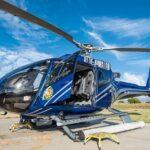
I love the doors-off feeling and the way you get live pilot narration while the helicopter lines up the best views over West Maui Mountains and Molokai. One thing to plan for: it’s a short flight and the rules are strict on what you can bring, including weight requirements and a no-camera-in-hand setup.
You also get the practical goodies that make this kind of ride much easier to enjoy—Air Maui provides a windbreaker jacket and goggles, plus a phone lanyard so you can snap pics without juggling gear. Just make sure you’re ready for wind, bright light, and the fact that only your cell phone is allowed on board for picture taking.
In This Review
- Key things to know before you book
- Doors-Off Over West Maui and Molokai: The point of this flight
- Kahului Heliport Check-In: What you’re dealing with first
- Flying West Maui Mountains: Rainforest and coastline from the air
- Crossing to Molokai via the Pailolo Channel: Why this route is special
- Molokai North Shore Waterfalls: How to actually enjoy them mid-flight
- Photography rules: Phone-only takes patience, not frustration
- What Air Maui provides: windproof comfort that matters
- Price and seat comfort: what $403 buys you (and what it can cost extra)
- Who should book this, and who might skip it
- Should you book Kahului: Doors-off West Maui and Molokai?
- FAQ
- Where does the tour start and end?
- How long is the flight?
- Is the helicopter doors-off?
- What’s provided for the flight?
- Can I bring a camera on board?
- What should I wear or bring?
- Is there a weight limit?
- How big is the group?
- Is the pilot narration included?
- Is transportation included?
- Is it suitable for kids?
Key things to know before you book
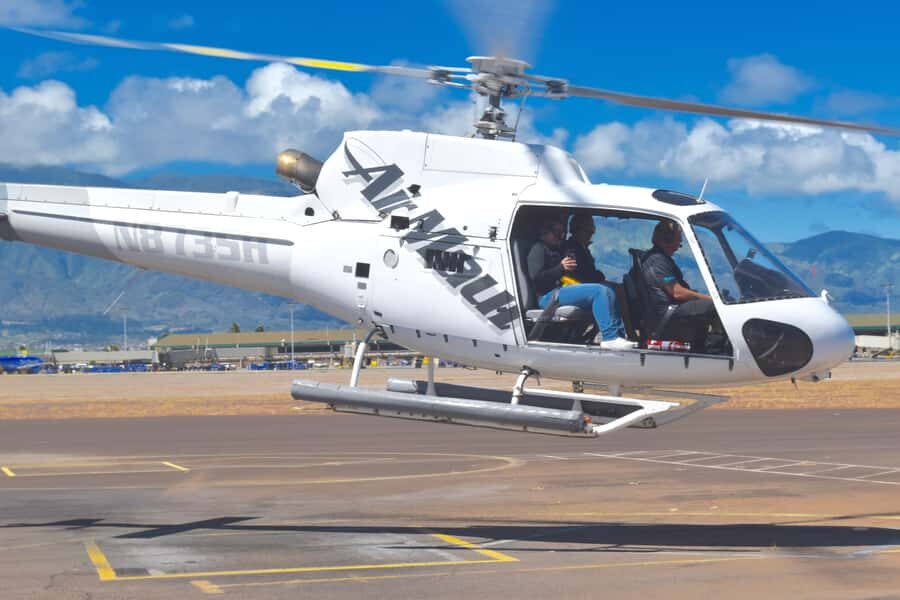
- Doors-off setup for real, unobstructed views over West Maui and Molokai
- Pilot narration and music included, so you get context, not just flying
- Phone-only photography with a lanyard provided by Air Maui
- Windbreaker jacket and goggles are part of your flight comfort
- Small group limit of 6 participants, which helps with smooth viewing
- Weight limits may require an extra seat for safety and comfort
Doors-Off Over West Maui and Molokai: The point of this flight
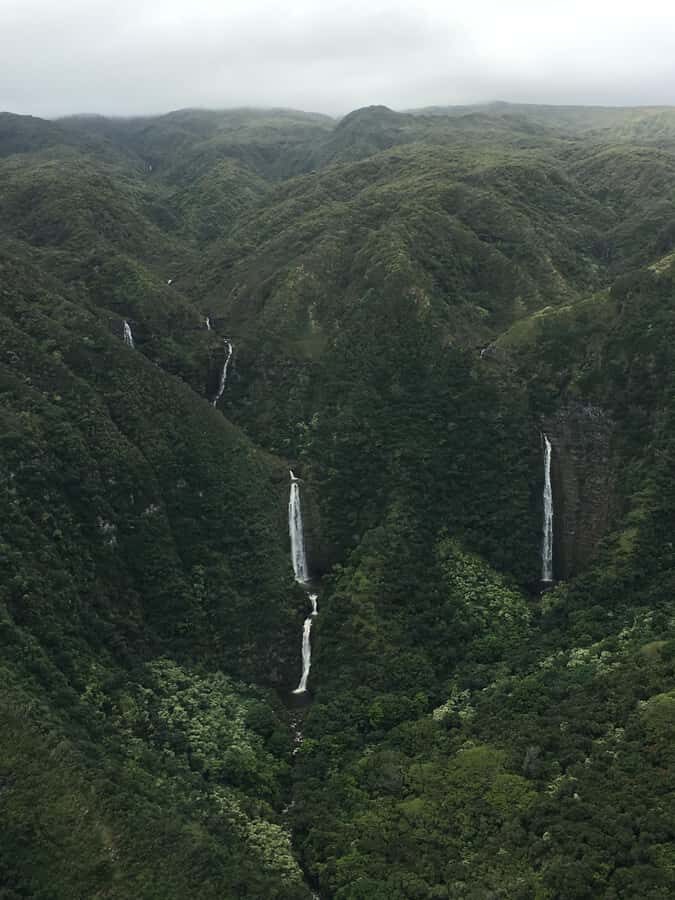
This is the kind of tour that makes you stop thinking like a tourist with a checklist and start thinking like a bird with a view. The big draw is simple: doors-off flying. That means your eyes get the full edge-to-edge look, and the wind is part of the experience, not a nuisance you’re trying to escape.
What you’re actually seeing matters too. The route is built around two high-impact regions: the West Maui Mountains (rainforest and coastline) and then the north shore of Molokai, where you can spot dramatic ocean cliffs and waterfalls. If you love places where the land drops fast into the sea, this is a very direct way to get that feeling—without a long drive and without hiking steep terrain.
You can also read our reviews of more tours and experiences in Maui


Kahului Heliport Check-In: What you’re dealing with first
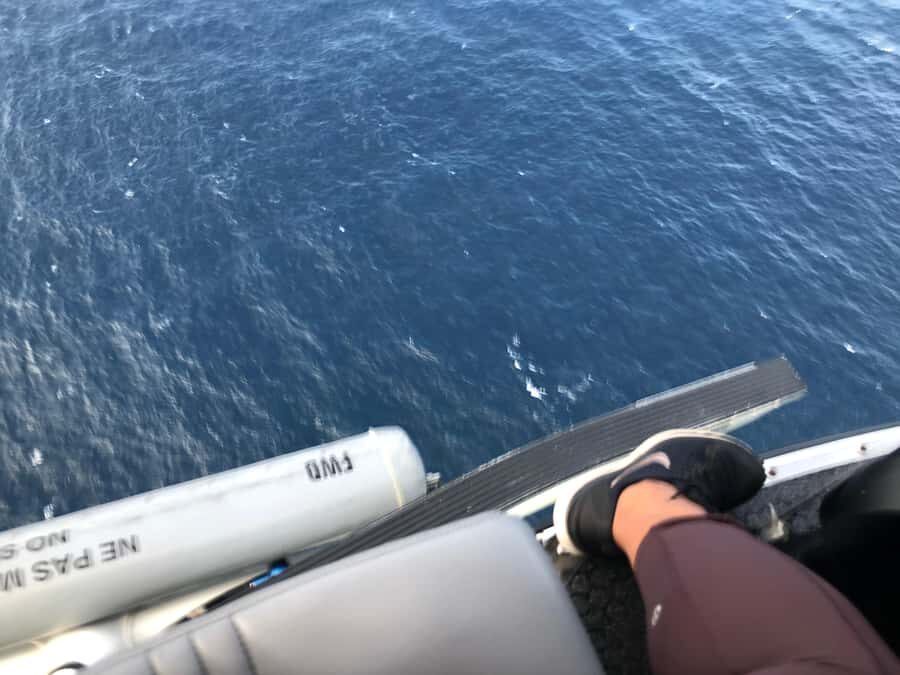
Most people think of a helicopter tour as a quick hop, but the first few minutes at Kahului Heliport can set the tone. You’ll check in at the heliport (the activity lists the start at Kahului Heliport, with the address shown as 1 Keolani Pl). Then you’ll fly and come back to land at the same base.
This matters because you’ll get fitted up for the doors-off conditions. Air Maui hands you the comfort gear before you go—a windbreaker jacket and goggles—and they also provide a lanyard for your cell phone. The goal is to keep you focused on the sights instead of figuring out what to do with your stuff in the wind.
One more early consideration: this is a small-group ride, limited to 6 participants. That usually helps the pilot and crew manage positioning so everyone has a shot at the views when the route turns toward the mountains and then again toward Molokai.
Flying West Maui Mountains: Rainforest and coastline from the air
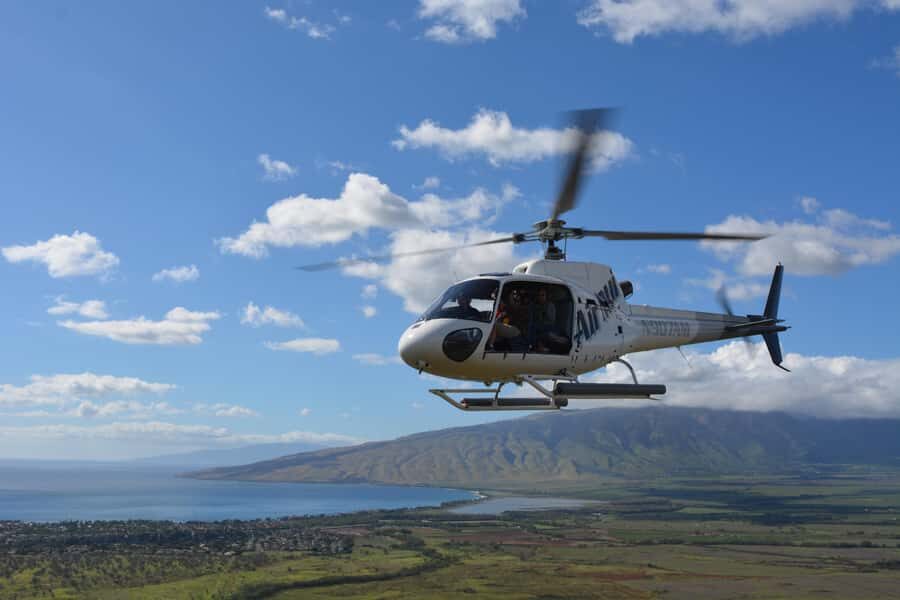
Once you lift off, the tour starts by running the line over the West Maui Mountains. From above, this area reads like layered detail: darker patches where the terrain is thicker, lighter stretches where the coastline breaks into coves and surf. Even if you’ve driven Maui before, it’s hard to truly grasp how quickly the slopes rise and how close the ocean sits to the hills—until you’re looking down from the air.
This leg is also where the pilot’s live narration and music becomes more than background. You’ll get a guided sense of what you’re looking at as the helicopter moves. That’s a big value point for me, because it turns the flight from just a ride into an actual tour.
Practical reality check: this portion is all about views, not sitting still. The helicopter will shift angles as you pass ridgelines and coastlines, which helps with sightseeing. You won’t be staring at one perfect angle for the entire time, so your best strategy is to stay ready—phones up when the pilot cues a sight, then relax and enjoy the moment.
Crossing to Molokai via the Pailolo Channel: Why this route is special
Then comes the step that makes this tour feel different from a simple “fly around Maui” deal: the crossing over the Pailolo Channel to Molokai.
From above, channel crossings tend to feel like geography homework. Here, it’s more like a visual switch. Water changes texture, currents and cloud shadows create movement, and the coastline starts looking more rugged and less broken up than West Maui. You’re not just traveling to another island—you’re seeing a different mood in the land.
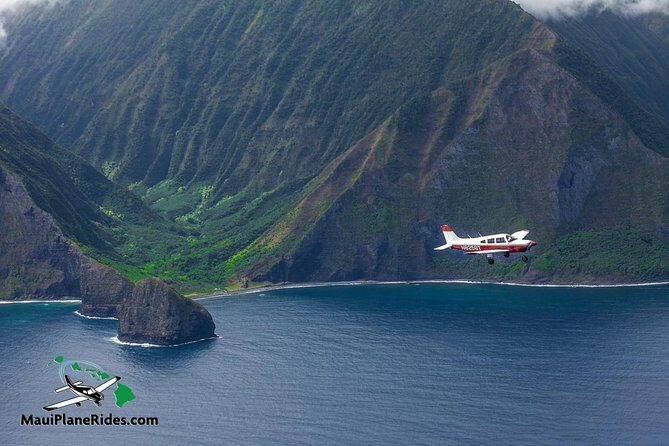
As you approach Molokai’s north shore, the tour’s promise starts paying off: you get the chance to look at some of the tallest sea cliffs and the waterfalls that drop toward the ocean. The key is perspective. From the ground, those cliff faces are hard to appreciate because distances and angles flatten everything. From the air, you can see the whole system: where the water falls, where the cliff walls cut down, and how the terrain stays busy with natural green cover.
This is also where a doors-off helicopter shines. The air is noisy and windy, but it’s also honest. You see what’s there, without the glass glare and framing you get in some other styles of viewing.
Molokai North Shore Waterfalls: How to actually enjoy them mid-flight
Waterfalls are tricky from a helicopter because you’re often spotting them at speed and from changing angles. The good news is that this flight is designed around the sights, not random scenic segments. The north shore is the focus, and the pilot keeps the experience moving toward what’s most impressive.
A detail I really like in the way this tour is set up: you’re not just flying solo behind other passengers’ heads. The overall experience is organized so each seat gets a fair chance to view the sights as the helicopter lines up. With a small group of up to 6, that’s easier than on bigger boats or packed aircraft.
Your job is mostly to stay ready. The flight includes live narration, and that’s your cue to lift your phone when the pilot is aiming the helicopter toward cliffs, falls, or a standout coastline stretch. If you keep your eyes on the pilot cues rather than trying to hunt for waterfalls the whole time, your pictures and your memories both tend to come out better.



Photography rules: Phone-only takes patience, not frustration
This tour has a clear and slightly unusual photo policy: only your cell phone is allowed on board for picture taking. No cameras. No loose bags. Hats aren’t allowed either. The tour even provides a phone lanyard, which tells you exactly how they expect you to manage it in the wind.
Here’s how I’d handle it so it doesn’t become annoying:
- Keep your phone in hand only when you’re ready to shoot.
- Use the lanyard to prevent it from flying off, but still be mindful when the helicopter banks.
- Don’t waste time digging for settings. Decide ahead of time if you’re using video or stills.
Also, even if you take photos the whole time, the best “photo” is still what you see with your own eyes first. The best cliff-and-waterfall moments are often brief. You’ll get better results when you accept that you’re capturing highlights, not documenting every second.
One more value point: a media package (USB live video and/or photo from your flight) exists, but it’s not included. If you care a lot about having someone else capture the flight angle you’re missing, budget for that add-on decision. Otherwise, rely on your phone and the lanyard.
What Air Maui provides: windproof comfort that matters
Doors-off is thrilling, but it can also be brutally windy. That’s why Air Maui provides the safety-and-comfort basics before you go:
- Windbreaker jacket
- Goggles
- Phone lanyard
This is a smart setup because it reduces the risk of you wearing the wrong gear. A jacket helps with wind chill. Goggles protect your eyes from spray and dust. And the phone lanyard matches the photo rule—no juggling, no stuffing your device into a pocket where it might come loose.
What you should bring is simple: closed-toe shoes. That’s it from the provided info. Hats are out. Bags are out. In other words, they want you lightly loaded and stable in the cabin.
Weather can still be windy, so expect it. The tour explicitly notes that it can be very windy onboard, but the tradeoff is unobstructed views. If you want clean scenery without window reflections, this is the trade: discomfort for clarity.
Price and seat comfort: what $403 buys you (and what it can cost extra)
At $403 per person, this isn’t a cheap activity. The value comes from three things you can’t easily replicate:
- Doors-off access with clear air views (not framed through glass)
- A route that targets West Maui Mountains plus Molokai’s north shore
- Live pilot narration and music, so you get meaning behind the visuals
It’s also a short flight, listed at 45 minutes. For that time, you’re paying for the aircraft, the pilot expertise, and the prime scenic routing. If you’re comparing this to a long day of driving and viewing from lookouts, helicopter time is expensive—but it also compresses the experience into a concentrated highlight.
The other big factor is seat and weight requirements. This tour has comfort-seat rules that may require purchasing an additional seat at booking. The provided guidance includes multiple thresholds, but the direction is consistent: accurate body weight matters, and extra seating may be required for safety and comfort.
From the info you’re given, the situations that can trigger an extra seat include:
- a single passenger at the higher weight thresholds mentioned (including 240 lbs or more in one section and 230 lbs or more in another)
- a couple’s combined weight crossing the stated limit (between 400 lbs and 420 lbs depending on the section)
- groups of 3+ with an average weight threshold (listed as 190 lbs or more or 200 lbs or more depending on the section)
- anyone over 250 lbs, which is explicitly stated as requiring a comfort seat no matter what the combined weight is
If you’re near any of those numbers, don’t wait until the last minute. Build it into your budget early, because it can change the total cost fast.
Who should book this, and who might skip it
This is best for adults and older kids who can handle wind and accept the tight rules on gear. It’s not suitable for children under 10.
I also think it’s a strong choice if you:
- want big scenery without hiking or long drives
- love waterfalls and cliff scenery but don’t want the effort of ground-based vantage points
- value guided context (the pilot narration) while you’re looking out
On the flip side, you might want to skip it if you:
- hate being cold in wind (even with a jacket)
- get easily frustrated by strict carry rules (phone-only photography onboard)
- are planning a trip where you’re very flexible about time and can’t handle a specific tour window
One more note: this is a small group. That’s a plus for attention and viewing, but it also means the experience is tighter. You’ll be focused, not lounged.
Should you book Kahului: Doors-off West Maui and Molokai?
If your Maui plans include wanting both mountains and ocean drama, this tour is a good use of time. You’re paying for a rare combo: doors-off access plus a route that targets Molokai’s north shore cliffs and waterfalls along with the West Maui Mountains views.
I’d book it if you can handle wind, you’re ready to follow the phone-only rule, and you’re comfortable with the weight-seat policy. Also, if you care about having a pilot who manages the sightlines for everyone in a small group, this is the type of operation that tends to deliver on that.
If your priority is comfort over speed, or you want a long, slow sightseeing day, you may prefer a ground-based plan. But for pure aerial impact in a short window, this one makes a strong case.
FAQ
Where does the tour start and end?
The tour starts at the Kahului Heliport (the meeting point is also shown as 1 Keolani Pl) and ends back at the same heliport.
How long is the flight?
The tour duration is listed as 45 minutes. Starting times depend on availability.
Is the helicopter doors-off?
Yes. This is a doors-off helicopter tour.
What’s provided for the flight?
Air Maui provides a windbreaker jacket, goggles, and a lanyard for your cell phone.
Can I bring a camera on board?
No. Cameras are not allowed, and only your cell phone is allowed on board for picture taking.
What should I wear or bring?
Bring closed-toe shoes. Hats, cameras, and bags are not allowed.
Is there a weight limit?
Yes. The tour lists comfort-seat/extra-seat requirements based on passenger weight (including rules for higher individual weights and combined weights). You’re asked to provide accurate body weight at checkout.
How big is the group?
This is a small group limited to 6 participants.
Is the pilot narration included?
Yes. Live narration and music from your pilot is included, and the audio guide is English.
Is transportation included?
No. Transportation to/from the heliport is not included.
Is it suitable for kids?
It is not suitable for children under 10.