REVIEW · MAUI
First Class Waterfalls of West Maui and Molokai Helicopter Tour
Book on Viator →Operated by Blue Hawaiian Helicopters - Maui · Bookable on Viator
If you love Maui views, this is a shortcut. A first-class helicopter ride gives you West Maui’s rainforest valleys and Molokai’s dramatic sea cliffs in about 50 minutes, with a pilot who shares the history and culture as you fly. I especially love the floor-to-ceiling windows up front for uninterrupted sightlines, and I also like the Bose Aviation-grade noise-cancelling headsets with two-way communication so you can actually hear what’s going on.
One thing to consider: your route and timing can change with wind and weather, and the flight is short, so you’re seeing a lot from the air rather than spending time on the ground. Still, if you want big scenery fast, this tour is built for that.
In This Review
- Key things you’ll notice on this helicopter tour
- First-Class Windows Over West Maui and Molokai: What You’re Buying
- Getting There, Check-In Timing, and Photo-Pro Tips That Actually Help
- Weight limit and the “extra seat” rule
- Comfort and Sound: Bose Headsets Make the Narration Work
- Stop-by-Stop: How the Flight Reads Like a Maui to Molokai Story
- Maui shoreline start: Haleakalā views and West Maui’s scale
- Gateway to ‘Iao Valley: seeing the island’s crossroads from above
- Waihe‘e ridge lines: dramatic terrain and the rainforest logic
- Kahakuloa Bay: a remote former fishing village feeling
- Mauna Kahālāwai: the highest peak and the ridge separation effect
- Cross the Pailolo Channel: turning toward the “Friendly Isle”
- Moloka‘i essentials: the world’s highest sea cliffs and Kalaupapa
- Ka‘anapali coastline: resorts and an easier pace of scenery
- Kapalua: beaches, clear water, and golf course geometry
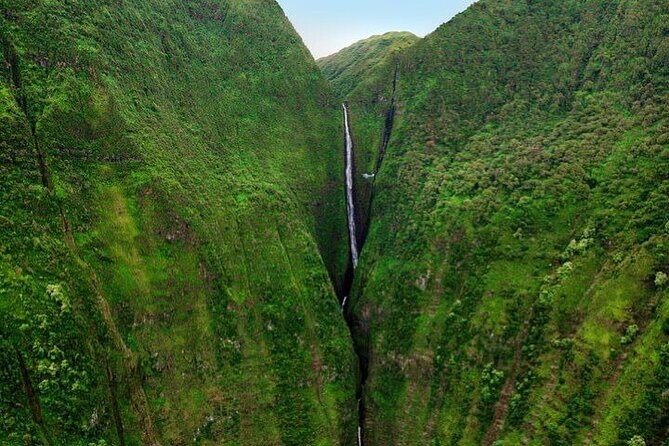
- Pelekunu Bay and Pelekunu Valley: free-flowing streams and preserved fauna
- Why This Tour Is Worth It (Even If You’re Watching the Budget)
- Who Should Book This, and Who Might Want to Adjust
- Should You Book the First-Class Waterfalls of West Maui and Moloka‘i?
- FAQ
- How long is the flight for this helicopter tour?
- Where does the tour start?
- What is included in the price?
- What is not included?
- Do I need to bring anything?
- What time should I arrive to check in?
- Is the tour dependent on weather?
- What is the weight limit?
- Is the pilot also a guide?
- Is scuba diving allowed before the tour?
Key things you’ll notice on this helicopter tour
- Front-row floor-to-ceiling windows keep your view wide open over valleys, ridges, and cliffs.
- Bose noise-cancelling headsets + two-way mic make the pilot narration practical, not just background noise.
- First-class comfort on a small aircraft setup helps the ride feel less hectic than bigger tours.
- Molokai’s sea cliffs and Kalaupapa peninsula show up fast when you’re looking down at sheer drop-offs.
- Pelekunu Valley and its free-flowing streams give you a different side of “waterfalls” beyond just the obvious falls.
- After-tour video preview at the heliport lets you review what you saw before you decide on optional photo/video add-ons.
First-Class Windows Over West Maui and Molokai: What You’re Buying
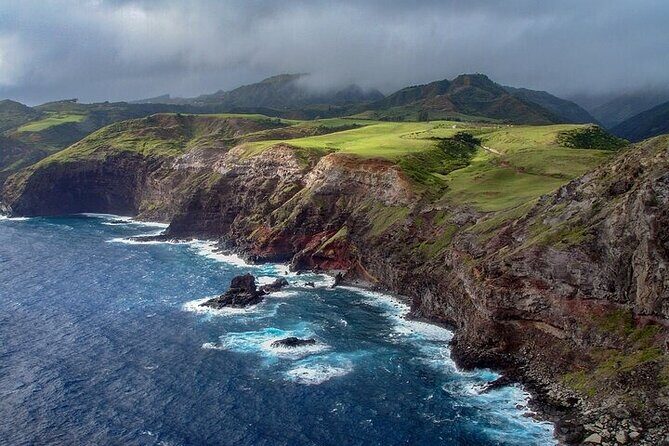
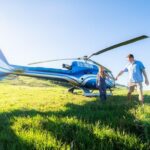
This is a helicopter tour where the main product is eyesight. You’re not just getting a scenic flight; you’re getting front seating with floor-to-ceiling windows, which matters a lot when you’re flying over knife-edge ridges, misty peaks, and deep valleys. From those seats, the view stays “whole” instead of chopped up by framing.
The other thing you’re paying for is the ability to understand what you’re seeing. The pilot also serves as a State of Hawai‘i Certified Tour Guide and you’ll get a running explanation through the aircraft’s headsets and microphones. With two-way communication, you can ask questions in real time, and that turns a quick flight into something more like guided sightseeing.
Yes, it’s expensive on paper. But when you look at what’s included (headsets, narration, fees/taxes, and first-class seating), the cost starts to make sense if you value time and views. Most people don’t come to Maui to waste half a day getting the “from above” perspective. This tour compresses a lot of coastline, mountains, and cliffs into a single ticket.
You can also read our reviews of more tours and experiences in Maui

Getting There, Check-In Timing, and Photo-Pro Tips That Actually Help
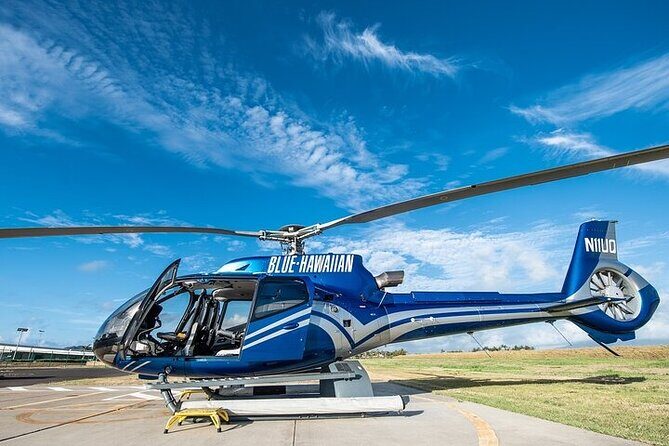
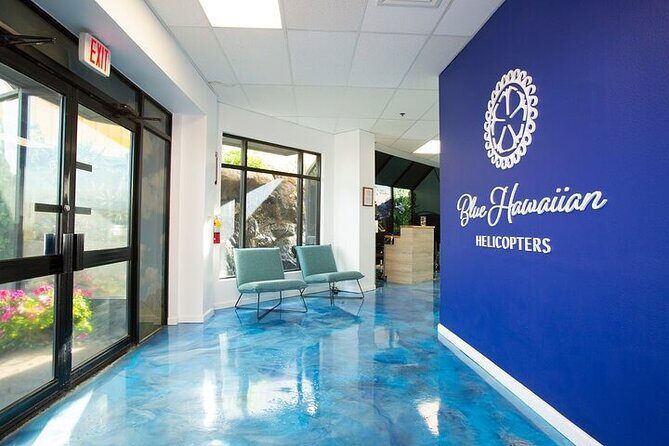
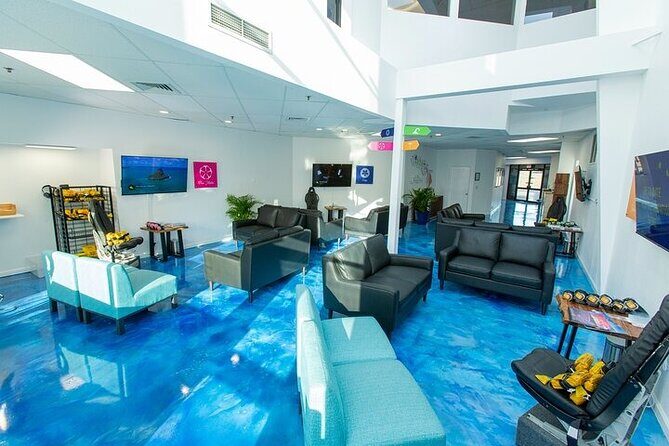
Meet at Blue Hawaiian Helicopters (Lelepio Pl, Kahului). Your tour ends back at the same meeting point, so you’re not dealing with transfers across the island.
Check-in is 45 minutes before departure. That isn’t just paperwork. It’s for weight check-in, a safety briefing, and getting escorted to your seats so you can launch on time. If traffic or parking delays are your usual problem, plan extra buffer time. Late arrivals can be refused and are non-refundable.
A small but important tip: wear dark colored clothing so it doesn’t reflect in photos. If you’ve ever tried to take window shots from a bright cabin, you know how quickly shiny fabric turns into glare.
Bring a credit card too. Optional video and photo packages can be purchased after the flight, and the tour includes an after-tour video preview at the heliport. You’ll be able to decide then, instead of guessing beforehand.
Weight limit and the “extra seat” rule
There’s a strict total passenger weight limit of 240 lbs (108 kg). For anyone above that weight, an adjacent empty seat is required for safe balancing, and the second seat is half off the regular tour price. If that applies to you, you’ll want to arrange the additional seat after booking.
Comfort and Sound: Bose Headsets Make the Narration Work
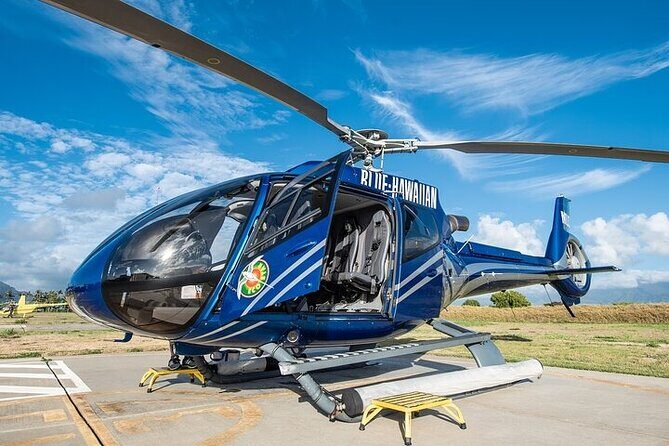
A lot of helicopter tours fail the “can I hear the guide” test. This one doesn’t, because you get Bose Aviation-grade electronic noise-cancelling headsets plus microphones with two-way communication. The cabin stays quieter than you’d expect, and the pilot’s commentary becomes clear.
That’s not a small detail. When you can hear what the pilot is pointing out, you start to connect the dots: why valleys were formed, how ridges split weather, and where certain famous places fit into Maui and Moloka‘i geography.
You’ll also get an after-tour video preview at the heliport. That’s handy if you’re the kind of person who wants to check whether your favorite moments came out looking the way you hoped.
Stop-by-Stop: How the Flight Reads Like a Maui to Molokai Story
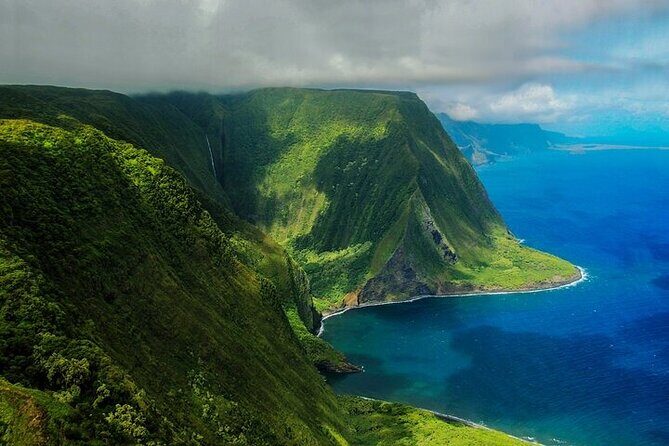
This tour is designed to move you through the island’s key “water-and-mountain” themes: rainforest valleys on West Maui, then the big vertical scale of Molokai, then a return sweep that hits resorts and valleys again.
You can also read our reviews of more tours and experiences in Maui






Maui shoreline start: Haleakalā views and West Maui’s scale
Your flight begins by looking out over the shoreline area tied to Maui’s economy, with wide vistas of Haleakalā and the West Maui Mountains. Even early on, you’ll notice that Maui isn’t just beaches. The island rises fast. From the air, the distance between the ocean and the valleys feels compressed, like the mountains are leaning toward the water.
If you only know Maui from road trips, this stage helps you understand the “why” behind the scenery. Valleys aren’t random. They’re carved, separated, and shaped by the terrain and weather patterns the pilot will explain as you go.
Gateway to ‘Iao Valley: seeing the island’s crossroads from above
Next you move toward an area described as an ancient population center and gateway to the ‘Iao Valley and West Maui Mountains. This is one of those stops where the aerial view helps you “place” the story. ‘Iao Valley is famous, but from the ground it’s easy to underestimate how the surrounding ridges funnel views, winds, and rainfall.
From the air, you can look at how the terrain sets up channels where water and clouds move. If you’re hoping to understand why waterfalls and wet rainforest pockets exist in specific areas, this is the part that sets the stage.
Waihe‘e ridge lines: dramatic terrain and the rainforest logic
You then pass Waihe‘e, known for lush ridge lines and dramatic terrain. This is where the tour’s rainforest theme becomes more than a marketing word. When you’re looking down at ridges and valleys, it’s easier to see how slopes catch moisture and how streams can carve through valleys long before you ever see a waterfall directly.
The pilot’s cultural and historical narration is part of what makes these aerial “stops” useful. Instead of just naming places, the pilot helps you connect what you’re seeing to human history and Hawaiian geography.
Kahakuloa Bay: a remote former fishing village feeling
Next is Kahakuloa Bay, described as one of Hawai‘i’s remote former fishing villages along the winding West Maui Mountain Road. From the air, that remoteness is visible. You get a sense of distance, how the ocean interacts with steep land, and why this stretch feels separate from the more developed coasts.
If you like scenery with character, this is one of the moments where you might notice small patterns: how the coast bends, where the water looks clear, and where the land climbs too steeply for easy access.
Mauna Kahālāwai: the highest peak and the ridge separation effect
You’ll fly over Mauna Kahālāwai, noted as the highest peak of the West Maui Mountains. This part is about scale and structure. Knife-edged ridges and misty peaks separate valleys, and from above you can “see” those separations like walls in the sky.
Waterfalls often belong to those transitions: where cliffs drop into valleys and where water gathers and then spills over. Even when you’re not staring at a single famous fall at every moment, you’re learning how the terrain sets up water movement.
Cross the Pailolo Channel: turning toward the “Friendly Isle”
Then comes the moment you connect the islands by crossing the Pailolo channel to Moloka‘i, often called the Friendly Isle. Channel-crossing is more than geography. It’s when the ocean looks like the separator it really is.
Mentally, it helps you reset. You go from Maui’s mix of valleys, roads, and resorts to Moloka‘i’s reputation for distance and sheer vertical drama.
Moloka‘i essentials: the world’s highest sea cliffs and Kalaupapa
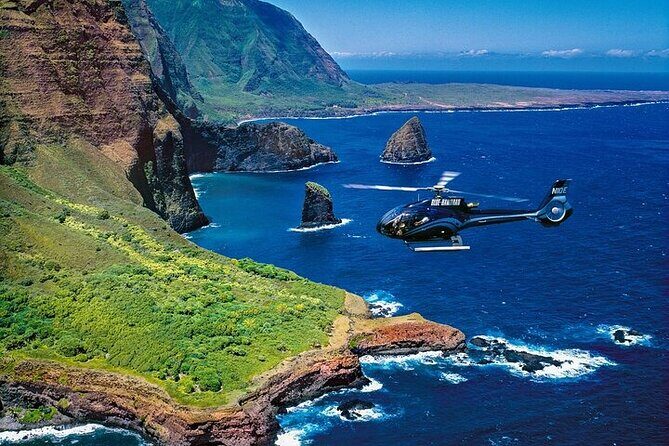
On Moloka‘i, you’re looking at the island’s standout feature: the world’s highest sea cliffs, plus the Kalaupapa peninsula and remote valleys. This is the point in the tour where “waterfalls” and “cliffs” stop being abstract. You can see how cliffs rise directly from the ocean, how far the drop is, and how unusual the terrain feels compared to Maui’s more familiar slopes.
Kalaupapa has deep cultural and historical importance, and from above you get a clearer sense of why it became such a distinct community. The land is dramatic, and the separation is obvious.
Ka‘anapali coastline: resorts and an easier pace of scenery
On the return sweep, you pass Ka‘anapali, known for premier resorts and a coastline that looks almost designed for postcards. From the air, you’ll notice a different kind of beauty here: long stretches, hotels and beaches laid out in a way that feels smoother than the cliff-and-valley areas you saw earlier.
This stop is good for recovery time in your brain. After all the vertical drama, Ka‘anapali gives you a breather view of the oceanline and Haleakalā-leaning background.
Kapalua: beaches, clear water, and golf course geometry
Next is Kapalua, described with a mix of beaches and crystal-clear waters plus perfectly manicured golf courses. From the helicopter, you can actually see the sharp contrast between natural shoreline patterns and the careful straight-line geometry of landscaped areas.
If you’re trying to photograph the “Maui look” that most people imagine, this is a strong moment. Just remember: the best shots often come when you’re patient with window glare and keep your phone/camera steady.
Pelekunu Bay and Pelekunu Valley: free-flowing streams and preserved fauna
The flight finishes with Pelekunu Bay, the entrance to Pelekunu Valley. Here the tour description focuses on one of Hawai‘i’s last remaining free-flowing streams and uniquely preserved ancient Hawaiian fauna.
This is a neat twist on the waterfall theme. You’re not only chasing a single waterfall photo. You’re seeing how water systems can stay alive over time in protected or less disturbed areas. Even from above, the idea feels different: less like a one-time spectacle, more like a living system.
Why This Tour Is Worth It (Even If You’re Watching the Budget)
At $667.15 per person, this is not a “split the cost with five friends and call it fun” purchase. It’s a premium tour. The question is whether it’s premium for the right reasons.
Here’s what you’re getting that justifies the price more than a typical “ride and see” ticket:
- First-class front seating with floor-to-ceiling windows (better views)
- Bose noise-cancelling headsets and two-way communication (you actually hear the pilot)
- Pilot Guide certified by the State of Hawai‘i (information is part of the product)
- Fees and taxes included (no surprise add-ons in the fine print)
- After-tour video preview (a built-in chance to review your highlights)
The short duration, about 50 minutes flight time, can feel like a trade-off. But if you’re visiting Maui and you want maximum “iconic from above” value without spending hours commuting and waiting, this format is efficient.
Who Should Book This, and Who Might Want to Adjust
This tour is a strong match if you:
- Want a big aerial overview of West Maui plus Moloka‘i
- Value narration you can hear clearly thanks to the headset setup
- Prefer seeing multiple areas in one go rather than picking one hike or one lookout
You might rethink it if you:
- Want lots of time on foot, since this is built for sightseeing from the air
- Are sensitive to helicopter rides, since the tour is compact and you’ll be in the aircraft for the full experience
- Are above the 240 lbs limit unless you’re ready for the adjacent empty seat requirement
Also, note the tour has a maximum of 2 travelers, which usually means you get a more intimate, less crowded experience.
Should You Book the First-Class Waterfalls of West Maui and Moloka‘i?
If your goal is a high-impact view of Maui’s valleys and Moloka‘i’s sea cliffs, I think this is a yes for the right person. The main reasons are simple: front-window views, clear two-way narration, and an itinerary that covers both islands’ “water and cliffs” personality in one flight.
If you’re the type who enjoys planning for a single island highlight and then digging deeper on the ground, you might prefer pairing this with a day drive or a hike instead of making it your entire Maui plan. But as a one-ticket way to see the Valley Isle from above and then jump to the vertical drama of Moloka‘i, this tour is built for exactly that.
If weather plays nice, it’s one of those purchases that tends to pay back immediately the moment you lift off.
FAQ
How long is the flight for this helicopter tour?
The tour lists an approximate duration of 50 minutes, with flight time stated as 50 minutes.
Where does the tour start?
The meeting point is Blue Hawaiian Helicopters, 1 Lelepio Pl, Kahului, HI 96732, USA. The tour ends back at the same meeting point.
What is included in the price?
Included items are first-class seating with floor-to-ceiling windows in the front of the helicopter, Bose Aviation-grade noise-cancelling headsets, microphones with two-way communication with the pilot, an after-tour video preview at the heliport, and all fees and taxes.
What is not included?
Parking fees at the heliport are not included (USD 7.00), transportation to and from the heliport is not included, and optional USB in-flight video and photo packages can be purchased after the flight.
Do I need to bring anything?
You should bring a credit card for optional video/photo packages and souvenirs at the heliport. You also should wear dark colored clothing so it doesn’t reflect in photos.
What time should I arrive to check in?
Check-in is 45 minutes prior to tour time.
Is the tour dependent on weather?
Yes. Tours/times can vary based on wind and weather conditions, and the experience requires good weather. If canceled due to poor weather, you’ll be offered a different date or a full refund.
What is the weight limit?
Total weight per passenger is listed as 240 lbs. For each guest over 240 pounds, an adjacent empty seat is required to balance the aircraft, and the second seat charge is half off the regular tour price.
Is the pilot also a guide?
Yes. The pilot is also a State of Hawai‘i Certified Tour Guide.
Is scuba diving allowed before the tour?
No scuba diving within 24 hours of departure.